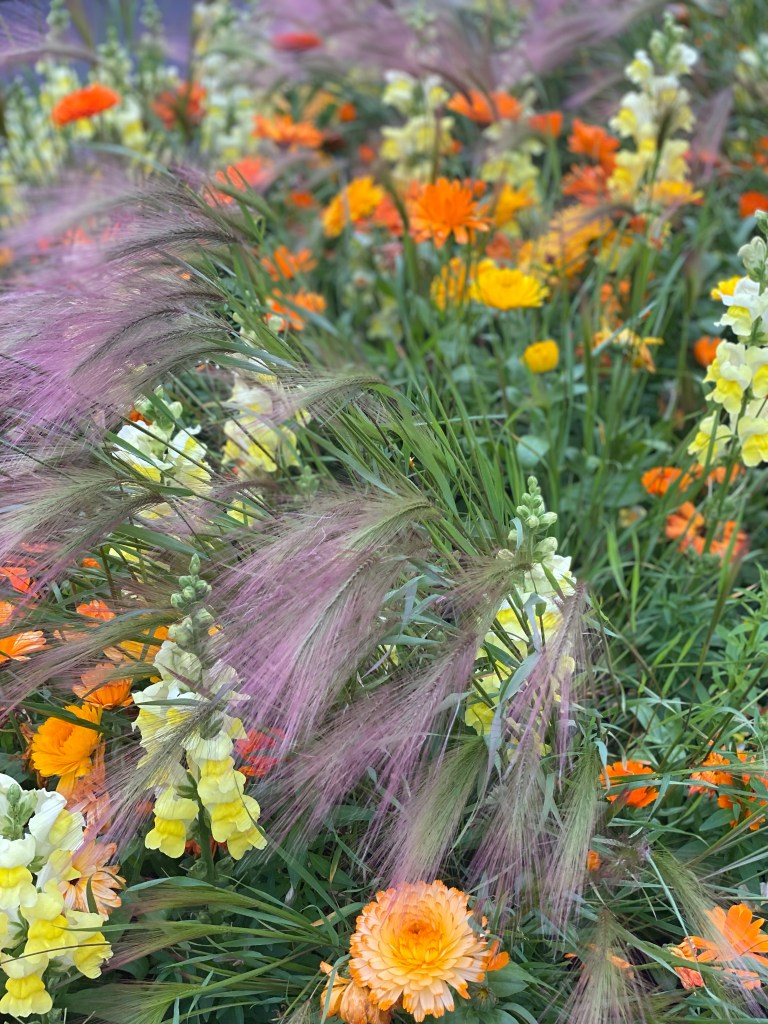
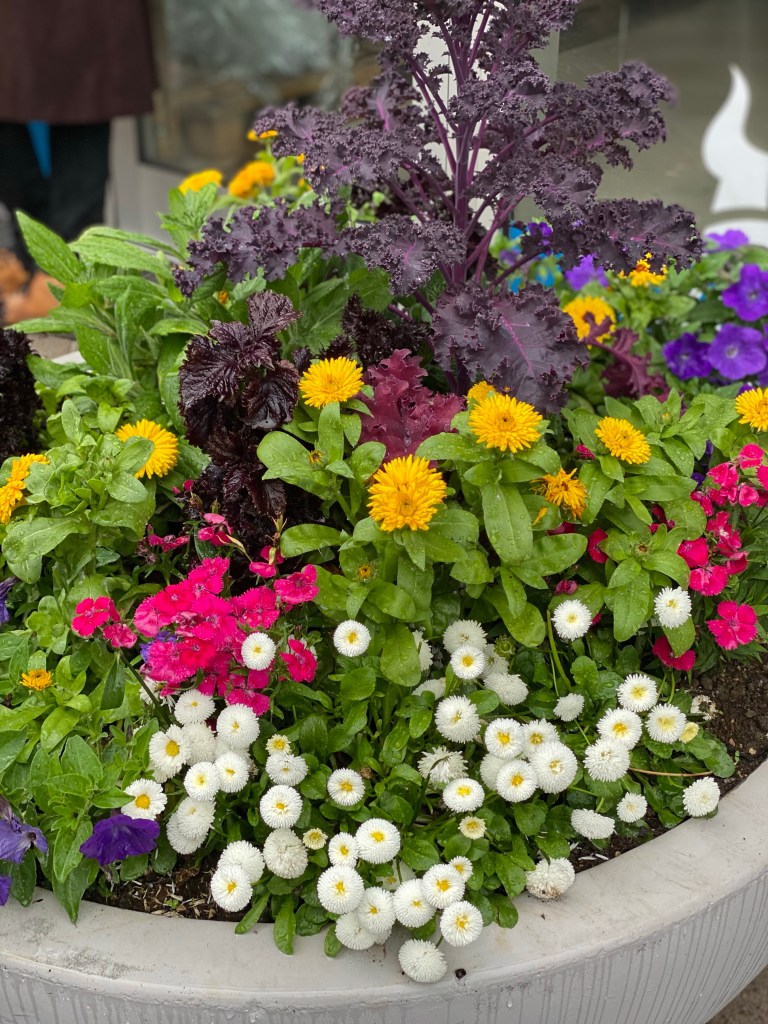
The growing season here is like our spring and summer combined. The flower pots I’ve seen in various places have combinations of plants that look to be quite hardy for cold. I see calendula mixed with other plants like kale everywhere- in the north as well as in Reykjavik.
On Friday, I visited the Botanical Gardens in Akureyri. It’s one of the northernmost botanical gardens in the world and only 50km south of the Arctic Circle. They have a lot of plants, trees and bushes, only about 400 of which are native to Iceland. Of course the Iclandic poppies were amazing, and so were many of their other plants. Because the climate is like more like our spring, the gardens were a mix of flowers that we see in the spring and early summer. The peonies were still in bloom and delphinium standing strong all over.
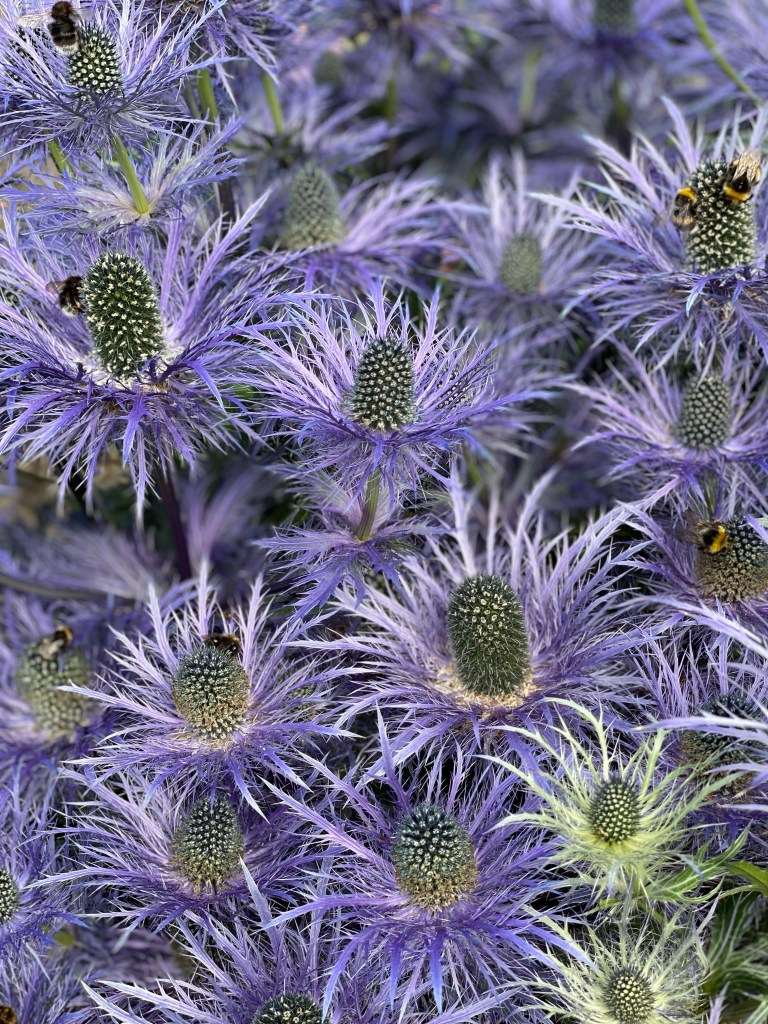
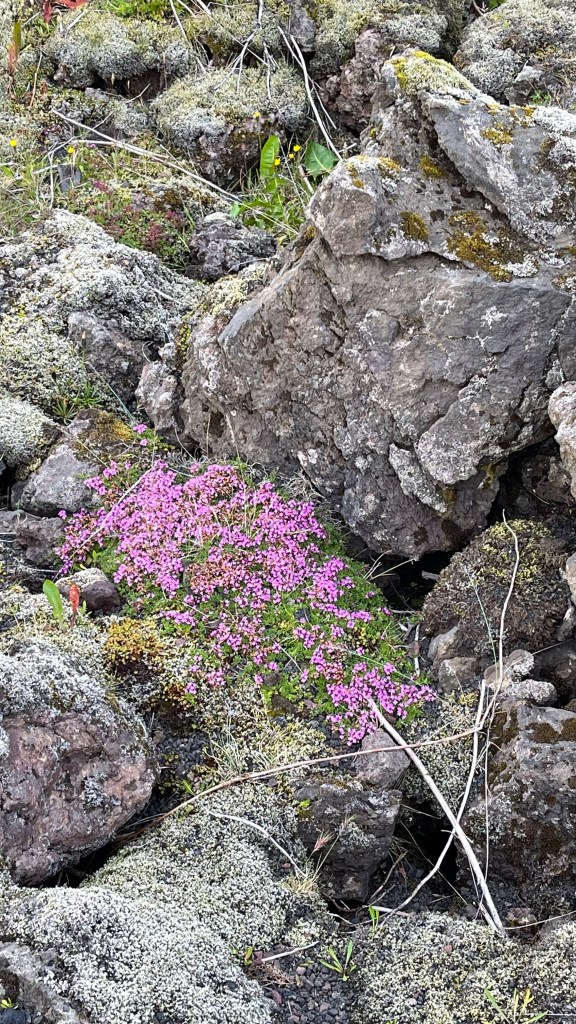
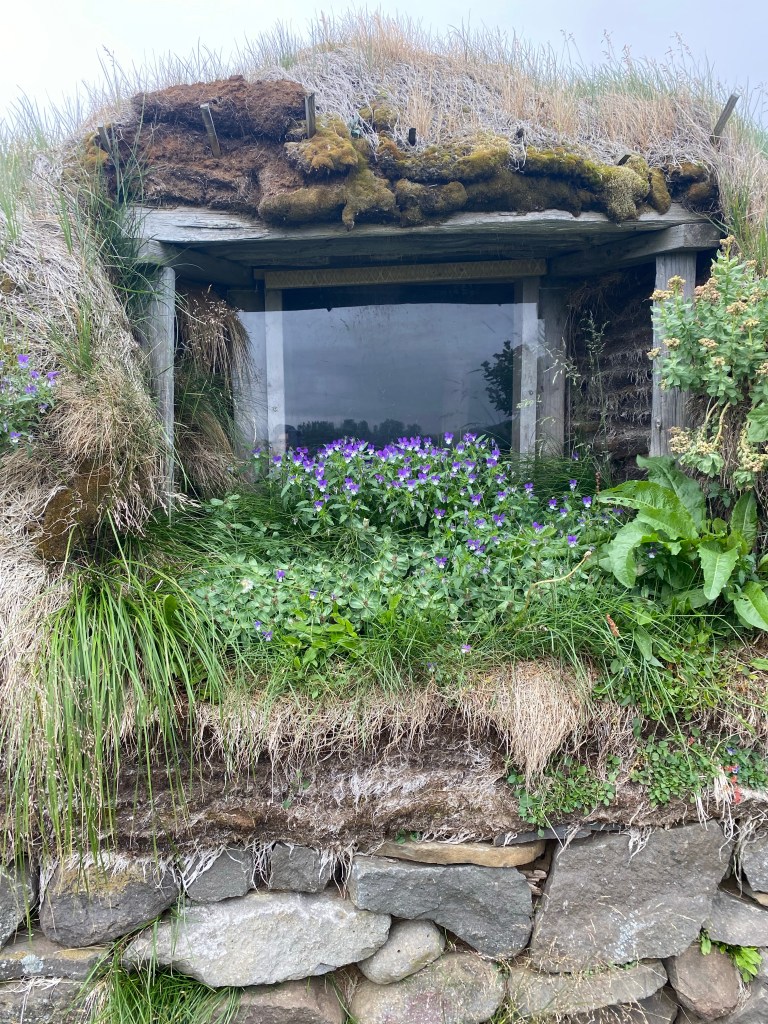
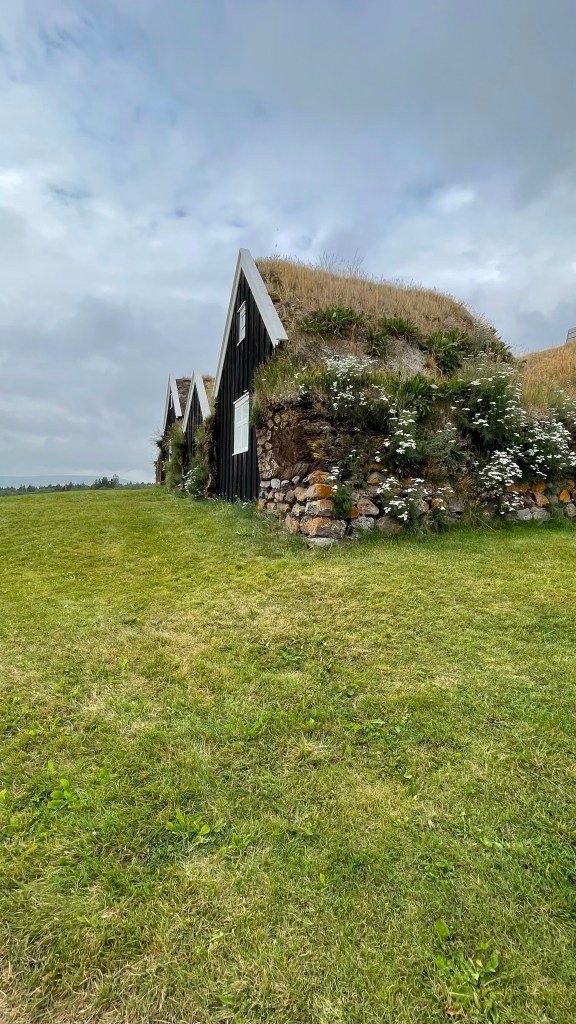
This is a type of sea holly that was covered in happy beesArctic thyme seen on many hillsides, and we saw it as an ingredient for a cocktail when we were on Vestmannaeyjar island of HeimaeyThe other creative use of plant material is in the turf houses we have seen all over the country. This is an old sheep building with turf roof and sides, and turf between the rocks that form the base. I loved that there was a ‘window box’ of flowers. Another naturally adorned turf house
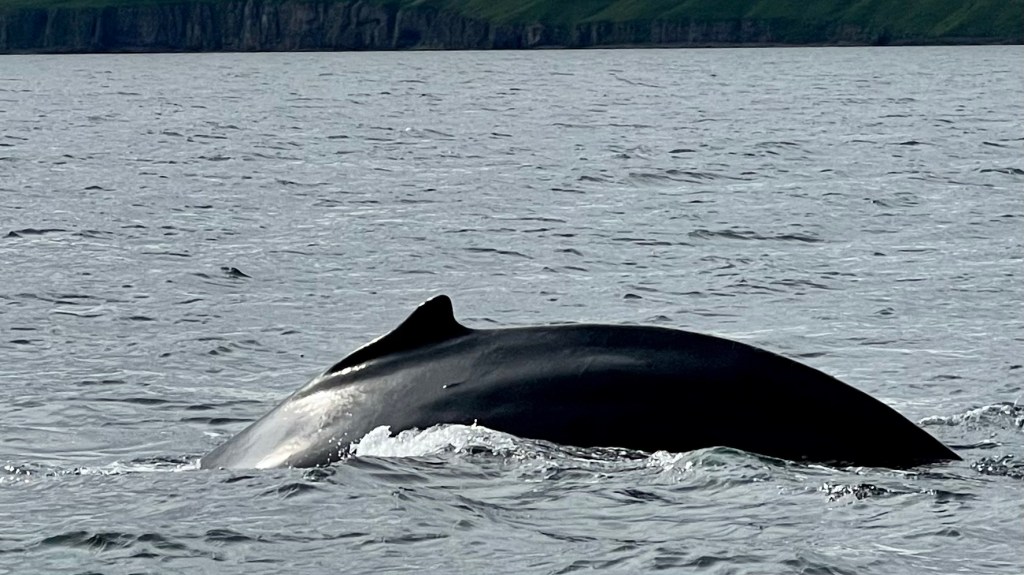
While I wandered the botanical gardens, Will and Charles were off on a whale watch that left Akureyri and travelled up the Eyja Fjord. They saw many whales and shared their photos with me. The sperm whales hang out in the northern part of that fjord to feed, and don’t seem to mind people watching them.
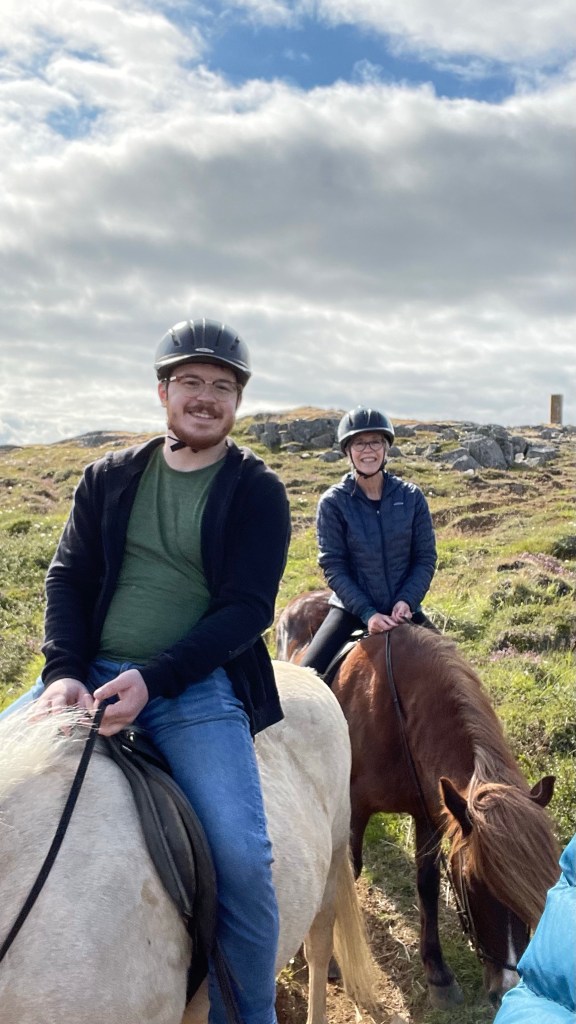
We also visited the Whale Museum in Husavik, a small information packed place to learn about whales and other inhabitants of the sea. This is the skeleton of a whale that washed up near to Husavik and re-assembled to show visitors the size of these mammals. When people find dead whales on the beach, they call the museum to donate the bones. One skeleton of a smaller whale was on display, noting that they buried the bones in dung to get the bones clean before displaying them. Horses are all over Iceland, roaming in fields near the sea and farms.Icelandic horses are a source of national pride, small, sturdy, and long lived. We’ve seen them in small and larger herds, some foals standing near a mother, and others playing or running together.Saturday morning was clear and warm for our horse tour by the fjord near Akureyri. We had two women for guides, one Danish born who decided to move to Iceland to do the job she loves. She told us that prior to the Americans bringing cars to Iceland during WWII, most Icelanders rode horses to get where they needed to go. The horses were gentle and well trained for us to ride them. It was a little exciting/scary when our guide urged them into a gait they call tolt. We got to hang out bit with them after the ride, giving them treats and being nibbled on gently ourselves- the horses’ way of being friendly.
When Charles left us Sunday to return home, Will and did the long and at times, precarious, drive to the Westfjords north and west of Reykjavik. It’s pretty desolate and sparsely populated, and home to Latrabjarg Cliffs where many seabirds go to nest. The puffins were out in full force, zooming around and hanging out outside their burrows. We even got to see a young puffling peaking out of the burrow.
These puffins are mates from what we could tell. They alternated going into their burrow behind them, and we even got to see a chick stick its head out. The burrows are up to 2 ft deep, and have a bathroom area for the chicks. The bathroom gets moved to the front as them get older so they won’t soil their feathers and potentially endanger their waterproofness when they go to sea. The cliffs are really high, and it was windy and cold while we were there. But the puffins and other sea birds kept us enthralled for a while.It was hard to leave.




 Birdgirl’s travels
WOW!
LikeLiked by 1 person