
The Rohsska Museum of Design and Craft in Gothenburg isn’t big, but it sure held our attention for a few hours. They have a permanent exhibit on East Asian crafts and other exhibits that show how Scandinavian art is influenced by those designs and crafts. Will and I watched a short video on the process of Japanese woodblock printing, amazed at the time, patience and skill necessary to produce such fine art. The textile exhibit called Let a Hundred Flowers Bloom was my favorite, especially the work by Elsa Pars-Berglund.


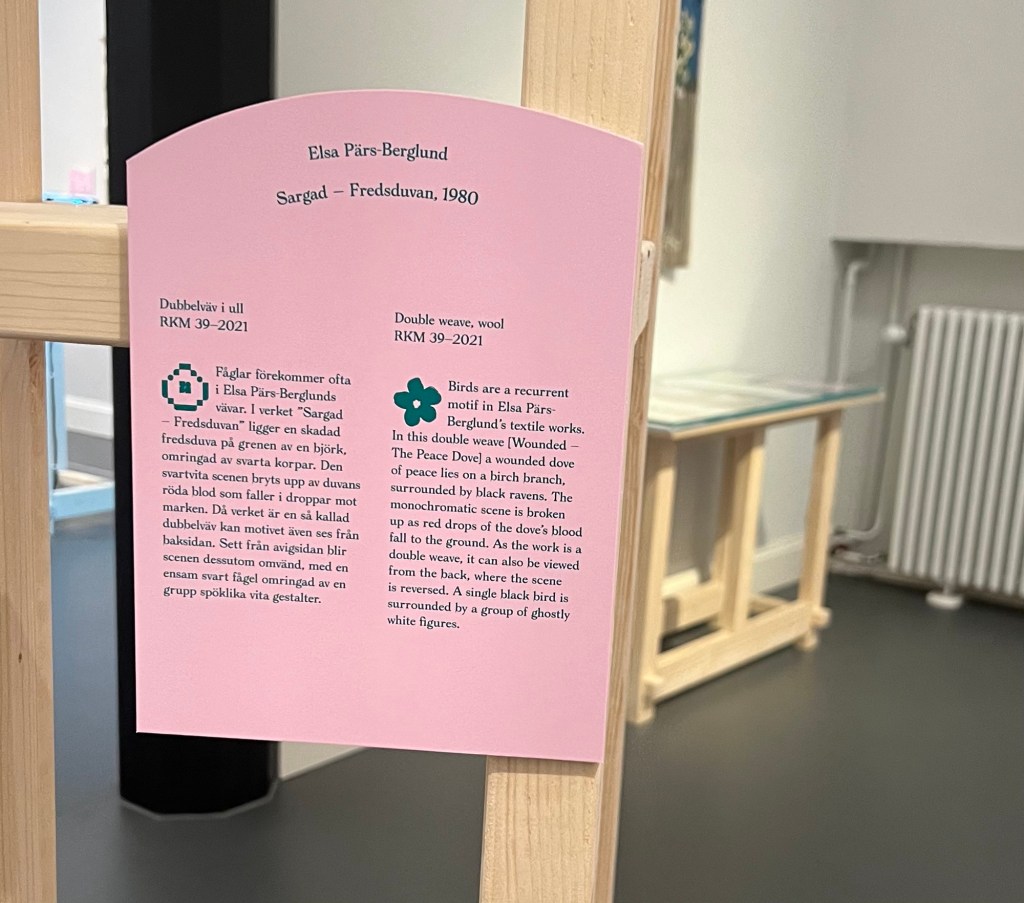

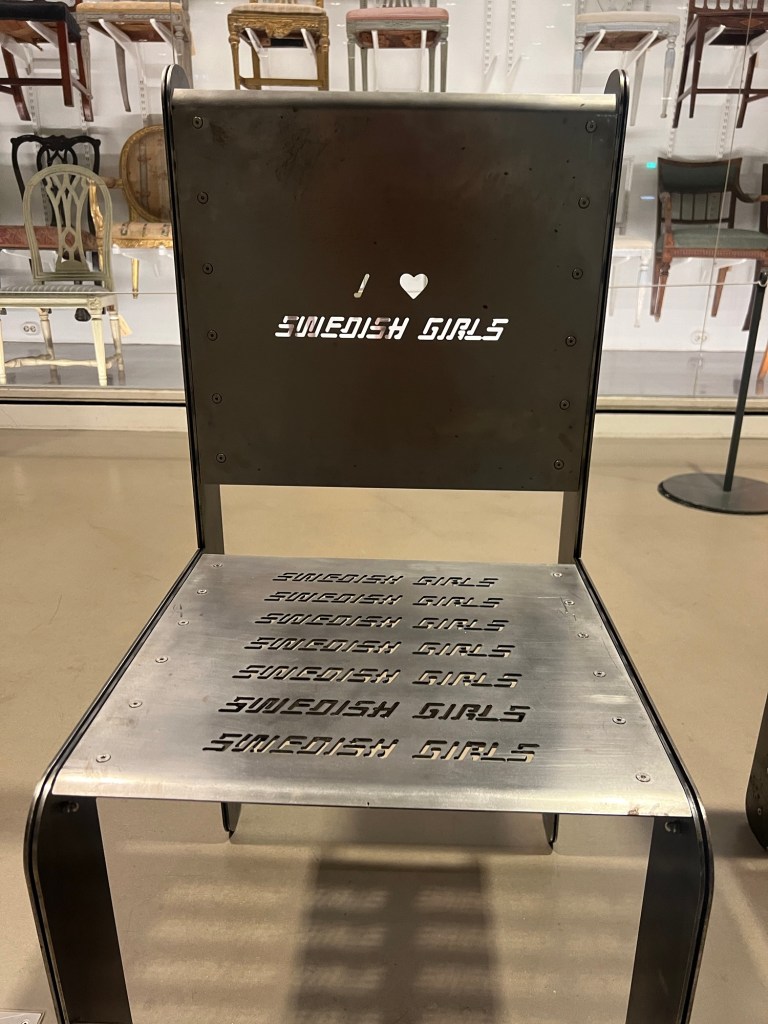

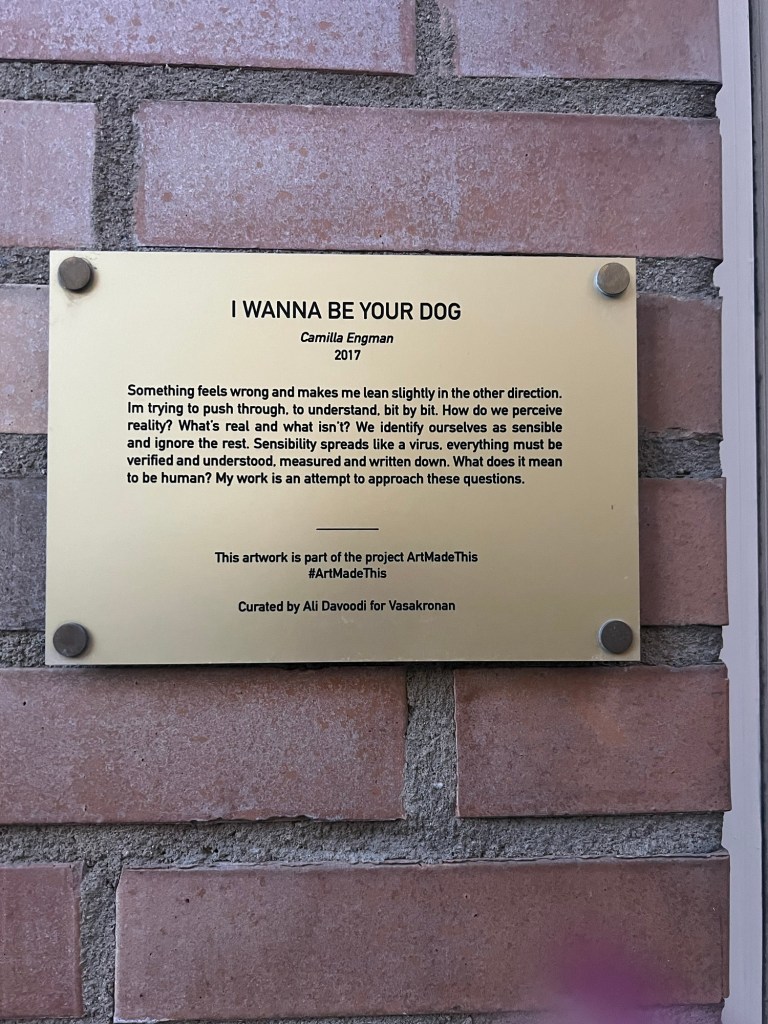
Beautiful Scandinavian design is evident everywhere we went in the city too.


We rented a car for an overnight trip to Tjorn, the 6th largest of the Swedish islands on the West coast, so that we could go to the Nordic Watercolor Museum. It turned out to be the first really stormy day we’d had complete with wind and rain. So we joined many other visitors at this amazing museum. Somehow, even though the place was really busy, people moved around easily and politely.

They had a sitting area where the posters of past exhibits were displayed; the posters were an exhibit in themselves.


There are 2 rooms with paintings from the main collection that get rotated every 6 months or so. All of the paintings were done with watercolor and so different in style.


The major exhibit was called Vanishing Point by a Belgian artist Hans Op de Beeck. They had a video of him talking about his work, process and the inspiration for Vanishing Point. His work in general includes sculptures, video works, watercolor paintings, photography, drawings, and large installations. This exhibit had dreamy black and white paintings, an animated film, sculptures and a baroque life-size carousel all in grey. When I was listening to him talk about his life and work in the video interview, I realized I was leaning forward not just to hear him but because his quiet manner was so captivating. His work was equally so. He spoke of creating fictitious worlds in his painting in which the viewer can create their own stories. In the museum director’s preface in the booklet for the exhibit, she wrote “time as a concept and moment between life and death are central themes in Hans Op de Beech’s art, where reality and dream merge”.


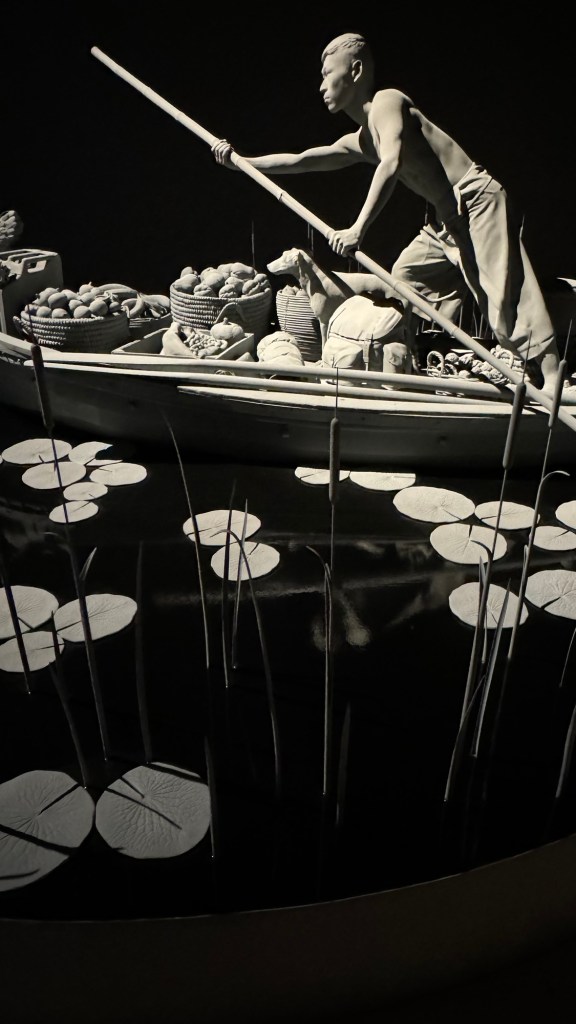
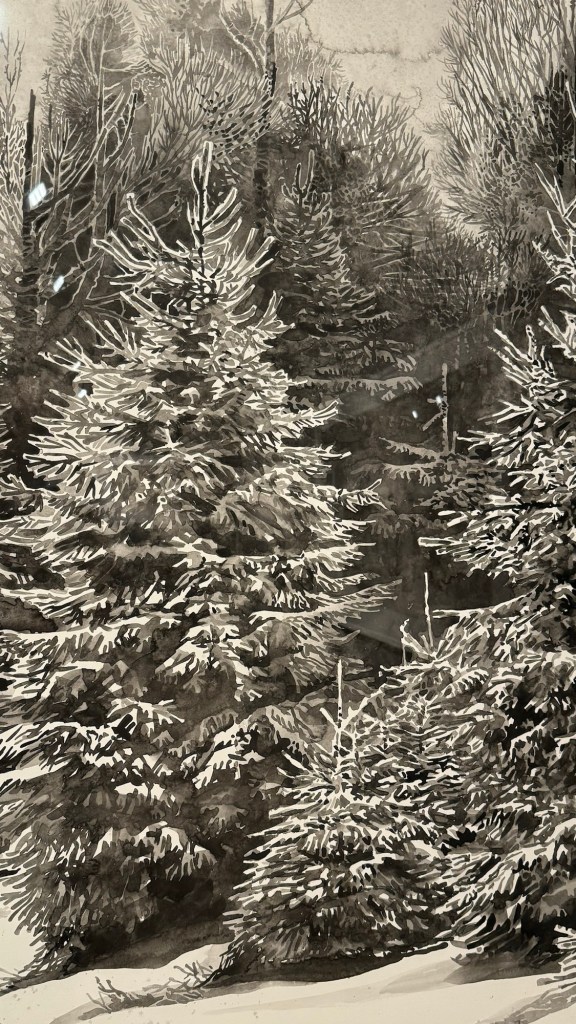
Will and I were both reluctant to leave; the paintings and sculptures were so mesmerizing and thought provoking. The rain had stopped when we got outside, so we were able to walk out on the deck around the museum a little.

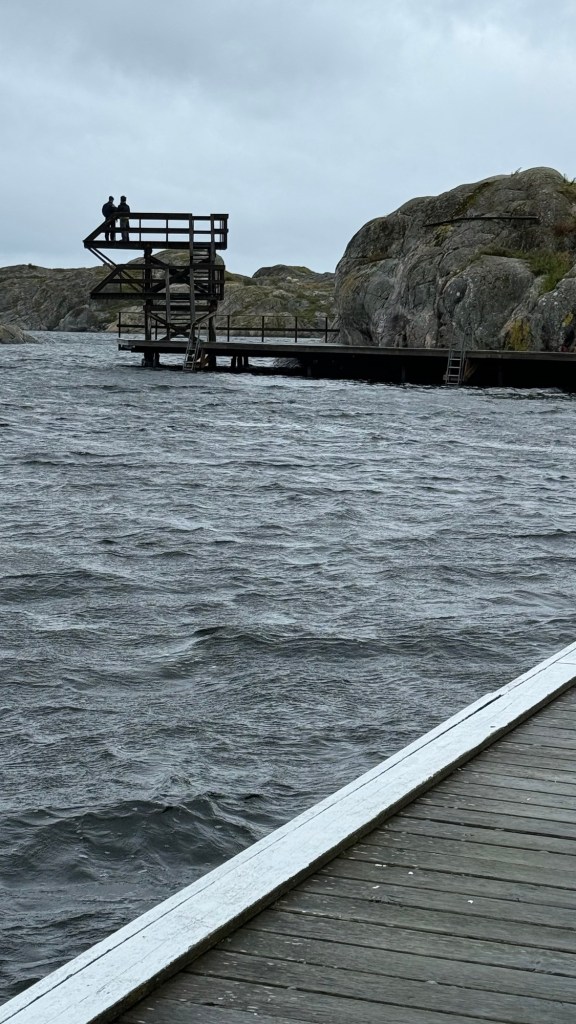

We drove a few minutes further on the island to the Salt and Sill, a floating hotel where we spent the night. The sun came out just before dinner to show off the beautiful rocky islands all around, some with houses.

It was a lovely place to stay. The wind continued, however, and I found myself feeling a little seasick the next morning! Will swam off the dock outside of our room before we headed out back to Gothenburg for a late brunch and our train to Oslo.


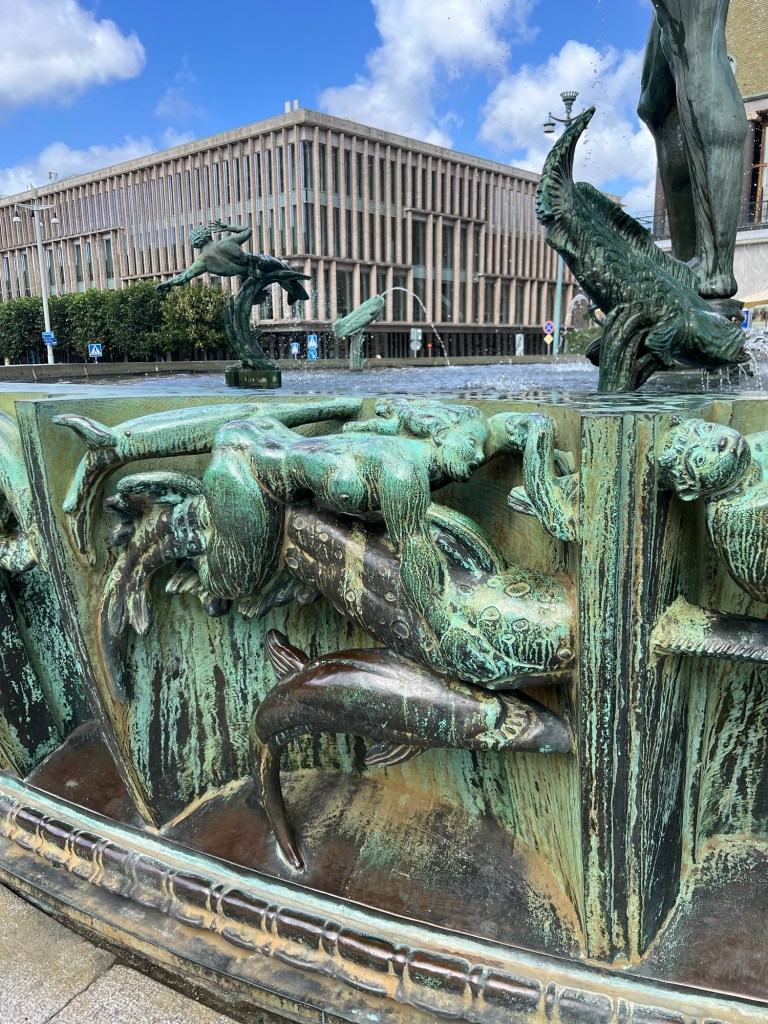
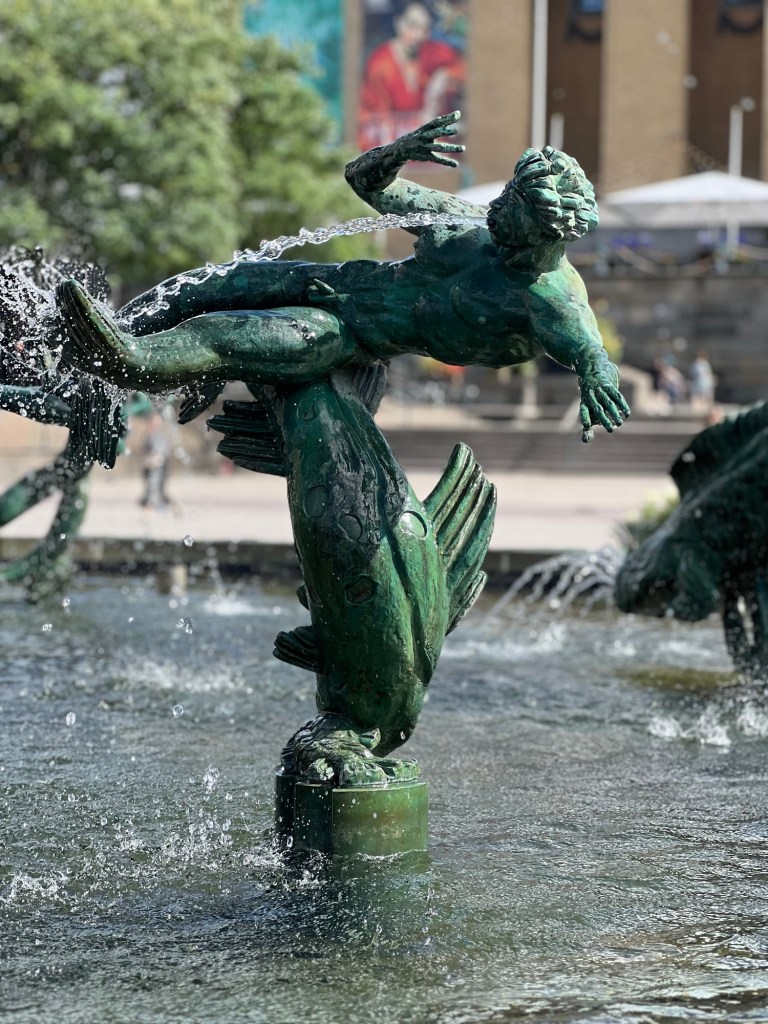
The train station departure board said the Oslo train was delayed by 2 hrs, so we stashed our bags in a luggage locker, rented the City bikes and rode to see some landmarks we’d read about. Poseidon is famous for not just being the sea god, but apparently the statue caused some scandal when installed in 1931 because his genitalia was considered too large and prominent. The sculptor amended it, but added the large fish in his hand. The smaller statues and reliefs of nymphs, mermaids, tritons and fish are lovely in their detail.

It was an easy ride back to the station. We returned the bikes, retrieved our luggage and the much delayed train finally arrived to take us on to Oslo. Exploring more of Sweden will have to wait til the next time.
 Birdgirl’s travels