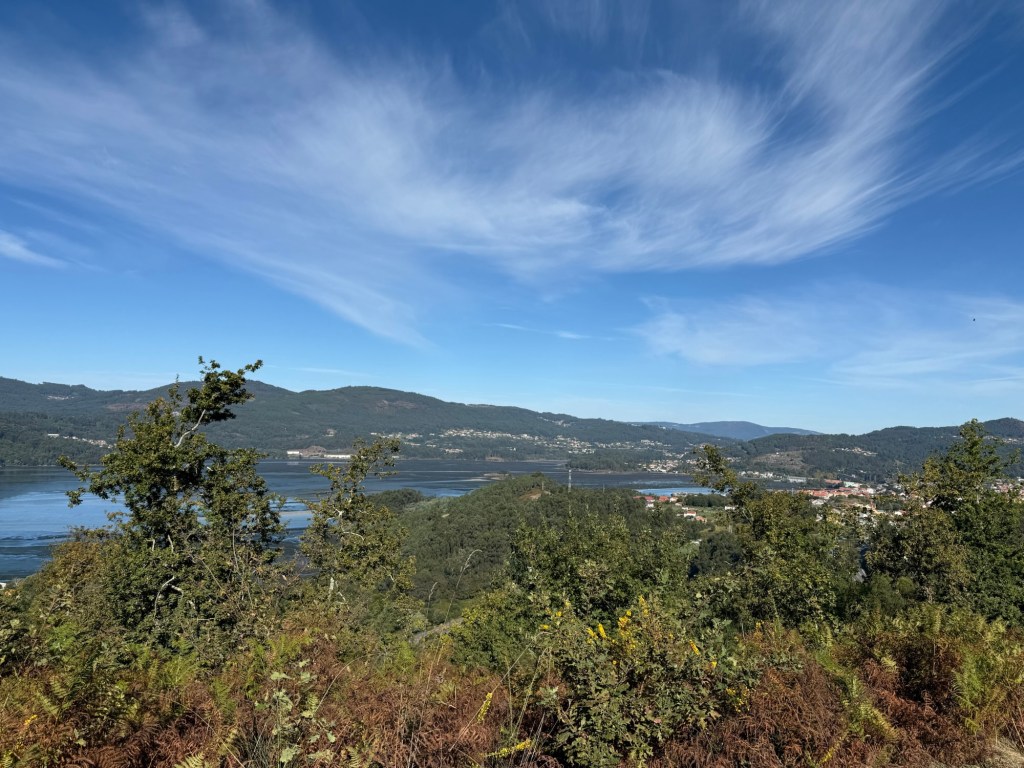
This week was as scenic as the first and much hillier overall. My legs weren’t so tired at the end of the day, so I could do some exploring after I reached my hotel(s).I had a couple more mornings of beautiful seascapes before the route left the coast and turns inland.

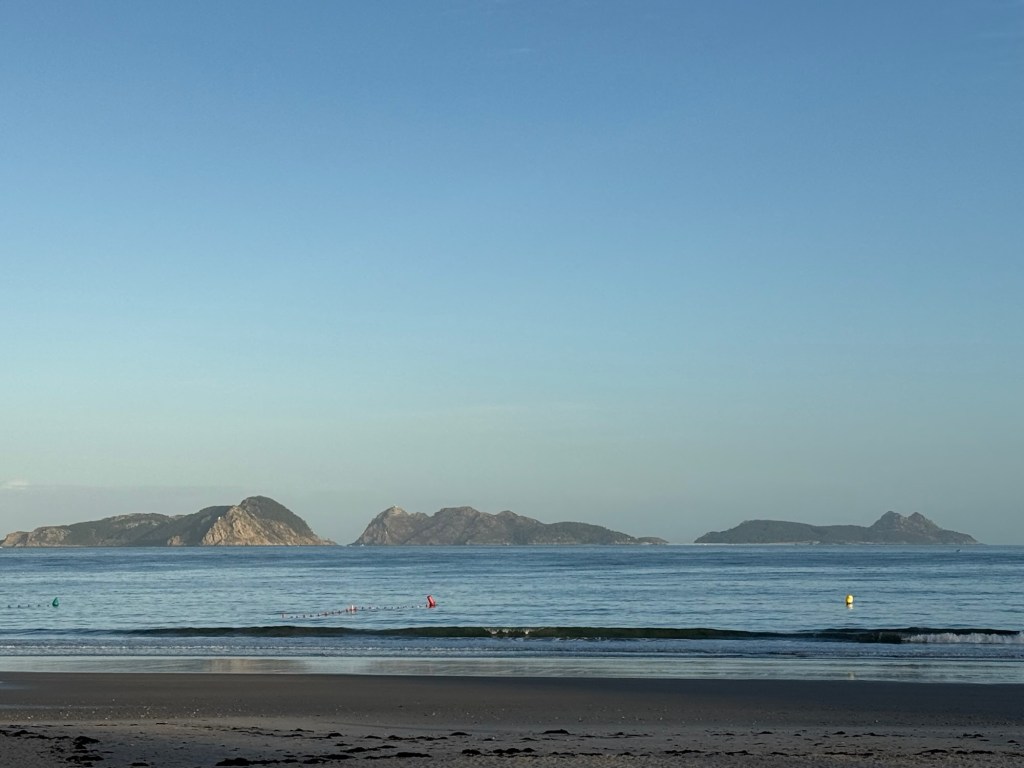
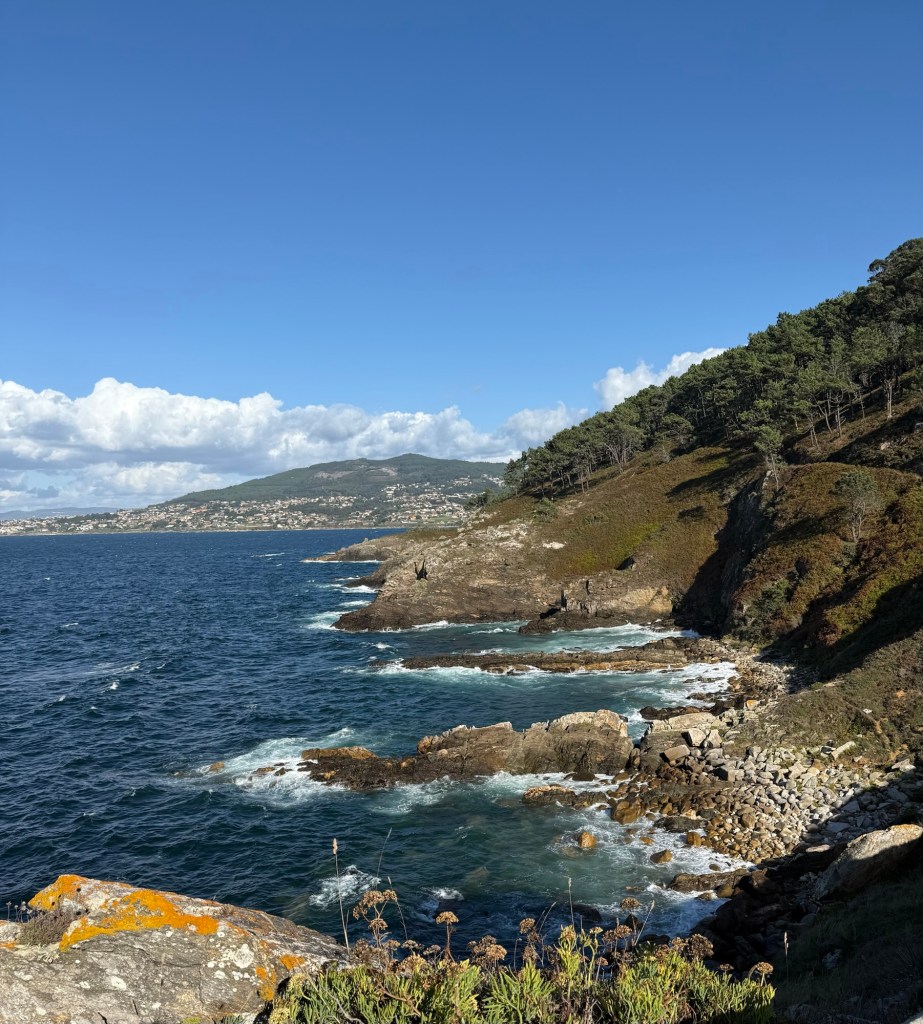

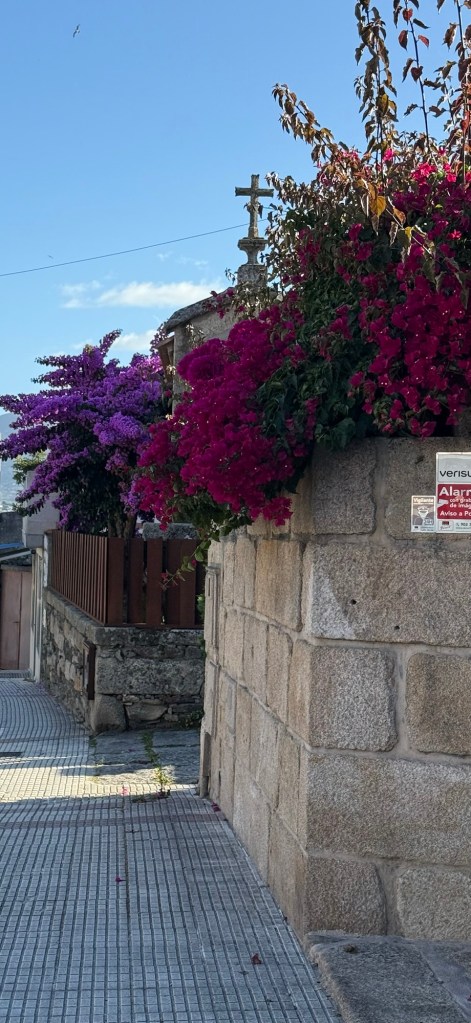
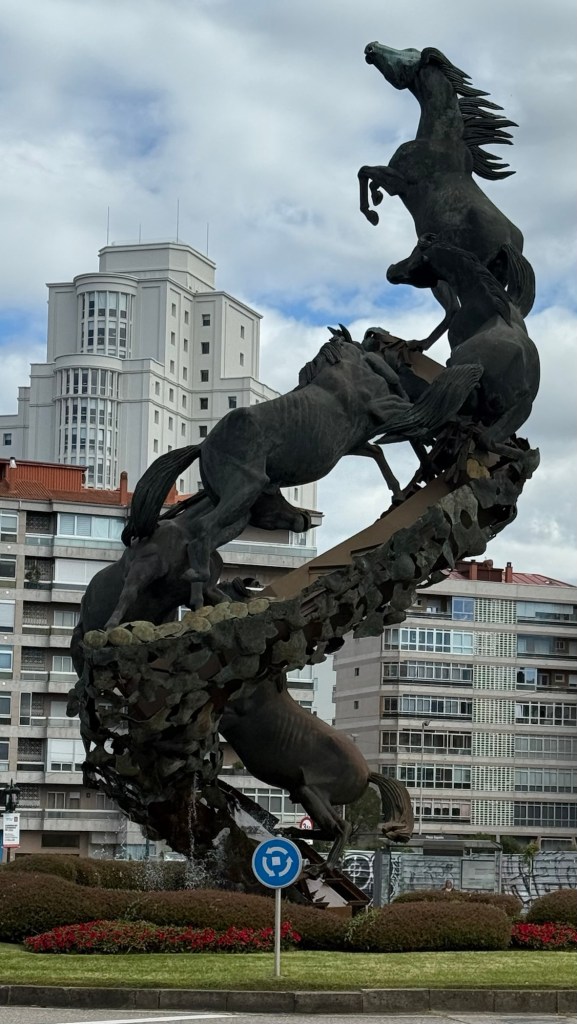
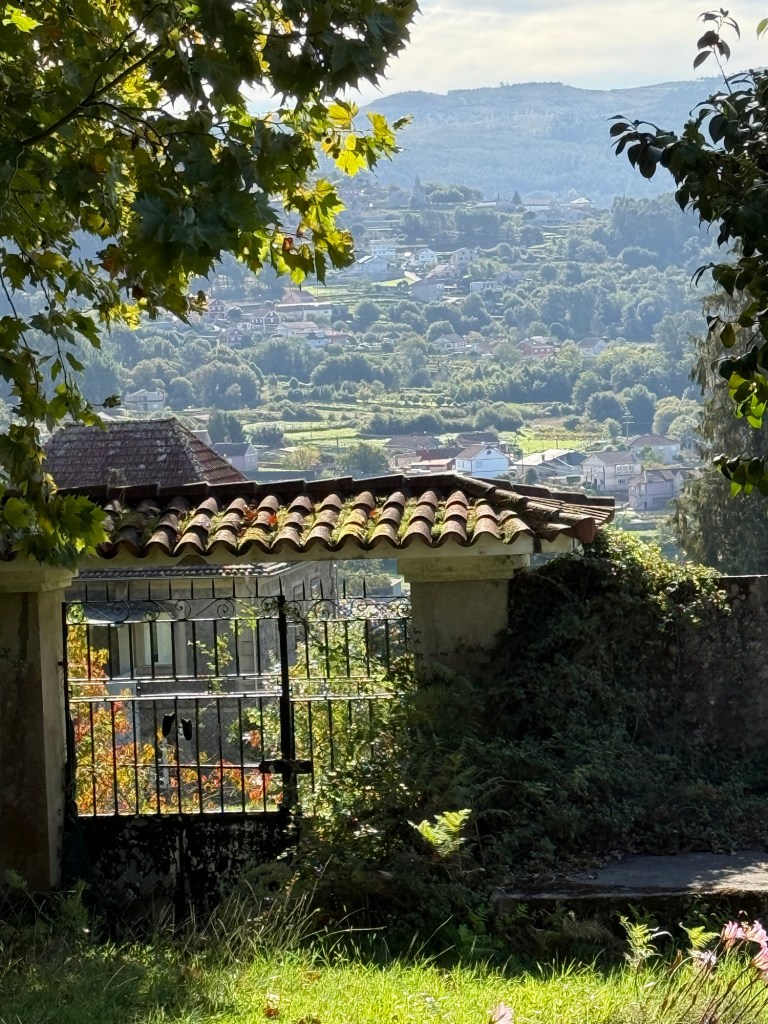
Galicia is the green lush part of Spain that the Camino winds through going inland. It’s a mix of towns, farms, vineyards and cities. The walk to Vigo, a city on the northwest coast, was about 12 miles and became more challenging with the city’s steep hills.


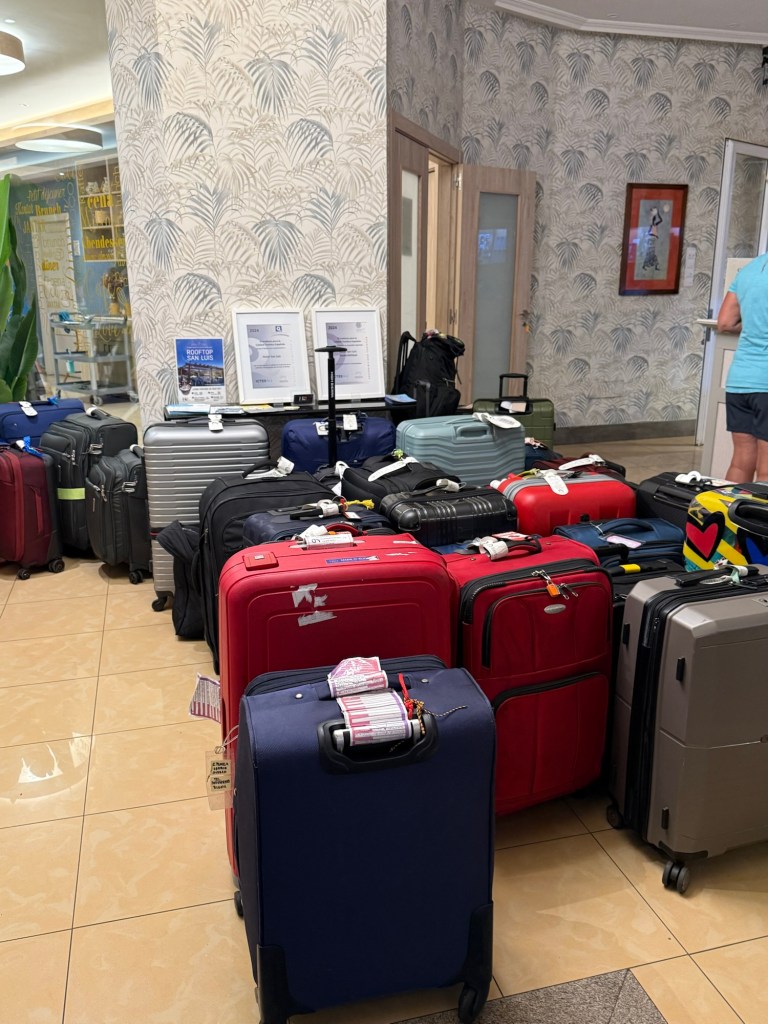
The routine of getting the suitcase down to the lobby by 8 got me out the door to start walking each day by 8:15 or so. The transport companies that move luggage on to the next hotel have my thanks and admiration. I was lucky enough to have my suitcase waiting each time I arrived at my next night’s stay. It seemed like the vans were everywhere when I arrived in a new place, with their guys using rolling carts to move mountains of suitcases.
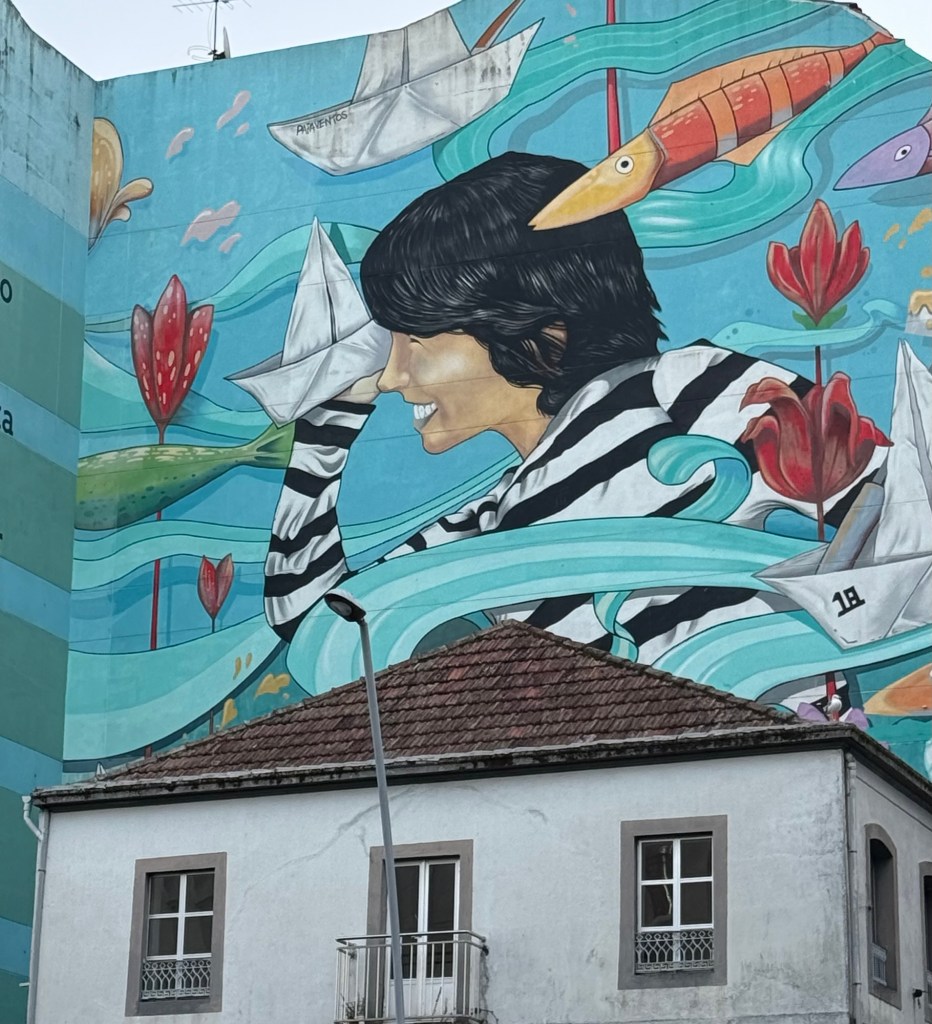
As I walked through Vigo to leave the city, there were lots of parents walking their kids to school. Most of the kids had uniforms on, I’m guessing for parochial school. The views from the hills of the city made the climb up and down rewarding.

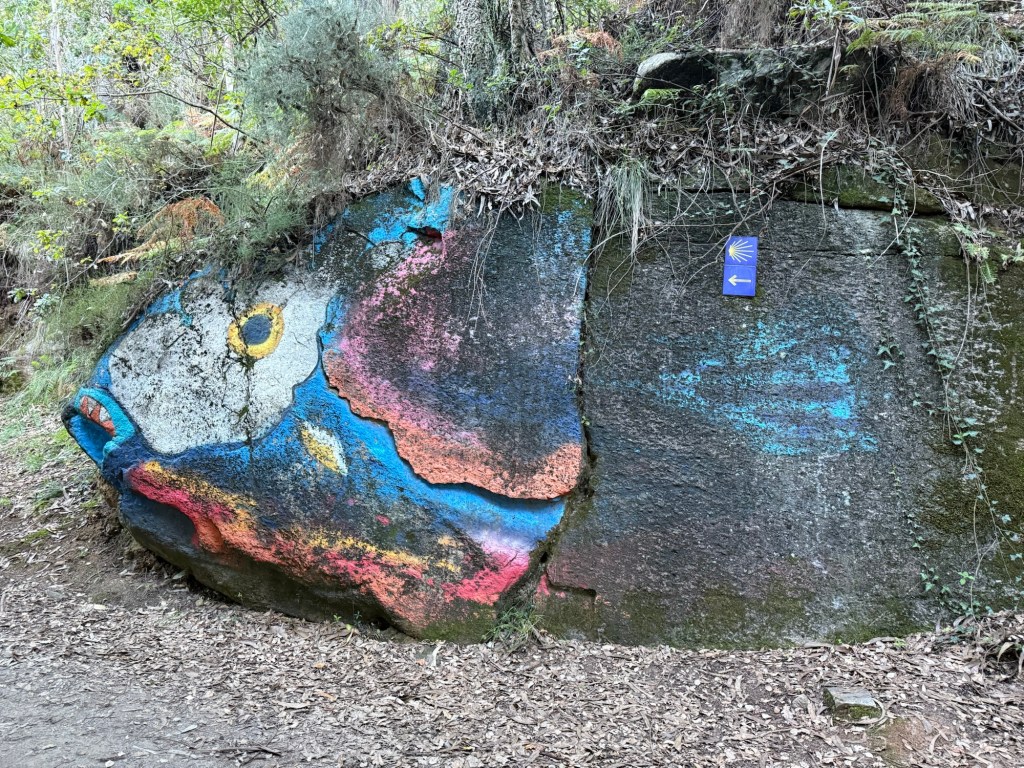
Redondela is a small town where I stayed in a hostal (their spelling) that had individual, double, triple and quad rooms. I was happy it had good a/c like the other places I’ve stayed since it was still hot out. I met a really great German woman named Sabine on our shorter walk into the next town Arcade. She invited me to stop to have a cold drink with her when we reached town, and then added me to her WhatsApp contact list to join some other people she’d met. I had dinner with her and a British guy who was also traveling solo. The 3 of us walked together the next morning to Pontevedra, a small city with lots to offer. At dinner that night, we were joined by 2 other German women Sabine had met a few days before. The 5 of us came together in the chilly wind the next morning to walk to Caldas de Reis.

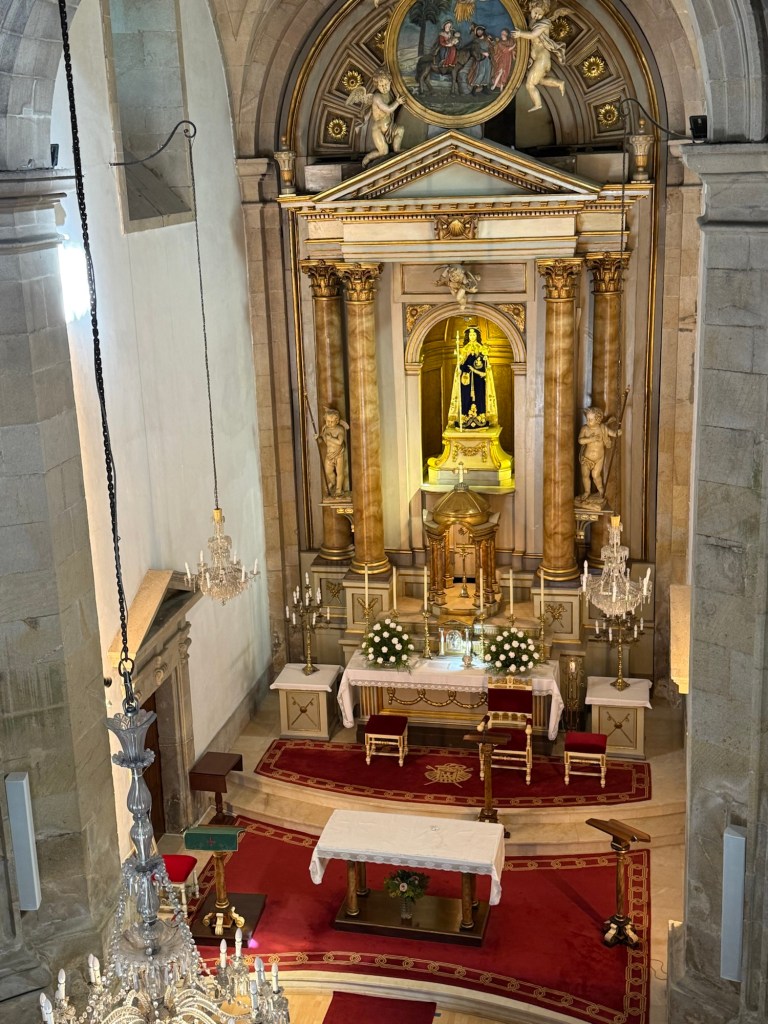
The hotel receptionist had lots of good information, and even told me my Spanish was good! She was very kind; we didn’t have a very long conversation.


We had a fairly long walk that day, but it wasn’t too hot til later in the day. At one point, it was a slow line to get a wax stamp for our pilgrim credential books. I got talking with a young British guy who was waiting with us. He had a small backpack with one change of clothes, so he washed and dried what he wore one day and switched to the other. I invited him to walk along with us after he showed us a cool way to customize the wax stamp. It was fun to talk with him about his travels, and his spontaneity in deciding to do this walk.

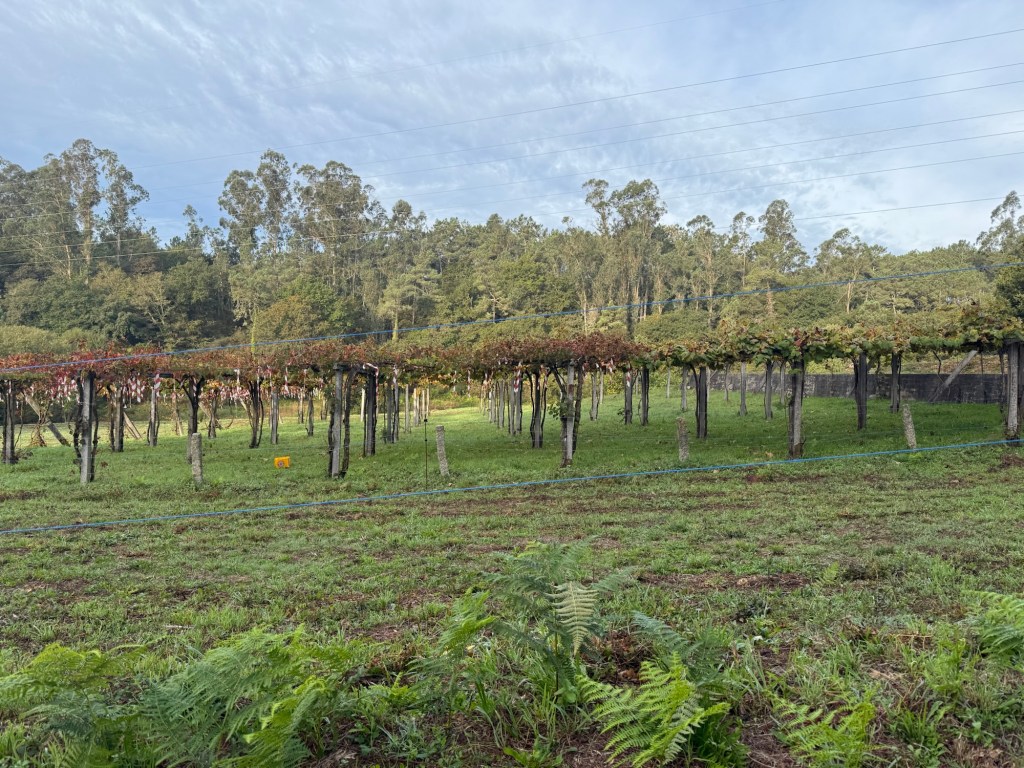
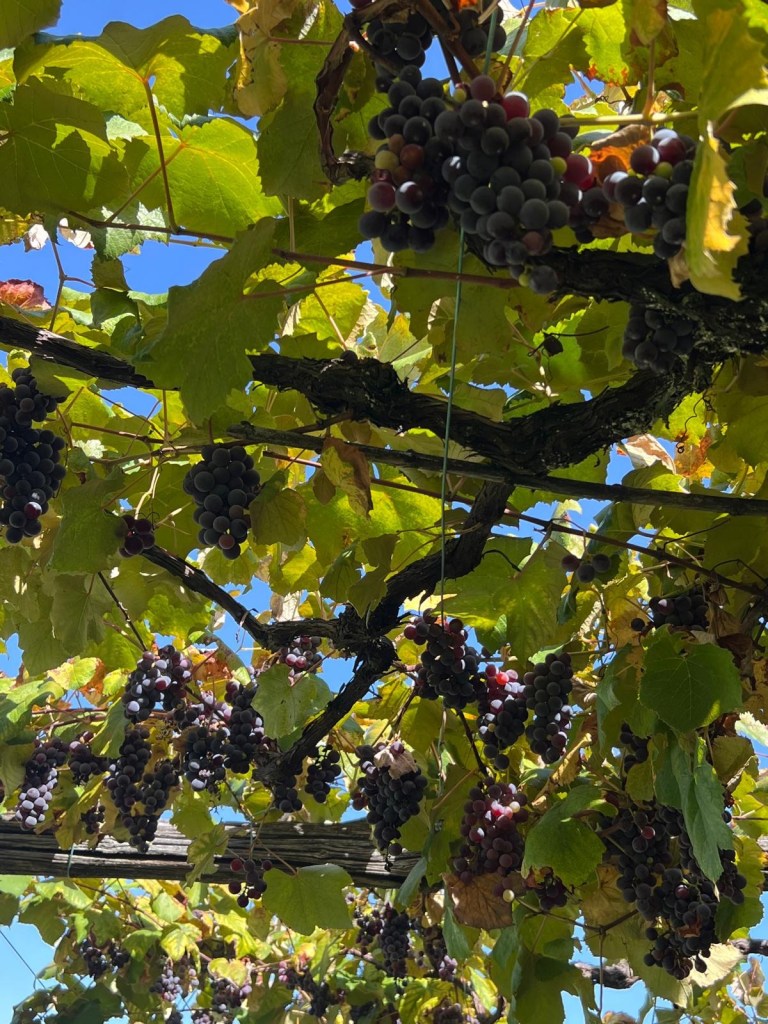
It dawned on me that I was doing just fine with the longer walking days, still tired at day’s end but well recovered next morning. I contacted the booking company to cancel the shorter walking day I’d planned for the weekend. That way, I’d stay with the group of people I’d been walking and eating with for several days, and arrive with them in Santiago on Sunday.

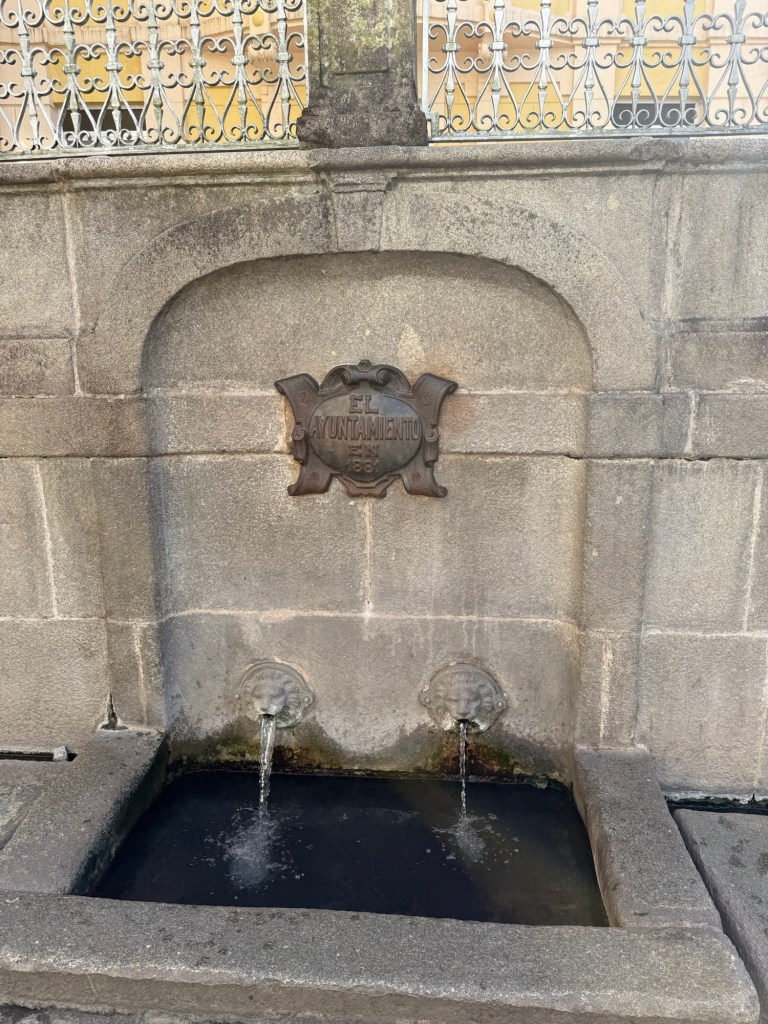
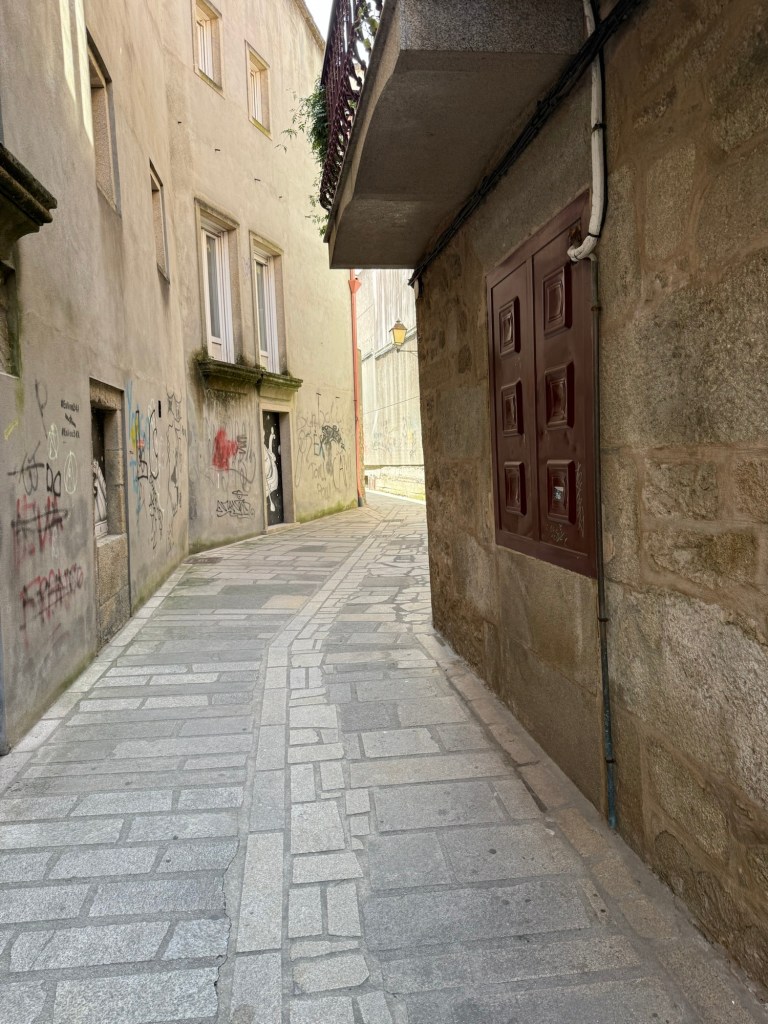
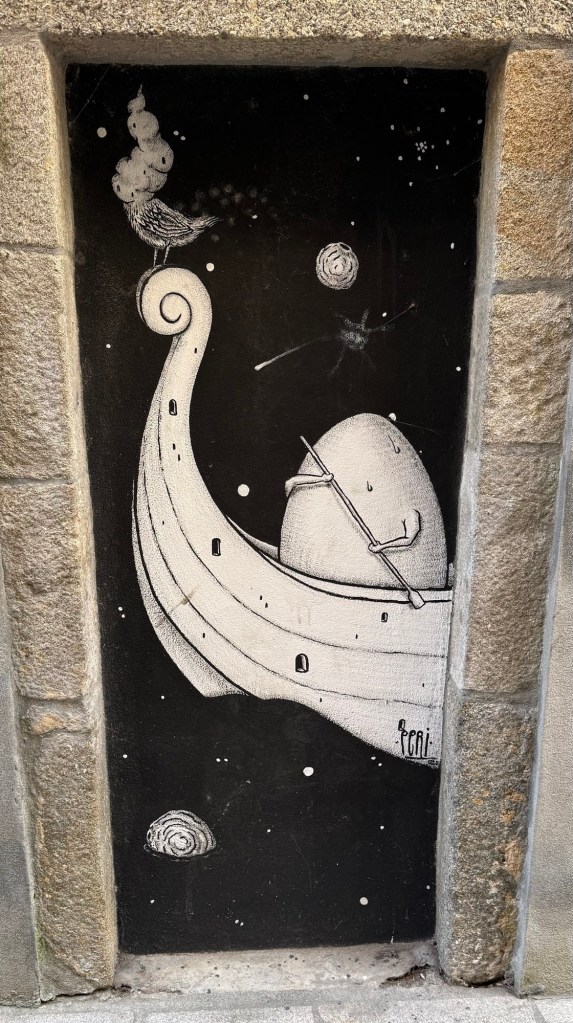
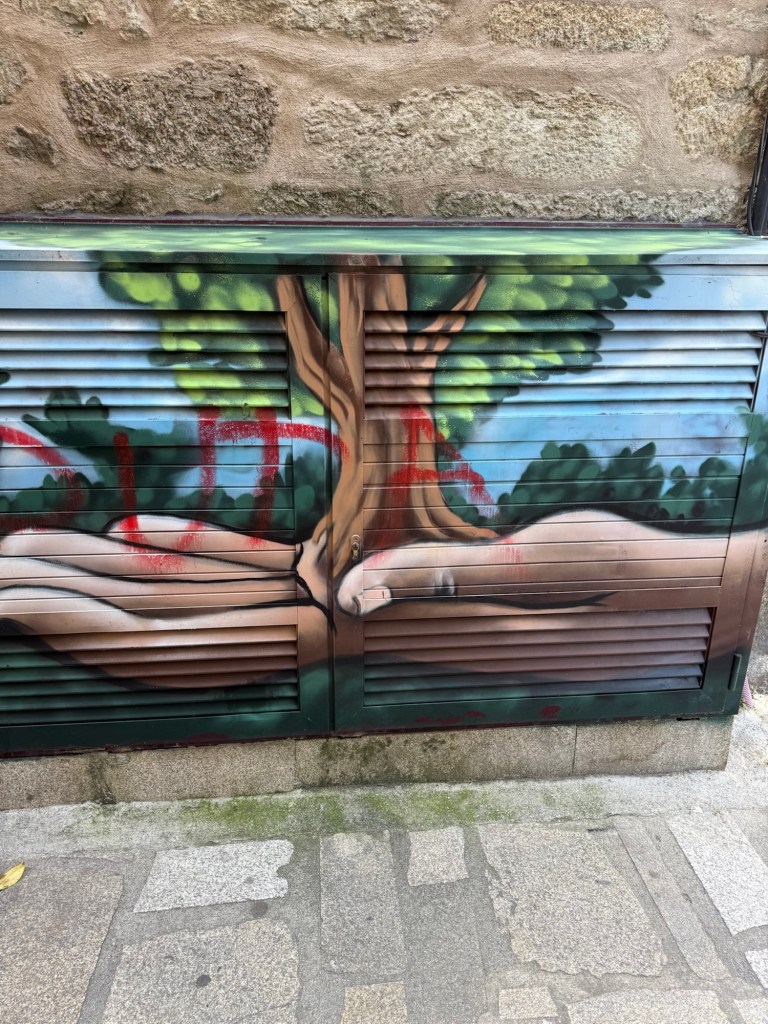

I didn’t meet the group for dinner that night in Caldas de Reis, and opted instead to go to bed early. It’s not always easy to eat on Spanish time at 8pm or later. The afternoon siesta is still going strong. It’s crazy how busy stores are in the evening.
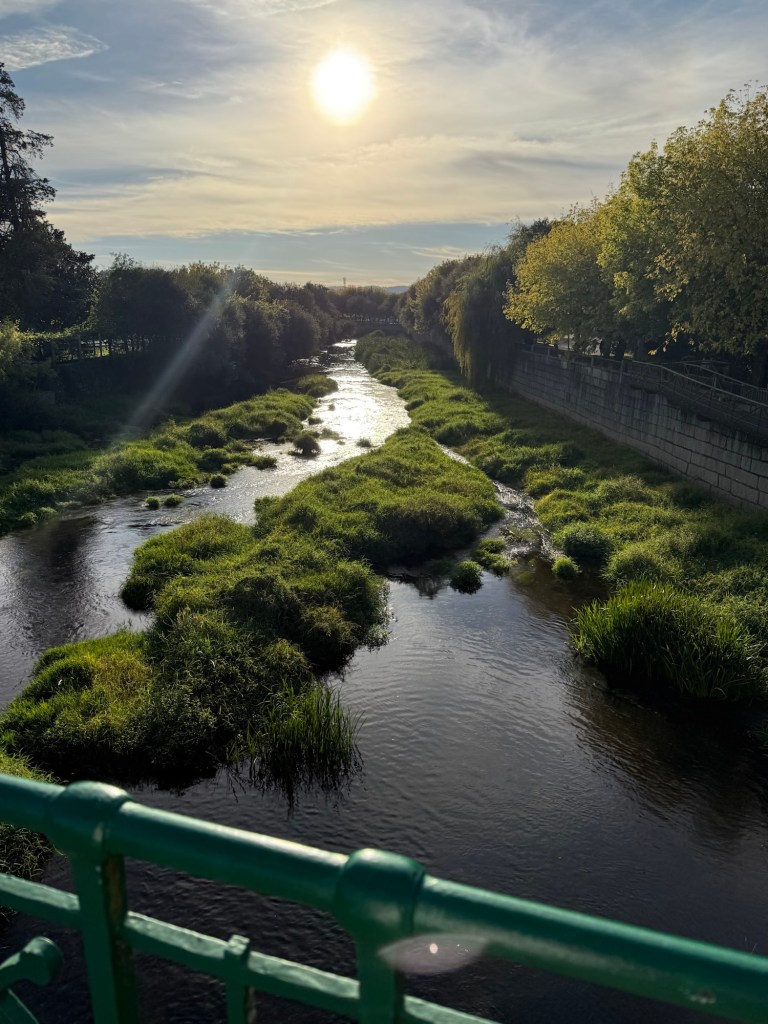


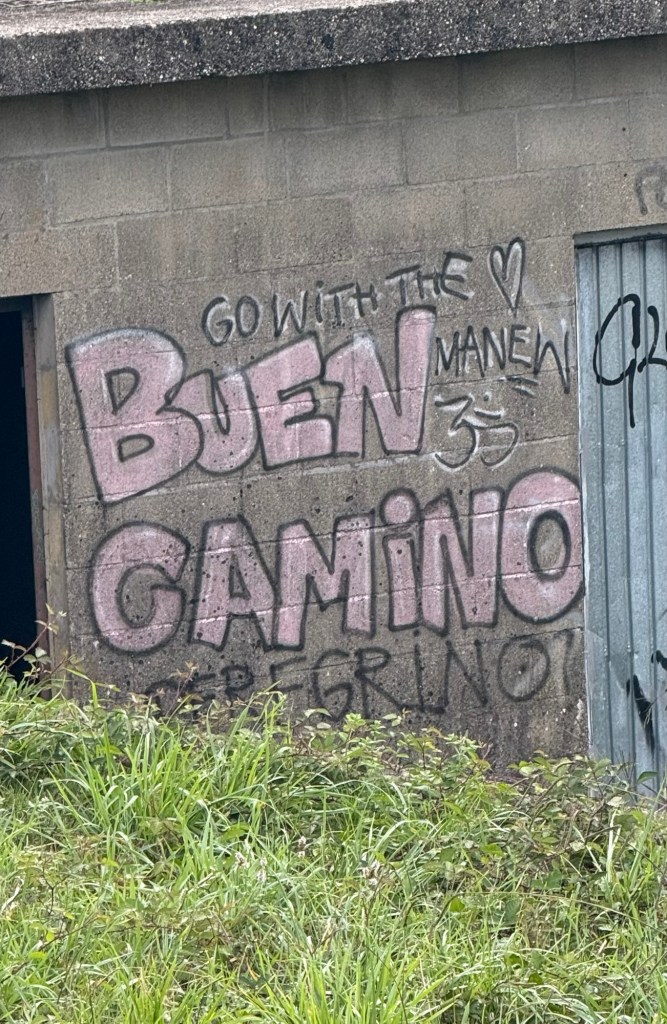
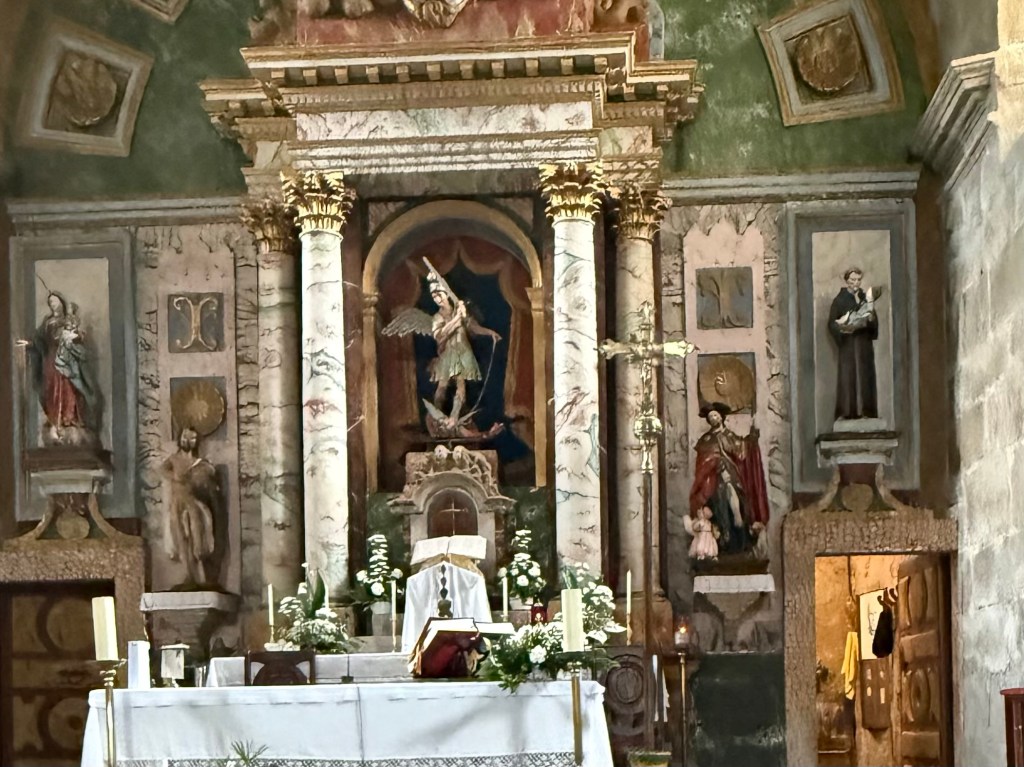
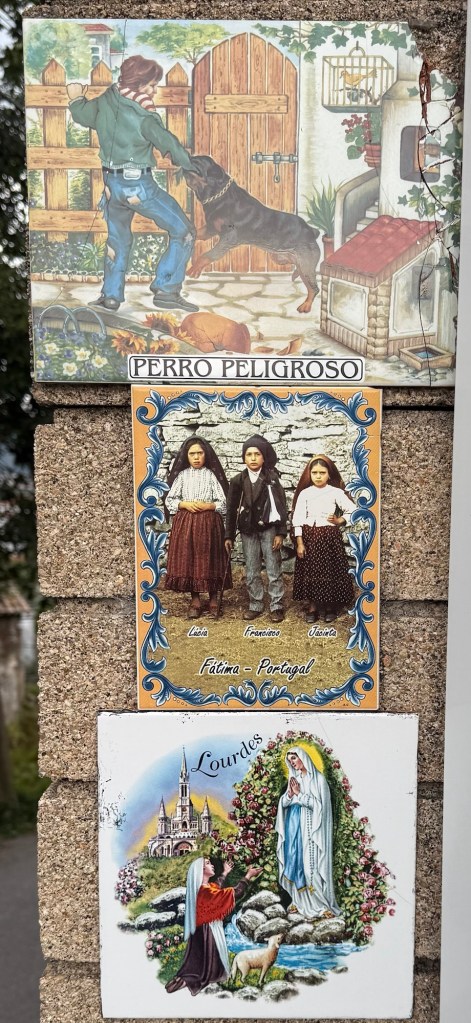
Our destination town of Padron greeted us with grey skies and lots of stone decor. We stopped and got rain gear on, and fortunately the downpour didn’t come til we were in the town. I’m happy- and surprised- I never had to hike a day in wet weather on this trip.
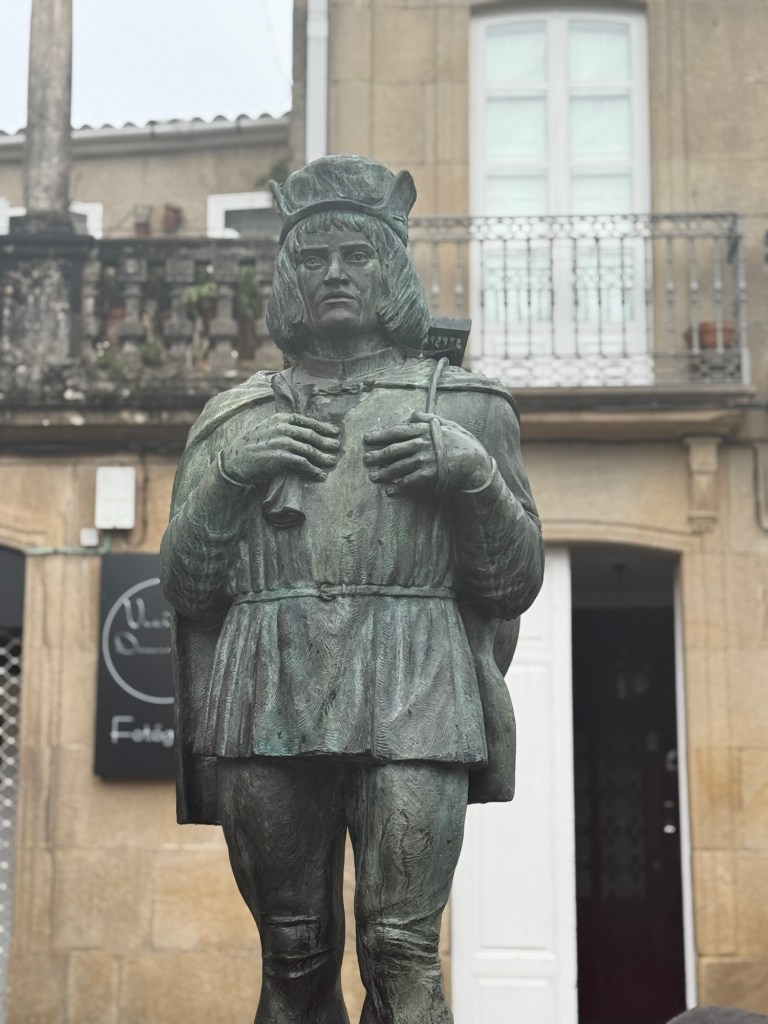


Sunday dawned grey but the weather prediction was for sun the whole 16-17 miles to Santiago de Compostela- the final day of walking! The walking paths varied a lot as the day went on.

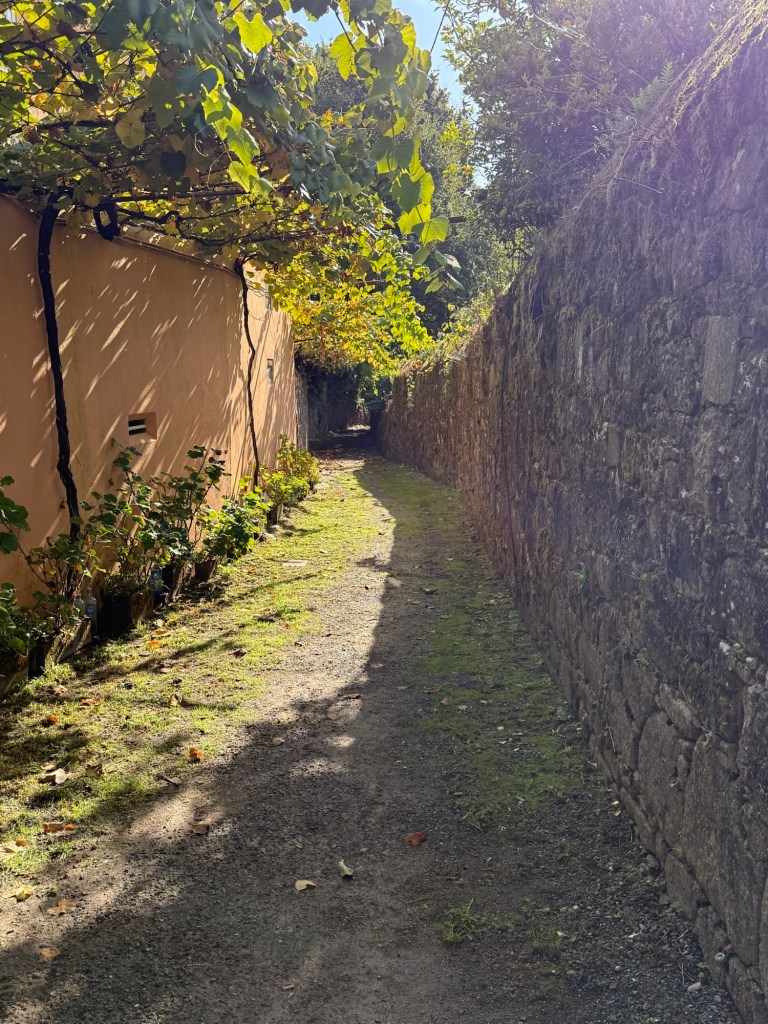

We were greeted by a man playing the bagpipes in the woods. Galicia has strong Celtic roots and I’ve heard bagpipes in several places now in this part of Spain.
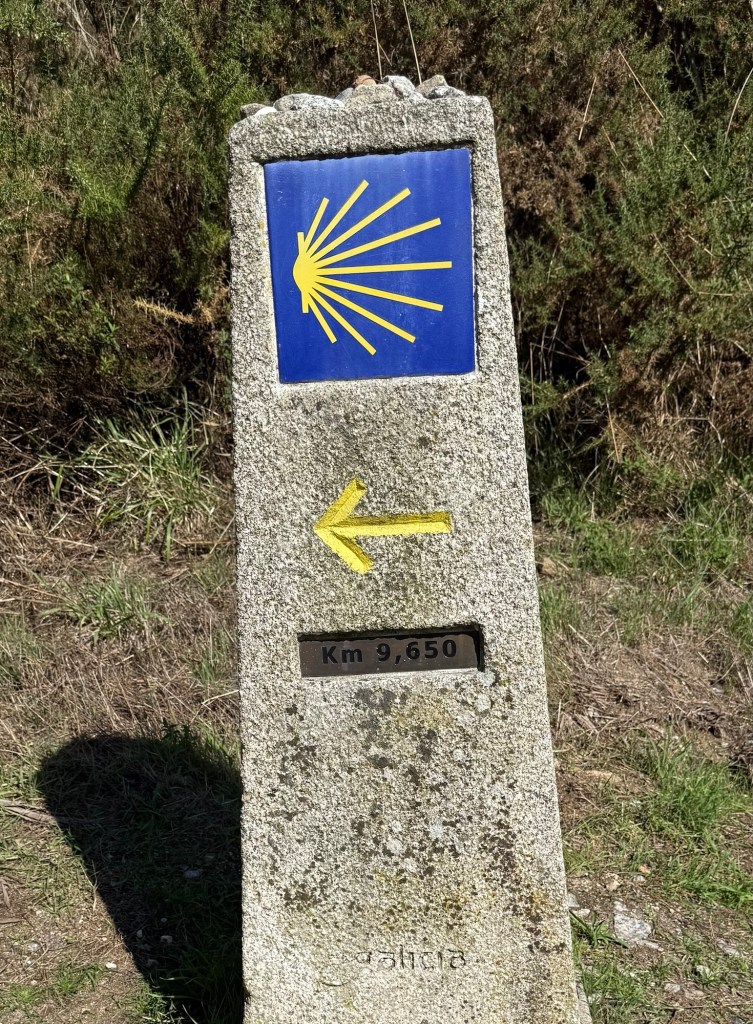
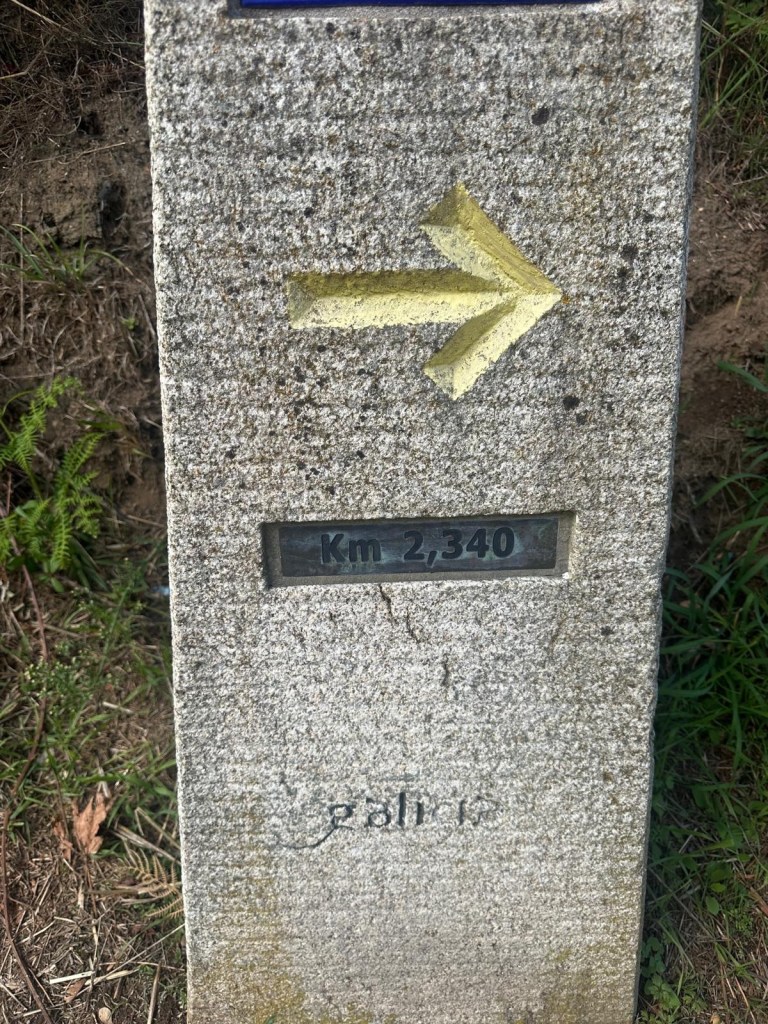
There were more pilgrims on the trails and not quite as much chatting. I think people were focused on walking and noting what the shell markers said for distance left til Santiago. No matter how many days people had been walking, it hard to believe the end was coming near. We joked about ‘what would the next week be like without walking many miles/kilometers each day”?
I was still seeing farm animals on the way, and the rose gardens in bloom. The roses were beautifully scented too.


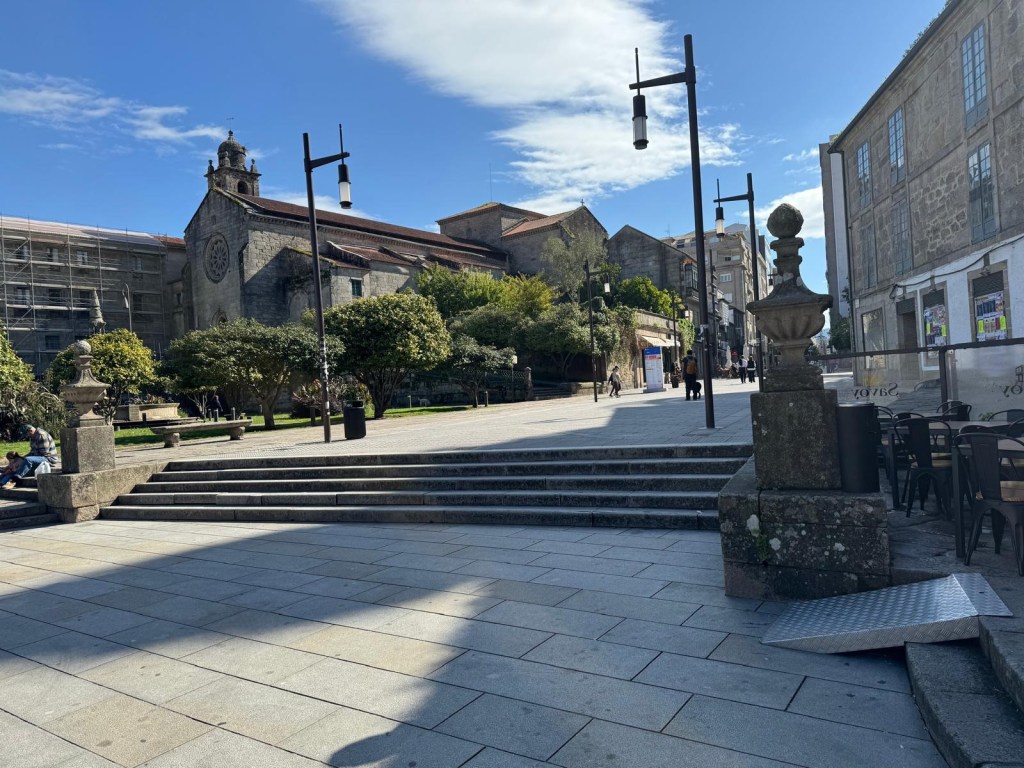

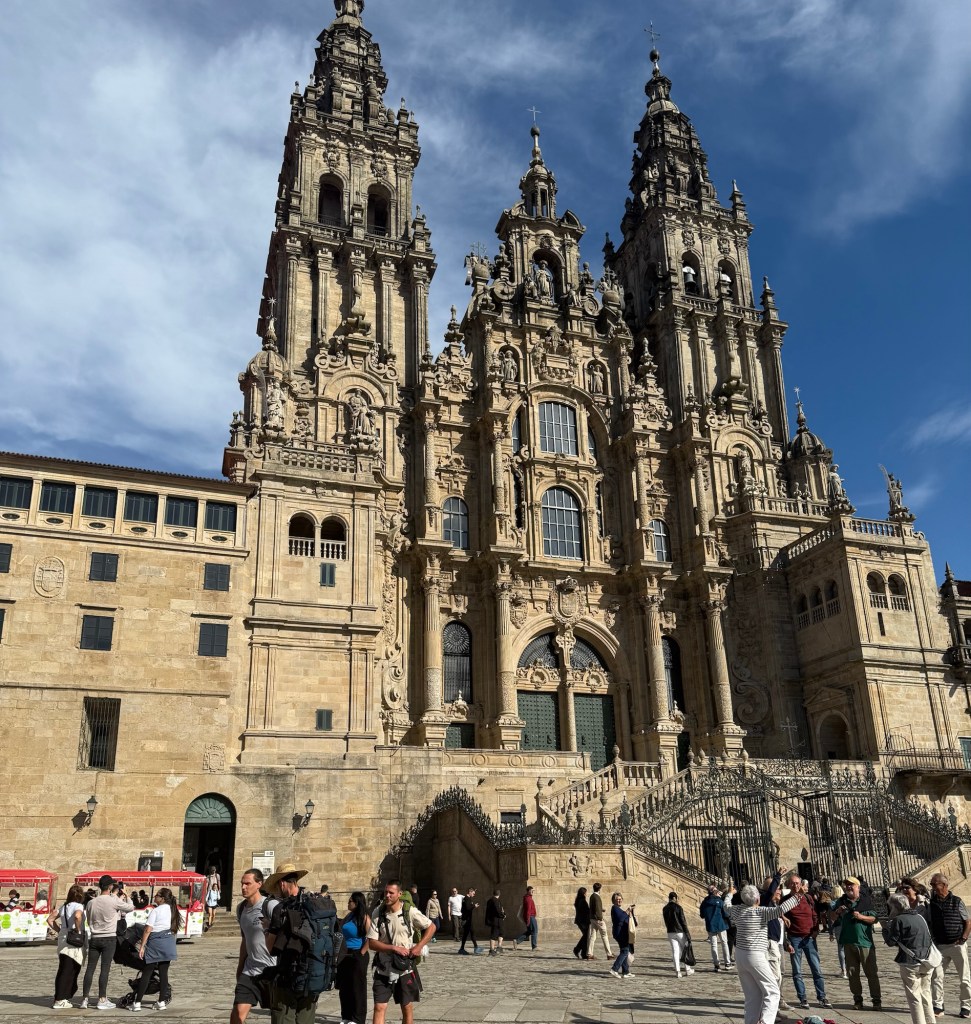
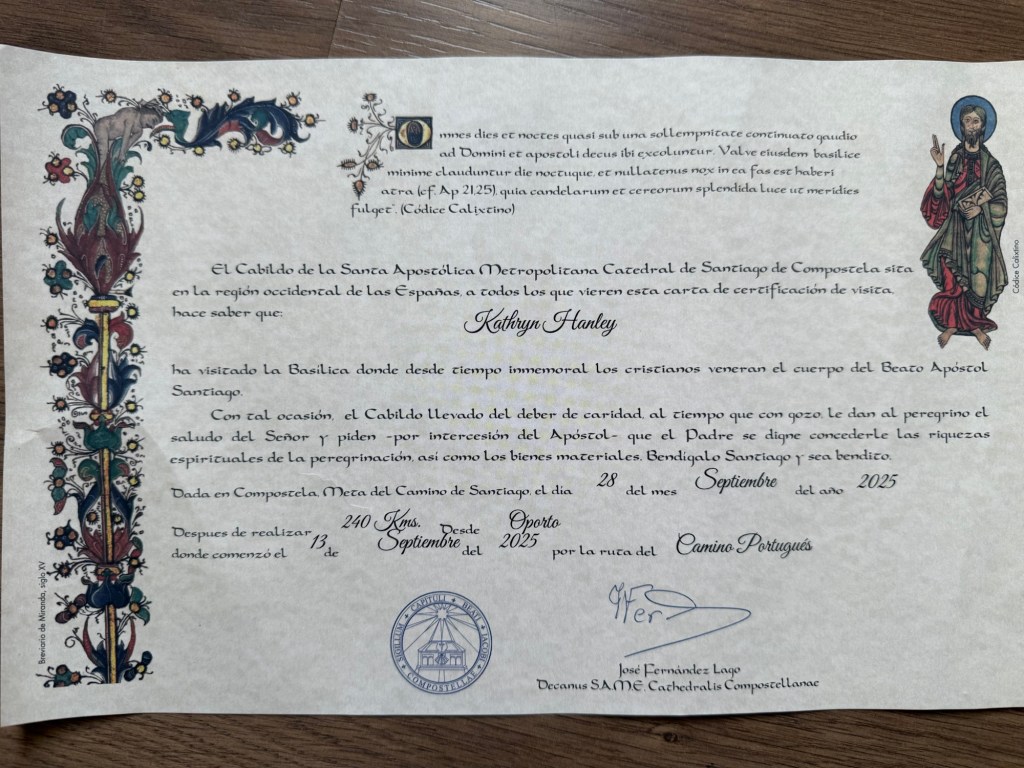
Sabine hadn’t walked the last day with us because her infected blister had re-opened. But she met us at the Cathedral and showed us where to go to register for the “compostela”- the official certificate that says a pilgrim has completed their journey. I had gone online a day before, as everyone has to, to register myself as a pilgrim. We’d joked that for those of us who selected “not religious” as a reason for walking would have to wait longer in line. But in fact, it was a little like getting a ticket for the deli. I showed the QR code I had from online registration and received a number to take in line. They even have a screen that tells what number is being called and what desk to go to. The woman who completed my compostela was an American retired ER nurse who’s volunteering for 2 weeks to do this job at the desk. She told me she’s walked the French Camino in 2019, and the number of people walking all routes has grown hugely.
My group of 3 German women and 1 British man had lunch together before we all went our separate ways. It was really nice to celebrate with them, and to recognize quite a few other faces of people coming in to the Cathedral square.
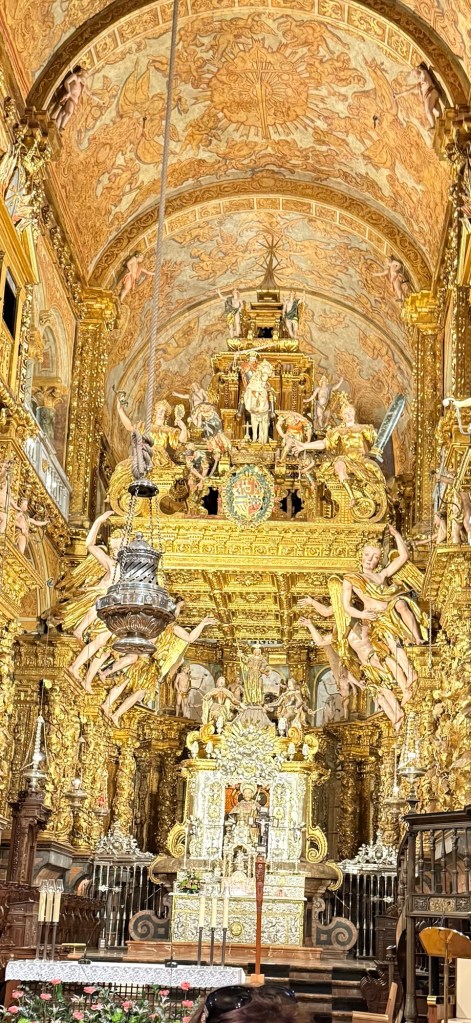
Even though I’m not religious, I wanted to see the ‘Botafumeiro”,where the thurible is swung back and forth with burning incense in it. Here is a link to a video on the Cathedral’s website if you want to see it:
I have no idea how they had so few people in the Cathedral when they made the video. Both times I went, the place is packed with people hoping to see this giant thing get swung back and forth high above our heads by 8 men pulling ropes to move it on its pulley. The incense is wafting everywhere as the thurible goes higher on each swing, the rising smoke symbolizing pilgrims’ prayers going up to God.
I stayed in Santiago for a few days to explore, rest and go out to the coast one day on a tour. The old city is all stone and winding streets and alleys. And it’s full of tourists and pilgrims. I’m sort of dismayed by the plethora of Camino merchandise in the shops all around the Cathedral.
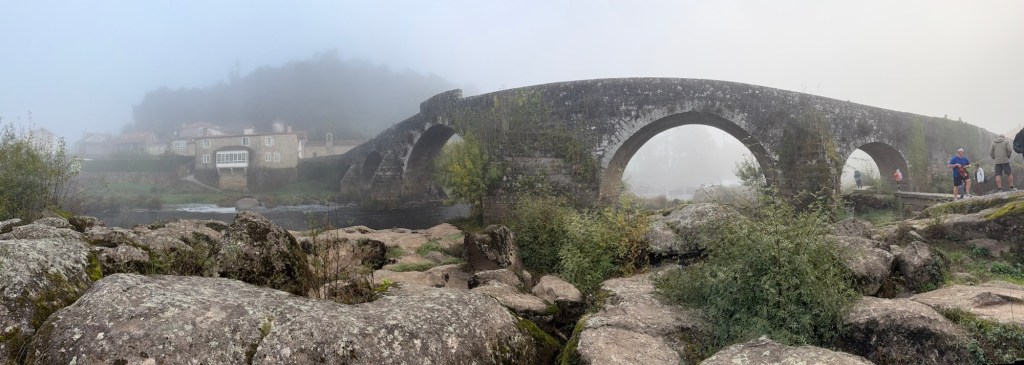
The day tour started with stopping on the way to the coast at this old stone bridge. It was cool and misty there, completely unlike the weather in Santiago and at the coast.
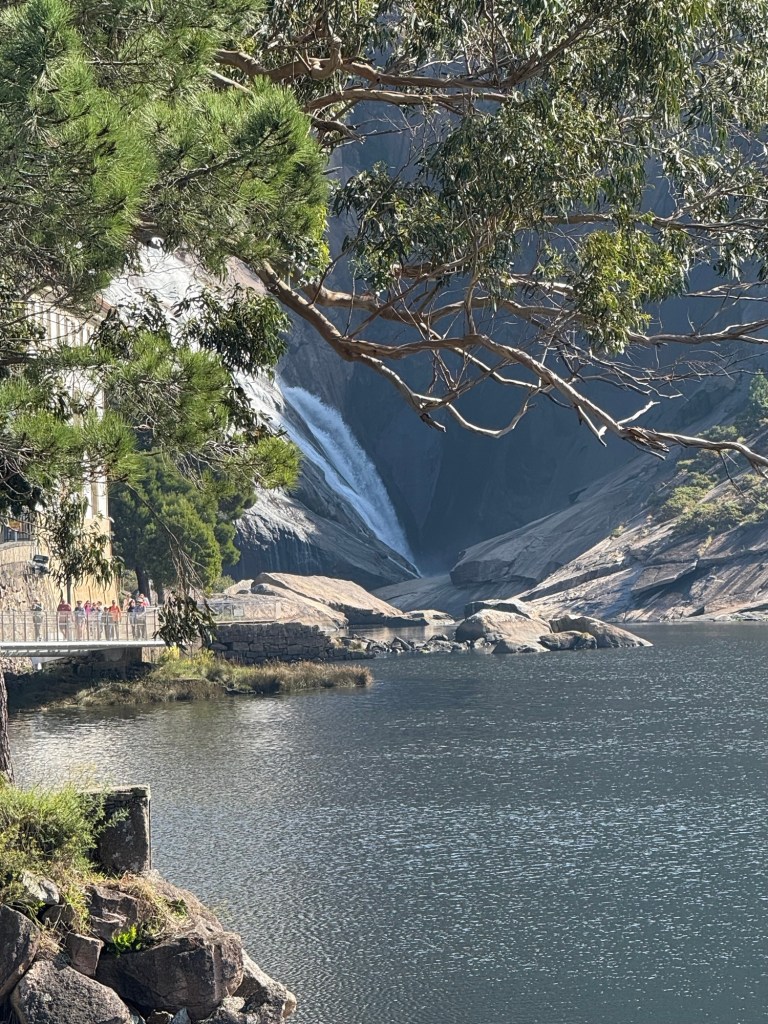
When we reached the coast, the beaches were beautiful white sand in protected coves. But the farther along the coast we went, the tour guide repeatedly reminded us that it is called the Costa da Morte (Coast of Death) for a reason. There’s a long history of shipwrecks along this coast due to rocks that rise up and can’t be seen by ships and strong currents.
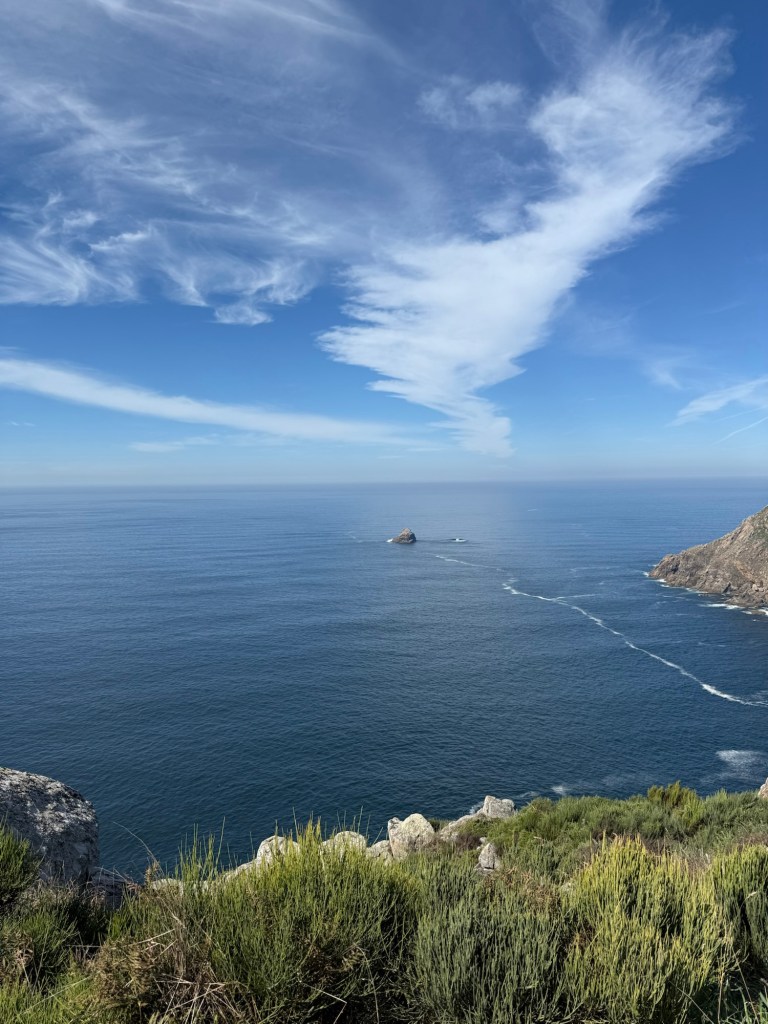
After lunch in the town of Finisterre, our last stop was the village of Muxia.
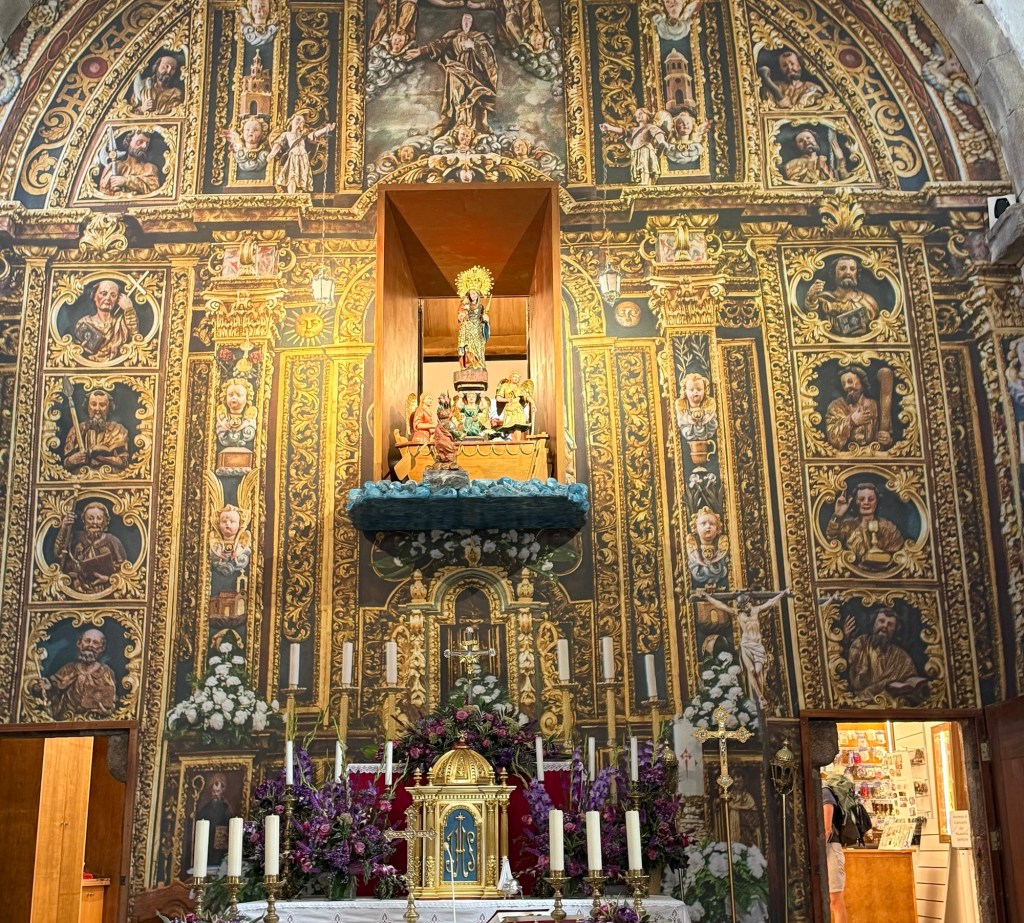
There are also model size or larger ships throughout the church, and memorial plaques outside to pay tribute to boats and crews who’ve lost their lives off this coast.

The day was so clear and beautiful, and the breeze was chilly outside the church. I liked it even better than being in Santiago at the Cathedral since it wasn’t mobbed with people everywhere.
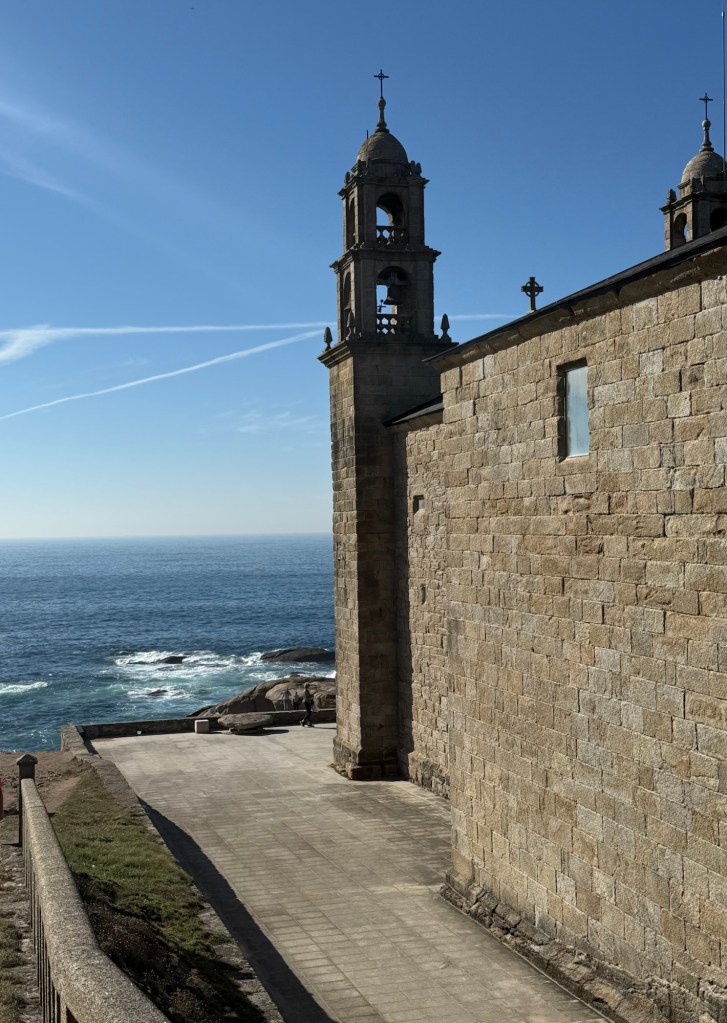


While I didn’t walk this part of the Camino, it felt like a fitting way to close my walking trip in Portugal and Spain. The greens, eucalyptus, roses, and the sea were all part of my walk, and their scents will bring it to mind often.
 Birdgirl’s travels