Berlin in WWII features a lot in historical fiction books I’ve read over the years. Since I had a few days before my Workaway in the North Rhine-Westphalia region, I decided to spend 3 days in Berlin. I was curious about it asa modern day city, and about how the horrors of WWII would be presented and acknowledged.

I saw this mural of Anne Frank the first evening I was walking around. She looks so young and alive. I was surprised there was a center dedicated to her in Berlin, and happy to read on their website about their focus on education and sharing Anne’s story with young people all over Germany. My wanderings around the city over the next couple days took me farther afield, and I’m sorry to say I didn’t get back there during opening hours.
Public transportation is really good in Berlin, and in between walking miles, I used trains, subway and buses. But mostly I walked. I heard a lot of Germans speaking English, and many people speaking other languages too. The city feels very international and not unlike New York in some ways. I stayed in Berlin Mitte area at Rosenplatz, the city centre where it seems to be a mix of very old and newer.

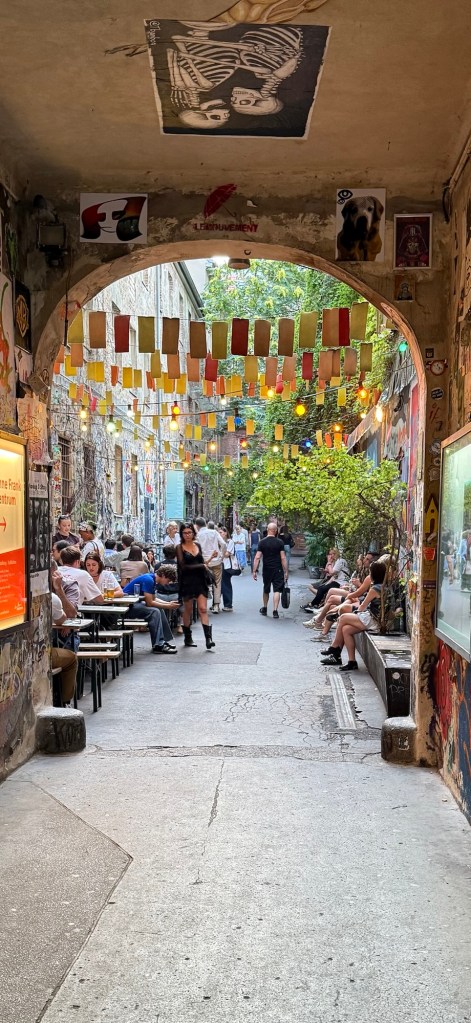


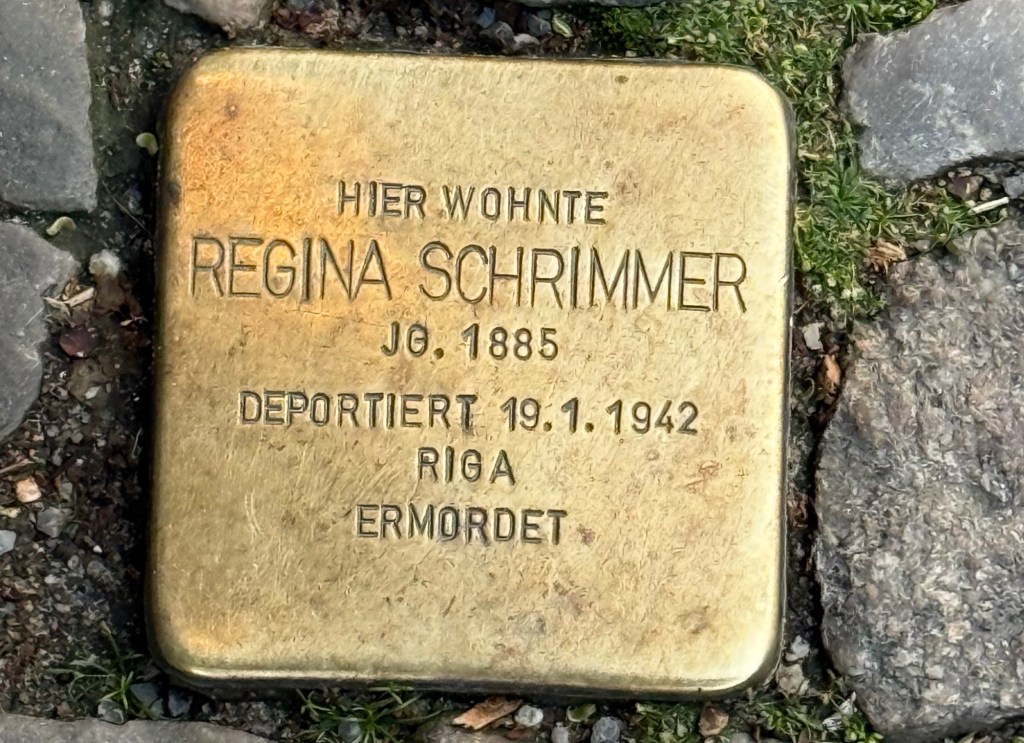
As I walked, I began to notice people stopping and reading small gold plaques in the sidewalks in seemingly random places.
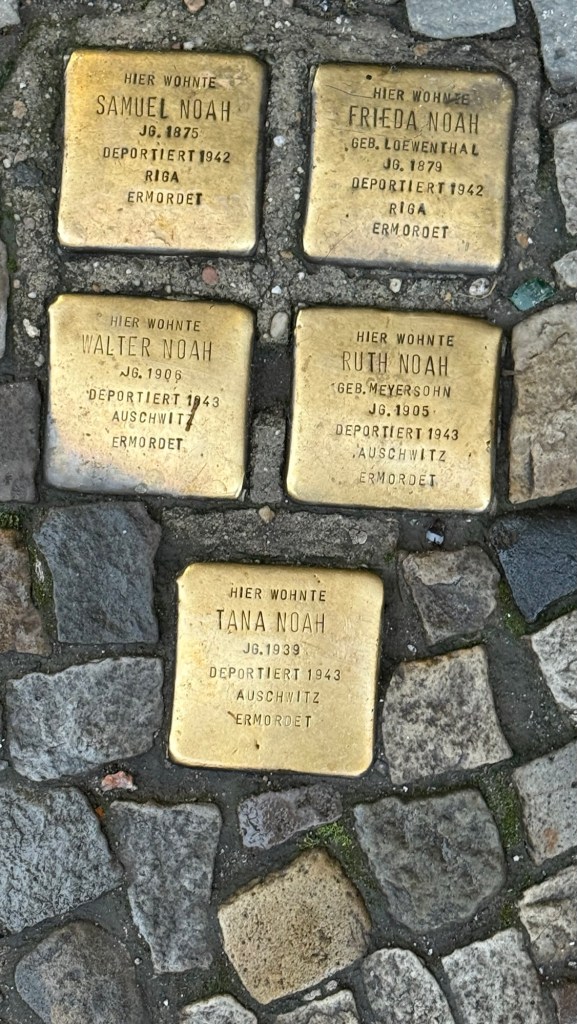
Once I saw one, I began to see more and more as I walked. They are also in other cities in Europe.

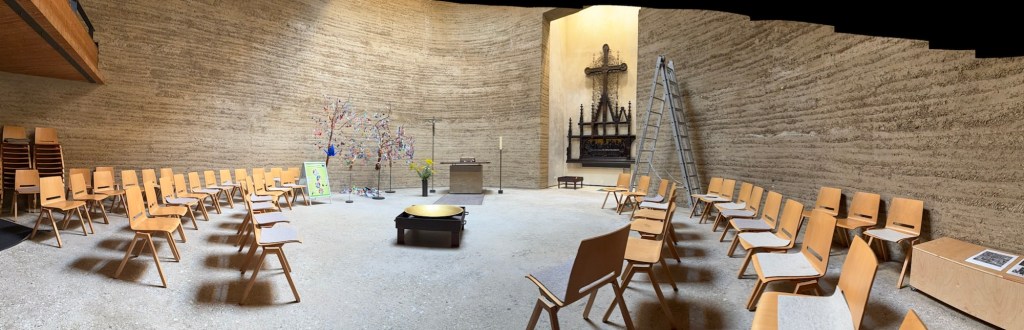
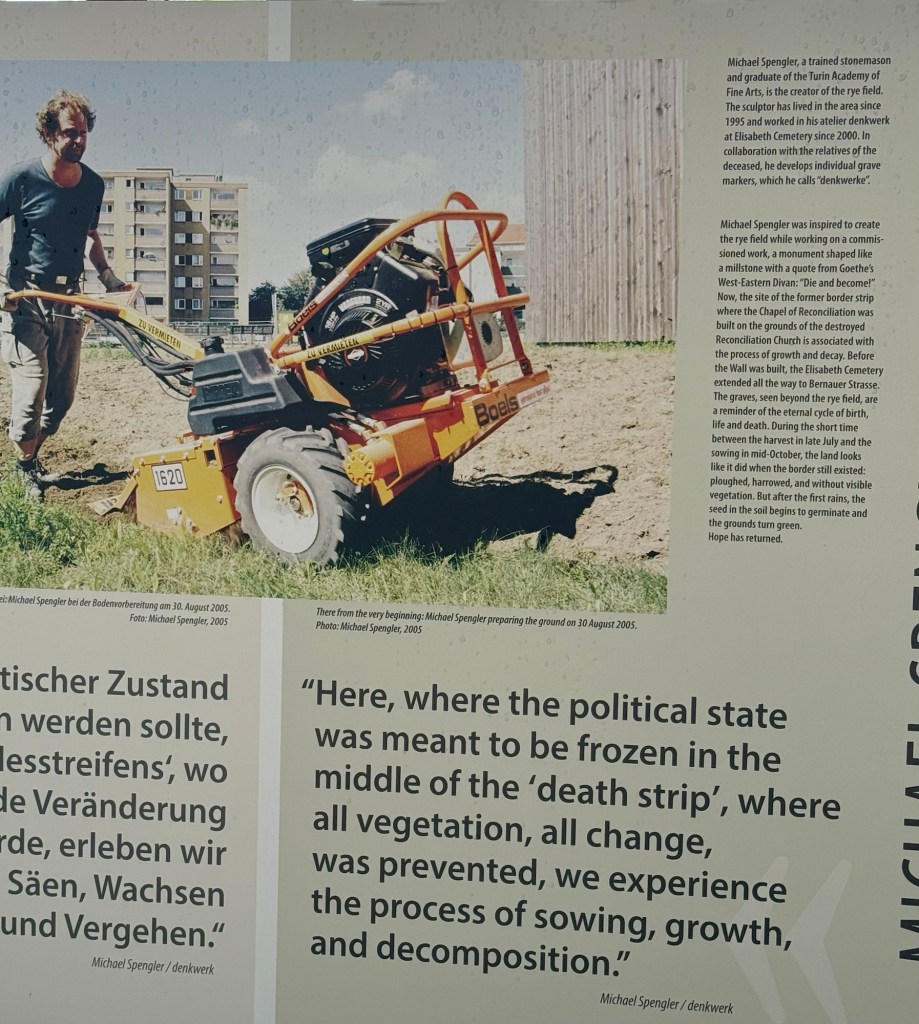
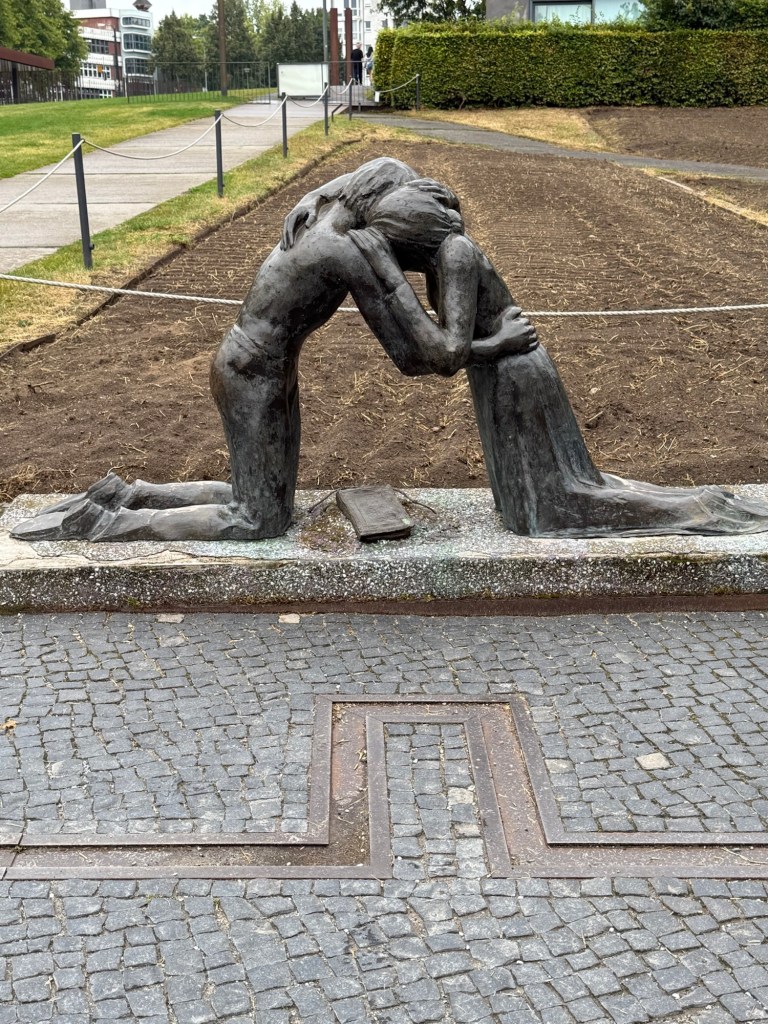
The Berlin Wall Memorial is at the corners of some neighborhood streets where the wall was first build. The information center they have on one corner shows photos of how the neighborhood was instantly divided, and has recorded interviews from neighborhood residents talking about how their lives abruptly and harshly impacted. Several of them told stories of their efforts to escape the Eastern side and how neighbors on the Western side helped them. On the opposite corner had been a church that was damaged in WWII and was in the ‘death strip” when the wall went up. The GDR (East German government) blew it up. What’s there now is the Chapel of Reconciliation, made from clay with glass, soil and rubble from the site mixed into it.




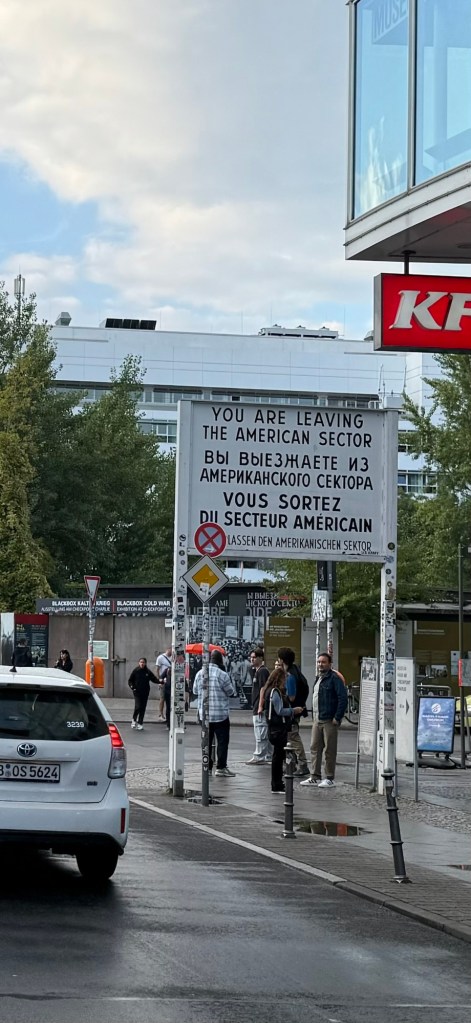
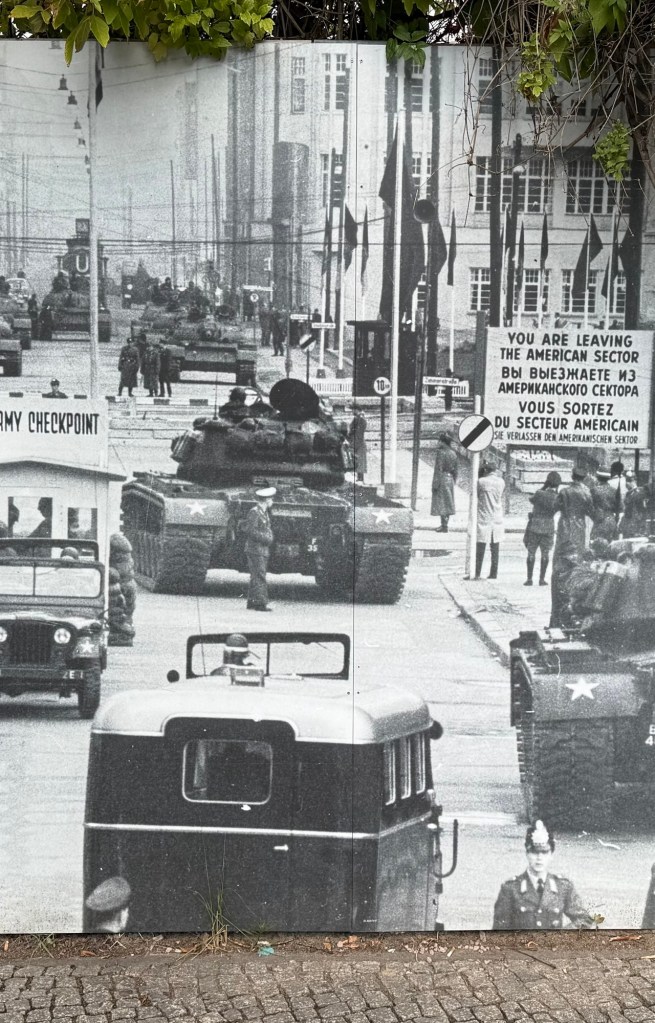
I visited Checkpoint Charlie later the same day.

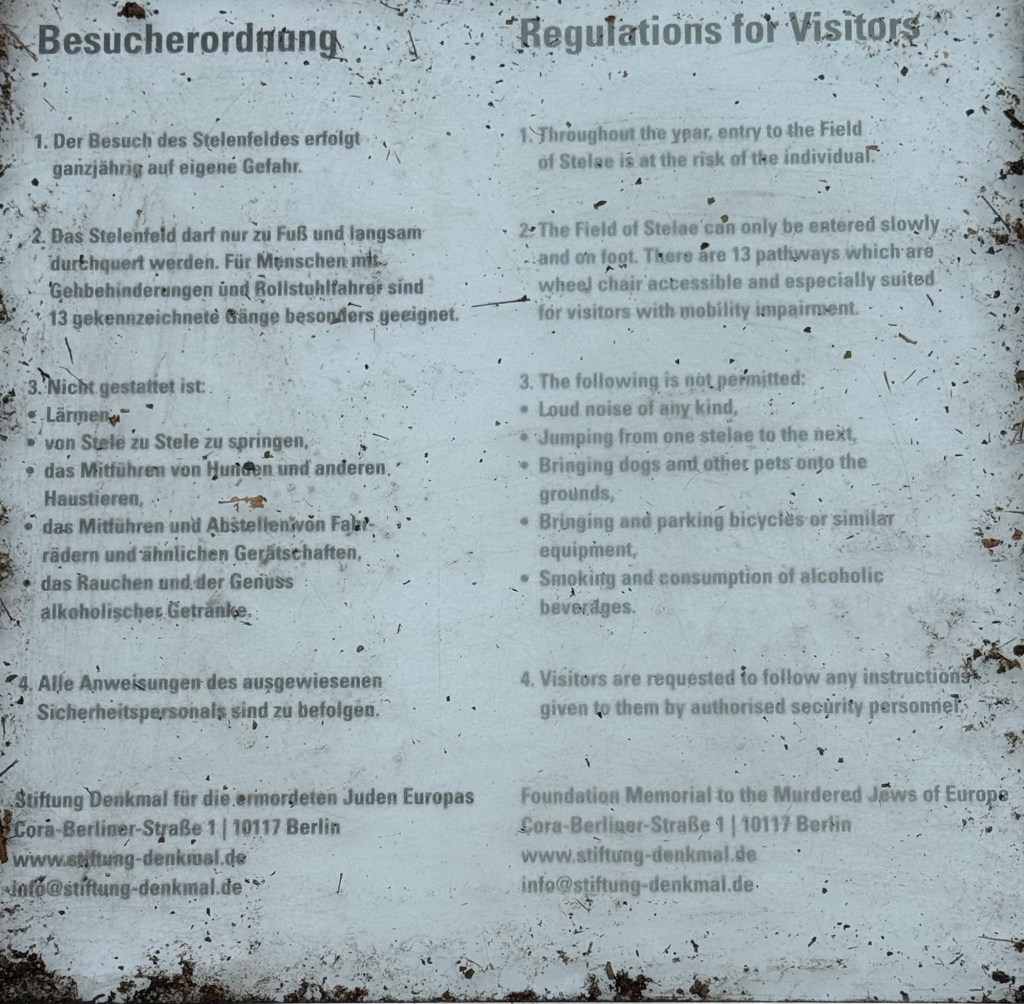
On my last day, I went to The Memorial to the Murdered Jews of Europe. It covers a city block or more, and has an underground information center.


 Birdgirl’s travels
Wow! Berlin seems super hip and heavy. heavy stuff. What an education. k.k.
LikeLike