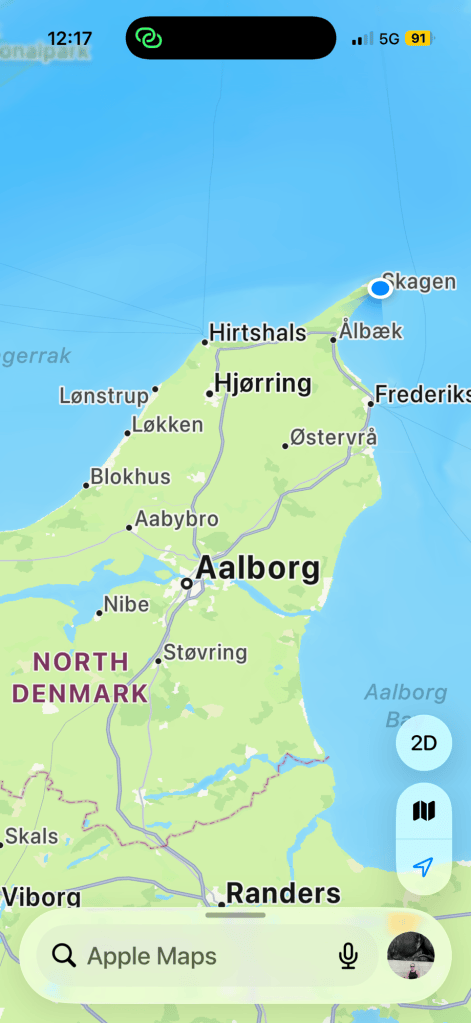
After an amazing week on Texel, Will and I headed to Denmark. I’d found a self-guided walk through Wild Rover Travel along the north Denmark coast from Hirtshals to Skagen over 3 days. We had an afternoon in Aalborg, Denmark’s 4th largest city, after a short flight from Amsterdam.
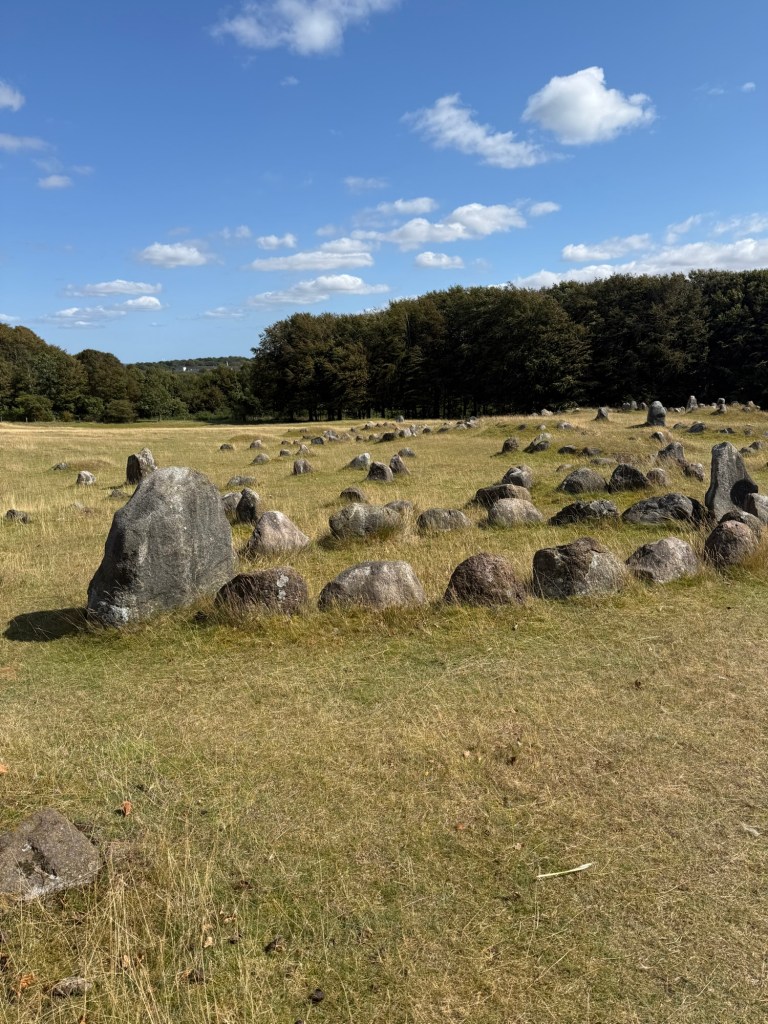
Will went off the explore the Utzon Center to see work by the architect Jorn Utzon, while I found my way by bus and walking to the Viking burial site and former settlement. There were many different sizes and shapes of graves, each marked by arranged stones. The entire site had been covered by sand blowing in from the beach miles away, unprotected due to deforestation and the strong prevailing winds. The graves and evidence of houses were excavated in the 50’s. On a beautiful clear day, it was hard not to feel the sacredness of the place. Artifacts from homes and graves have been found over the years and are kept in a Viking museum outside of Aalborg.

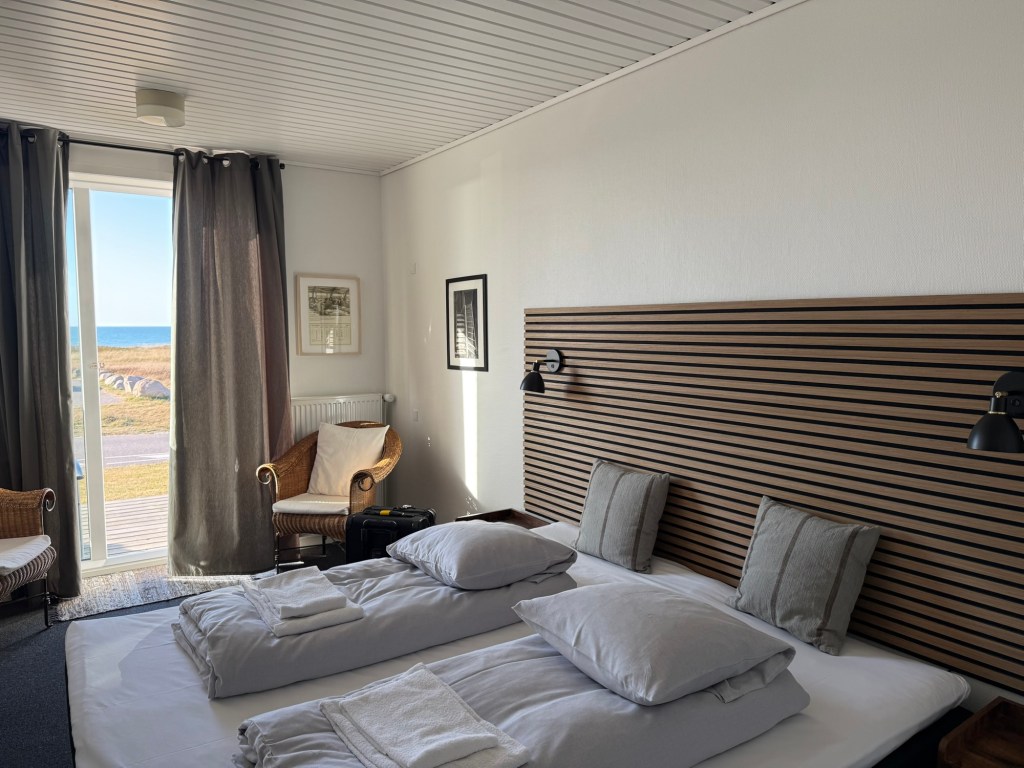
Hirtshals is a working port, an easy train ride from Aalborg and home to many fishermen and commercial boats. It’s also the port for the large ferries that go to the Faroe Islands, Iceland, Norway and Germany. Those ferries are really big! We saw at least 3 arrive/ depart as we walked along the harbor after a fantastic dinner of local fish and smoked salmon. We’d found a local restaurant with a line for ordering before choosing your seat, all of which gave great views of the harbor.
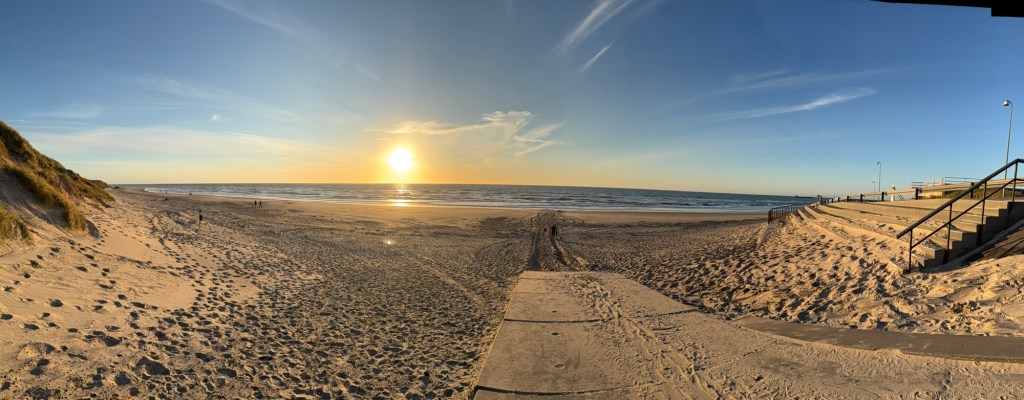
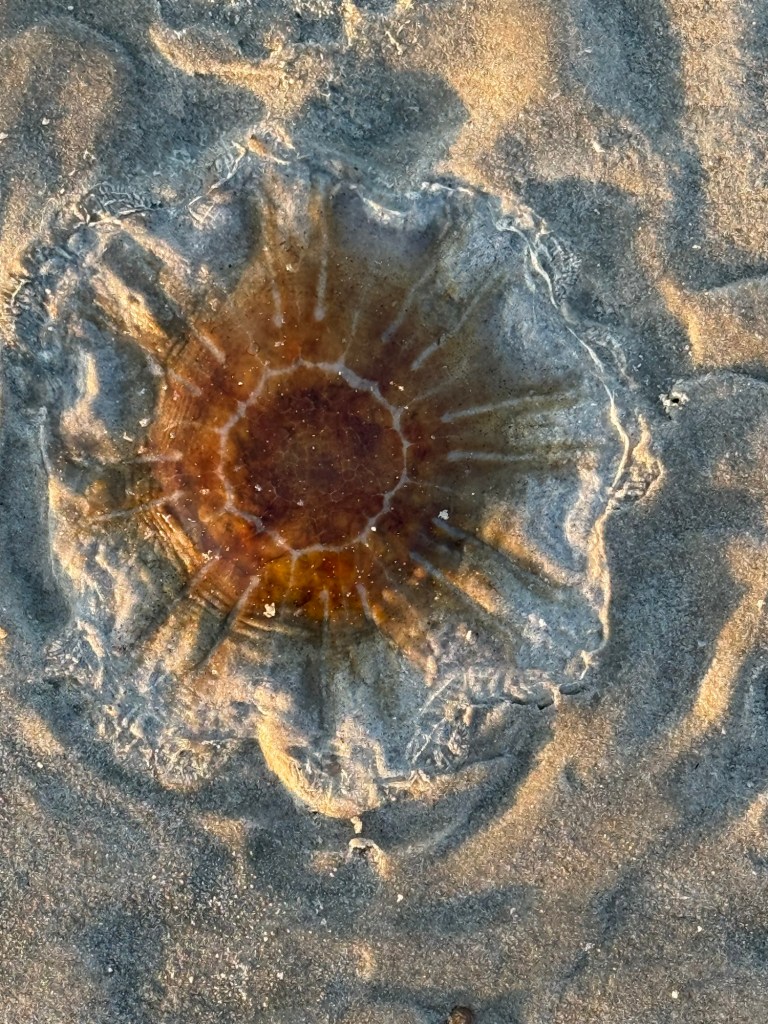

Walking Rover Travel has a very good app to follow the walking paths, but the sign posts were helpful too at times.
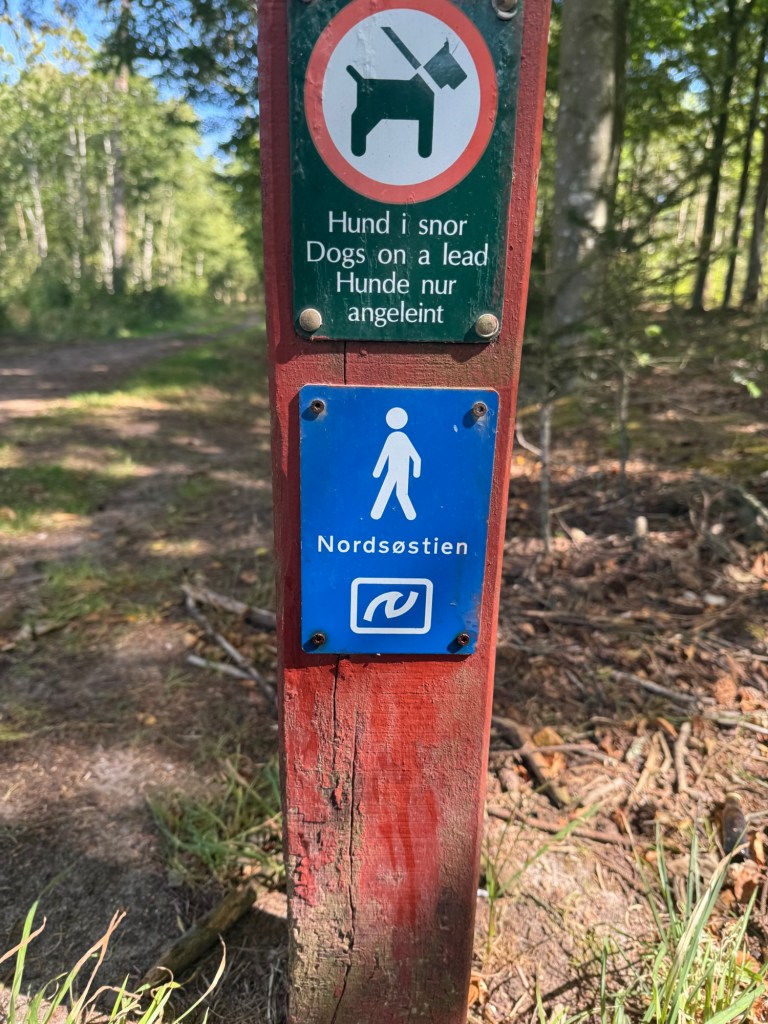
The first day of walking was about 12 miles in all, winding through forest paths, grassy tracks and dune plantations. In Danish, these are kiltplantage, man-made/built forests that are maintained in an effort to fight the drifting sands that covered villages, grazing fields and wet lands. At first they planted sea grasses and other low growing plants in the dunes, but then turned to planting trees of various species. It takes years obviously to have trees grow big enough to be effective against the wind and sand. Walking through a dune plantation is like being in a valley of low growing bushes and bog with dune hills up and down all around. The heather is a beautiful purple and there are often tiny flowers of yellow, red and orange interspersed. If anybody wants to read more about dune plantations, here is a good article. The Danes have been battling the wind and sand for hundreds of years.
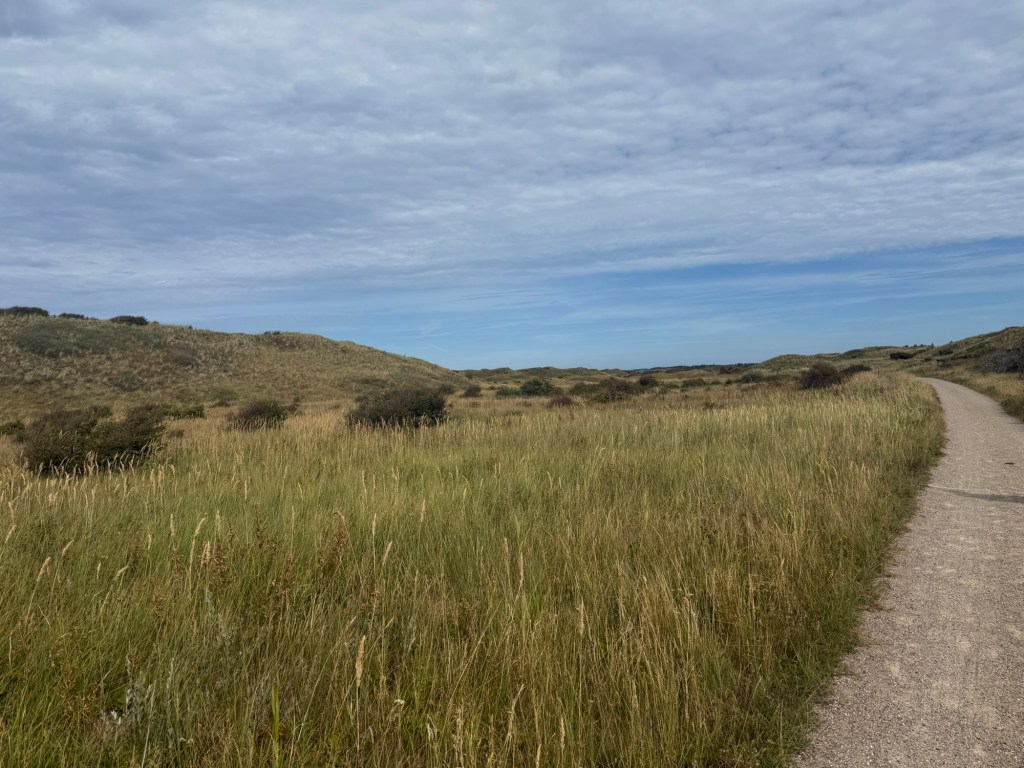
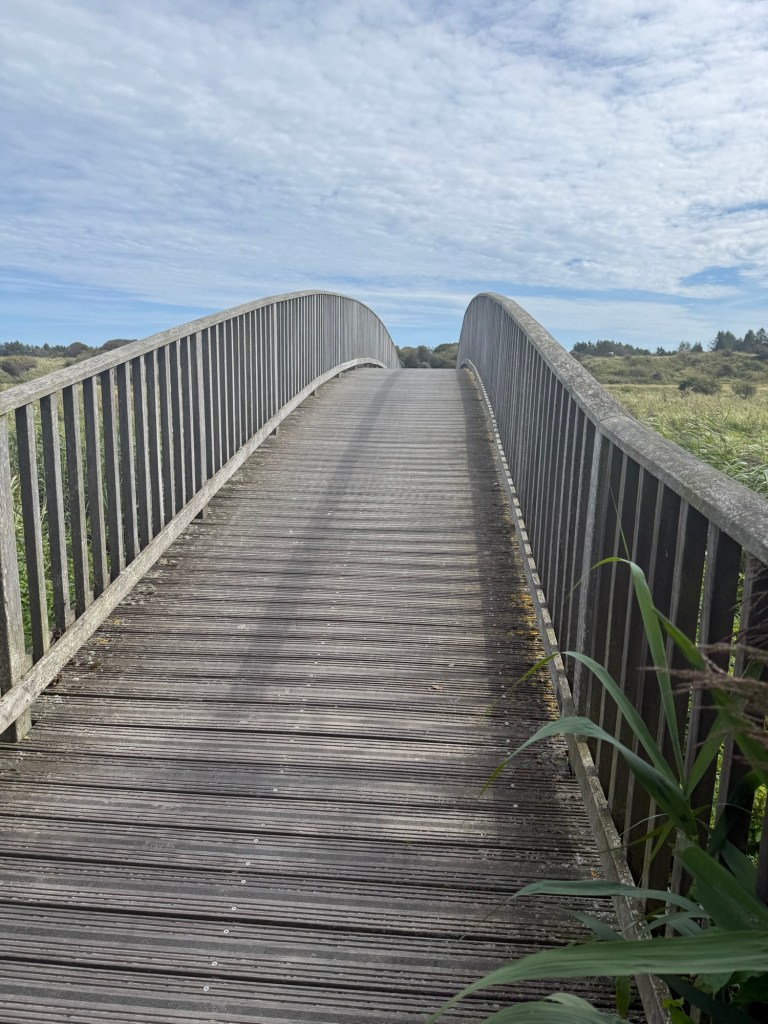
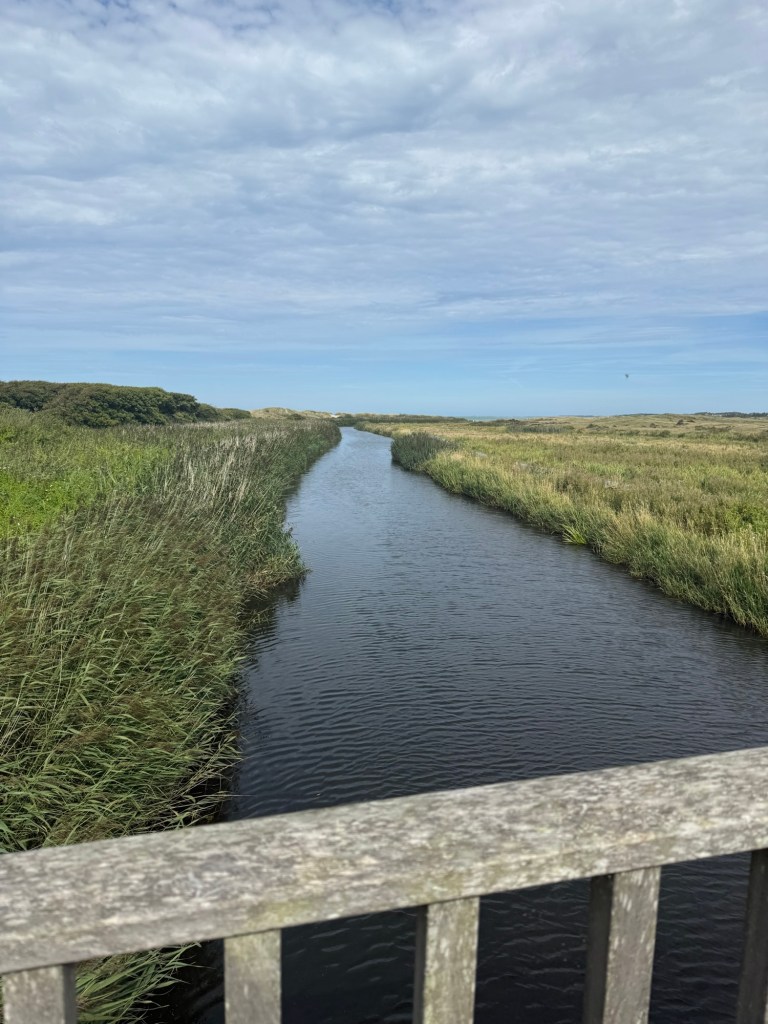
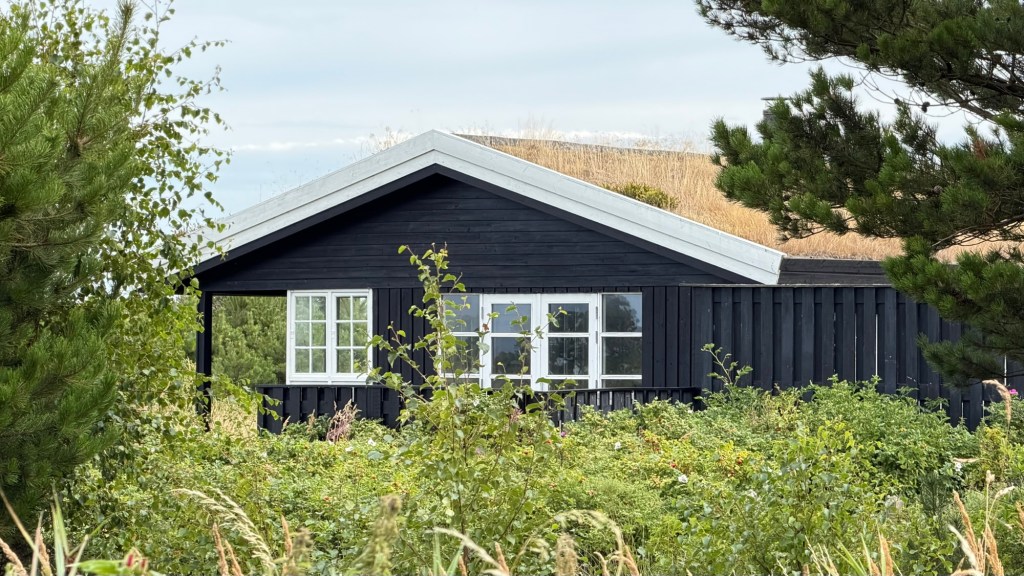
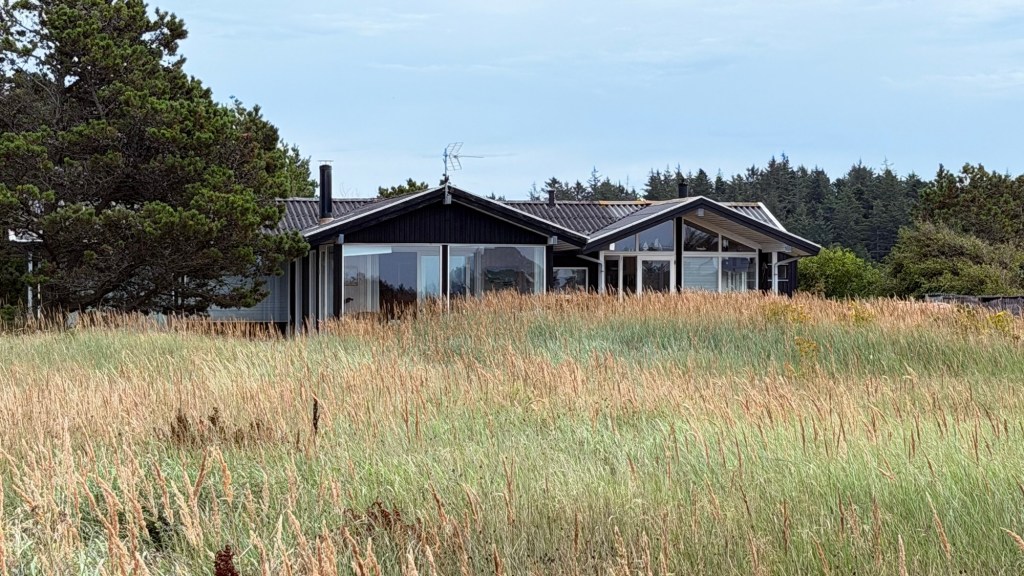
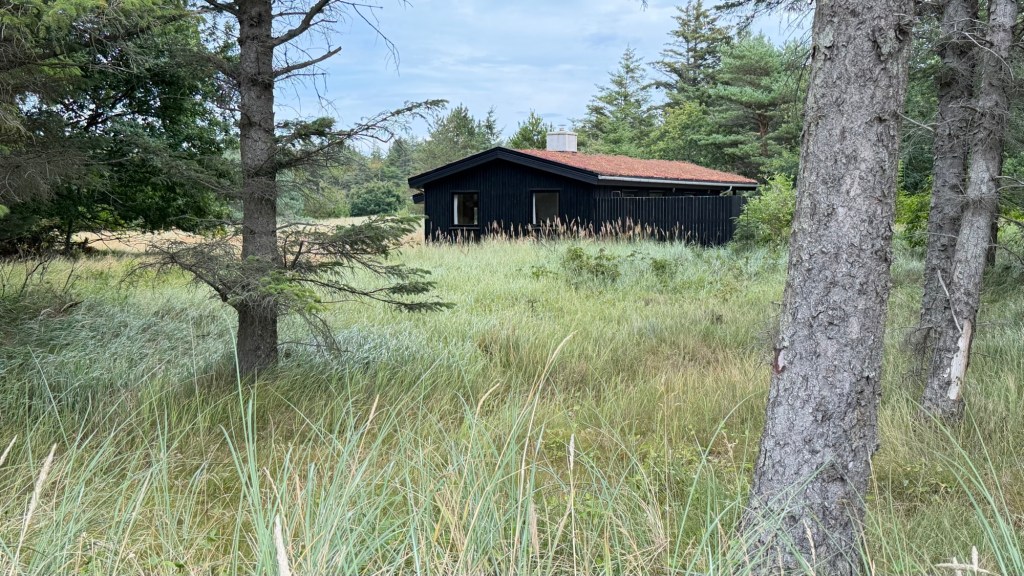
The end of the first day had us walking a long flat beach and then up along a river to the town of Tversted. Along the way, we’d seen a few bikers and local folks walking dogs, but no one else who seemed to be walking the coast.
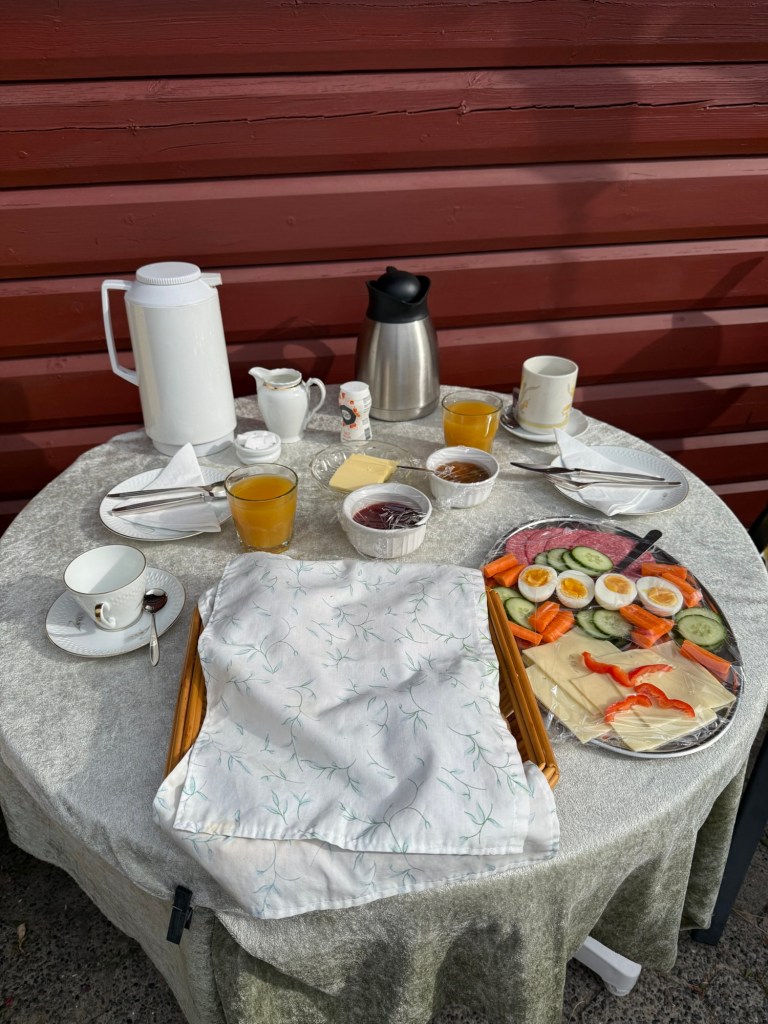
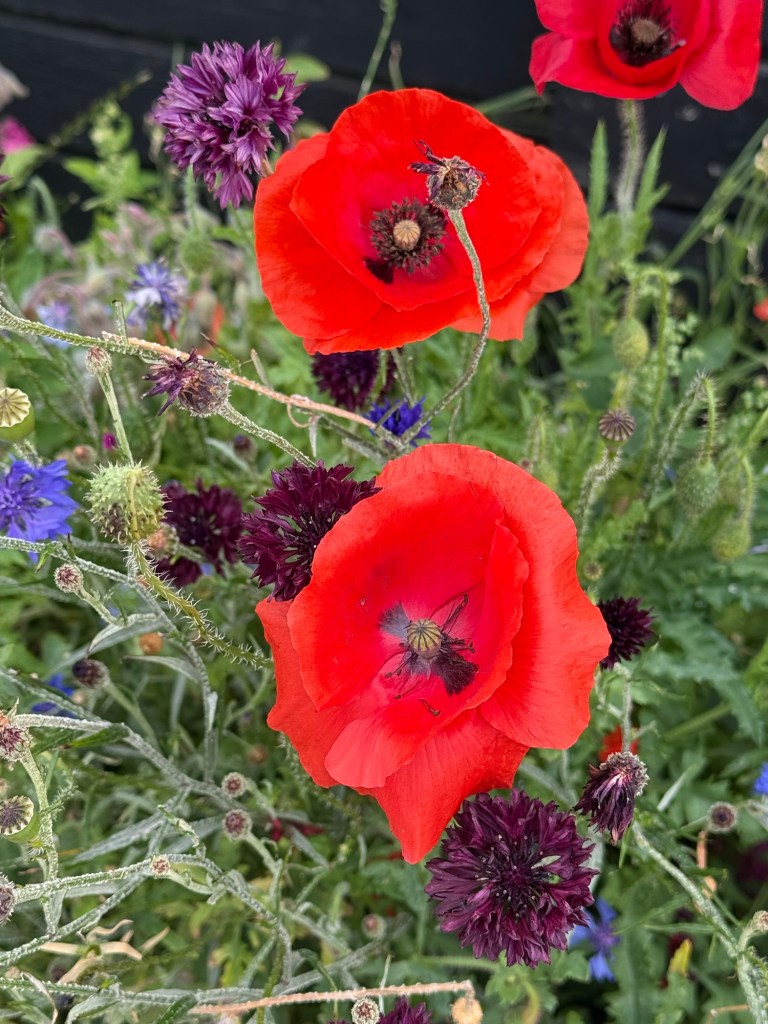
We stayed in Tversted, in a tiny, very neat outbuilding owned by our hostess Anne Marie. She showed us around the garden and arranged to bring us breakfast in the garden the next morning. She didn’t speak much English and the only Danish I can say is thank you (tak) so we did a lot of smiling at each other. The feel of the little place was 1970’s comfort- we loved it! It was so nice to have a cosy place to return to after dinner in town and to rest up for our next longer day of walking.


Oh Kathy!!!! Such a treat to see the world through your eyes. Lucky you and Will to be traveling together and… so much walking in nature. All of it. Thanks for sharing your wonderful writing and photos. XO Elizabeth
LikeLike
What a great picture of the northern coast! Love the graves and of course, the place you stayed. Thank you & love
LikeLike