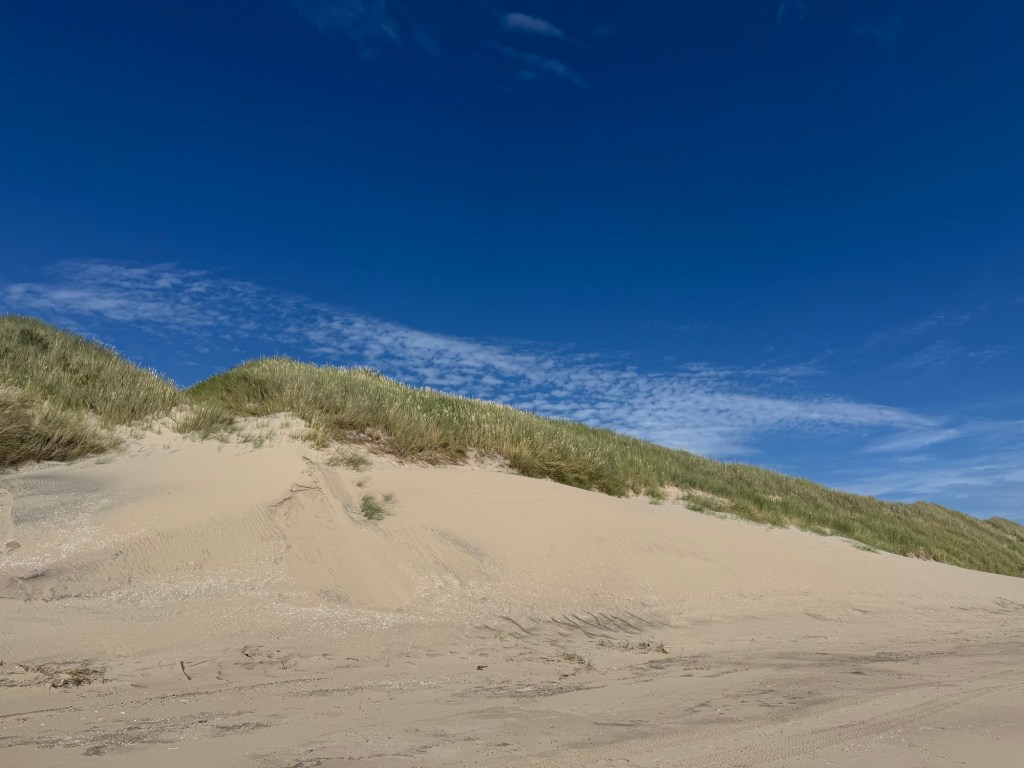
Hotel Inger gave us a hearty Danish breakfast to fuel our 8-9 mile day. The town of Hulsig (pronounced Hulsee) is very small so it was easy to find the trail near the train stop. The trail followed a bike path and then left the forest to wind through the dunes again. Our legs were still tired from our dune hike the day before. When we stopped to lay in the sun, we fell sound asleep! We slept for over an hour, that deep sleep that feels like you swim your way out of it,and emerge feeling like everything looks new.
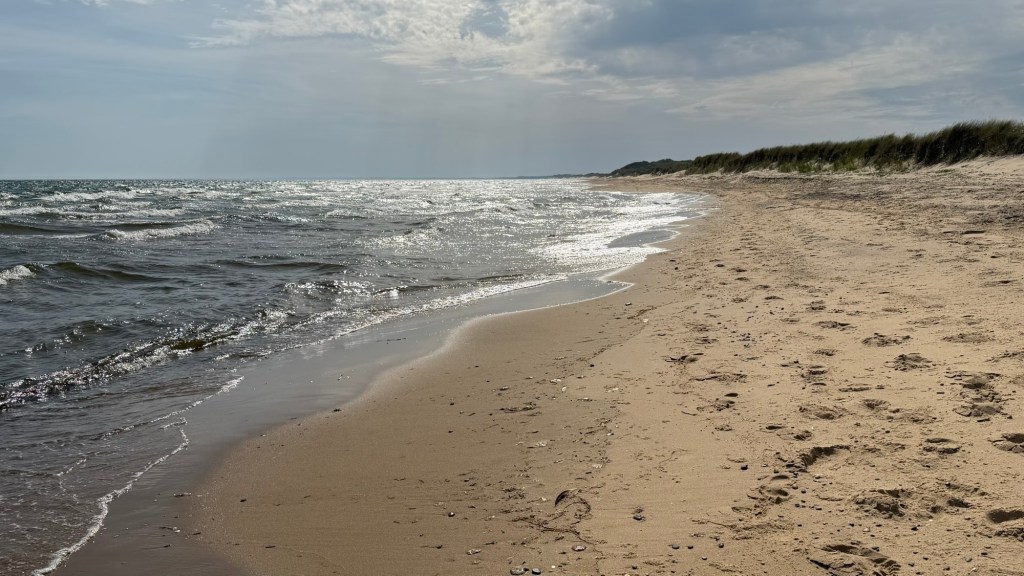
The walk felt shorter striding along the beach that afternoon. The colors and light in the sky were shimmery. No wonder painters were drawn here in the late 1800’s.
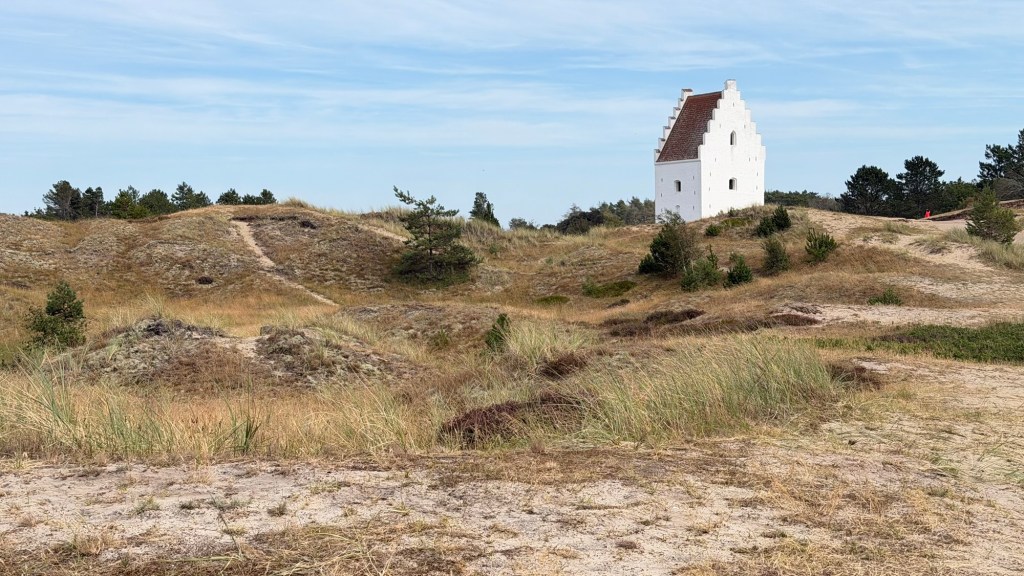
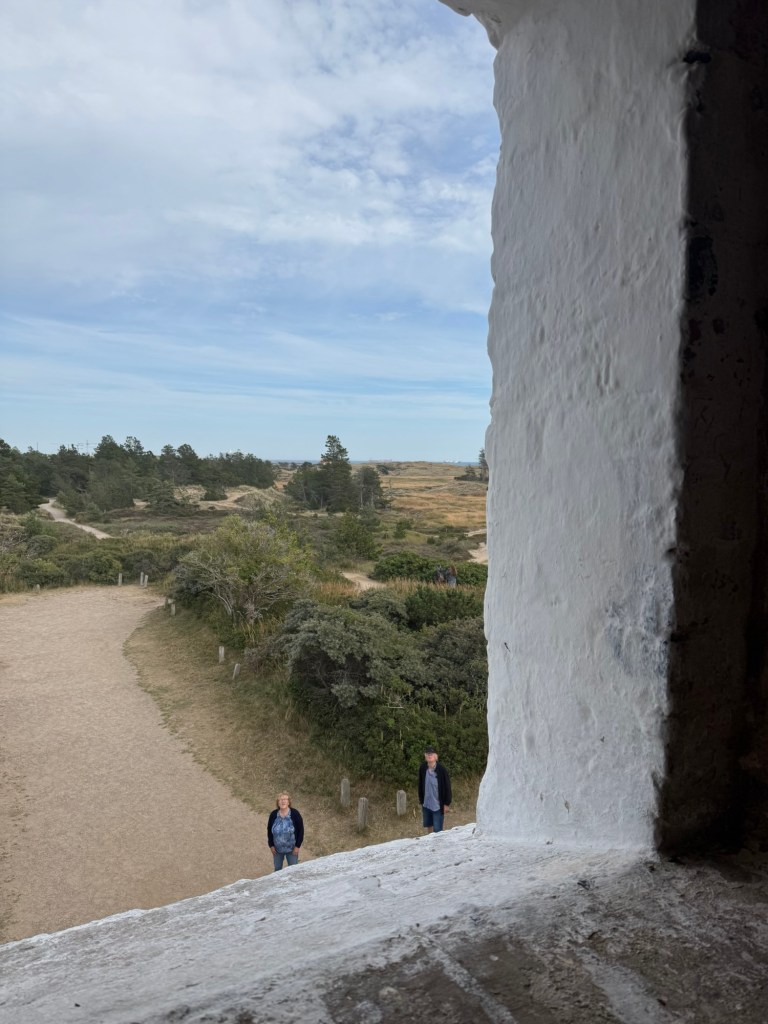
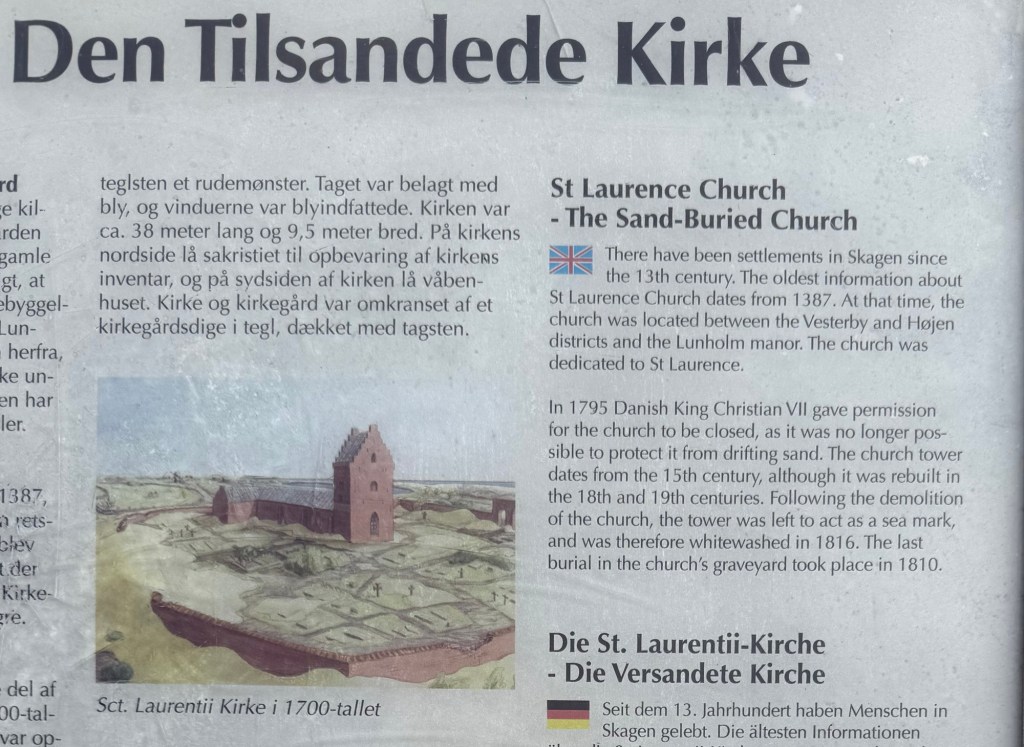
A turn back into the dunes brought us to the the sand covered church. Sand began drifting from Rabjerg Mile to cover the church, a village and land around the church in the early 1600’s. By the late 1700s the people had to dig out the entry each time they used the church! The church was closed by royal edict and demolished except for the bell tower. It’s empty inside with a narrow stair that goes up inside.
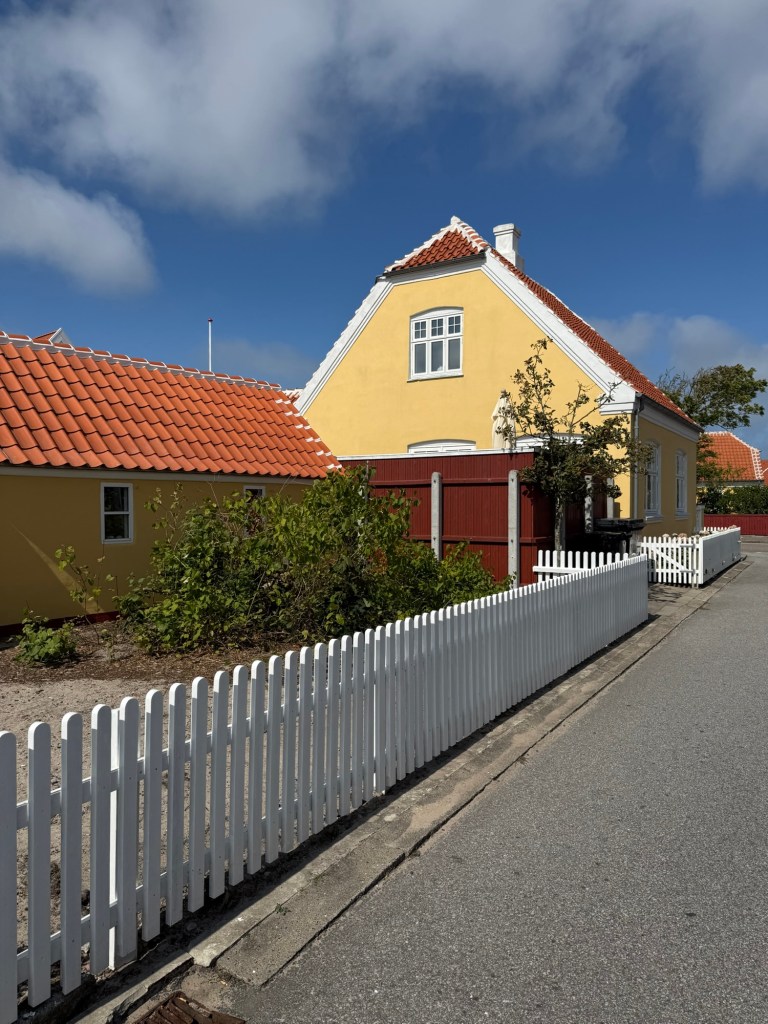
The coastal walk ‘finishes’ in Skagen, the port town at the top of northern Denmark. It’s very pretty with yellow houses, lots of boats of all sizes, gardens, shops and museums. Artists began coming here from other parts of Denmark, Sweden and Norway in the late 1800’s because of the beautiful light and landscape. We stayed two nights to explore the town and the Skagen Museum.
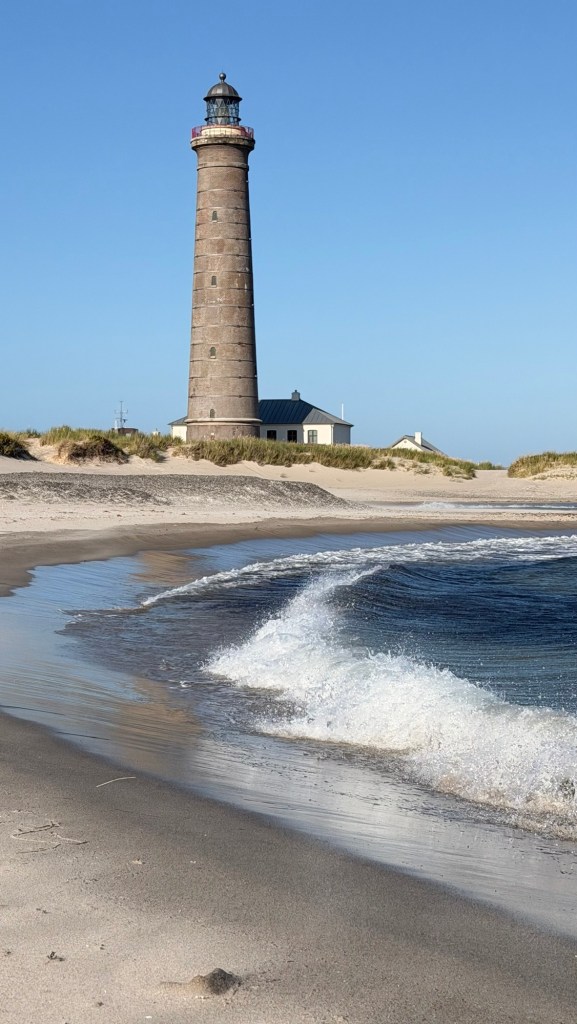
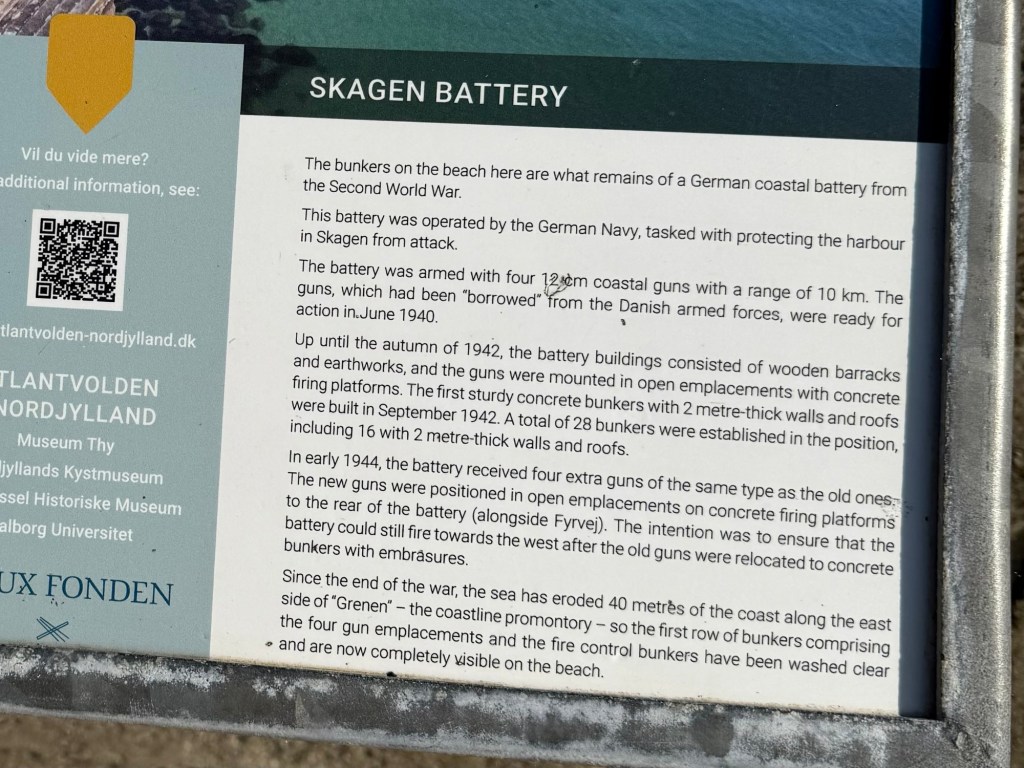
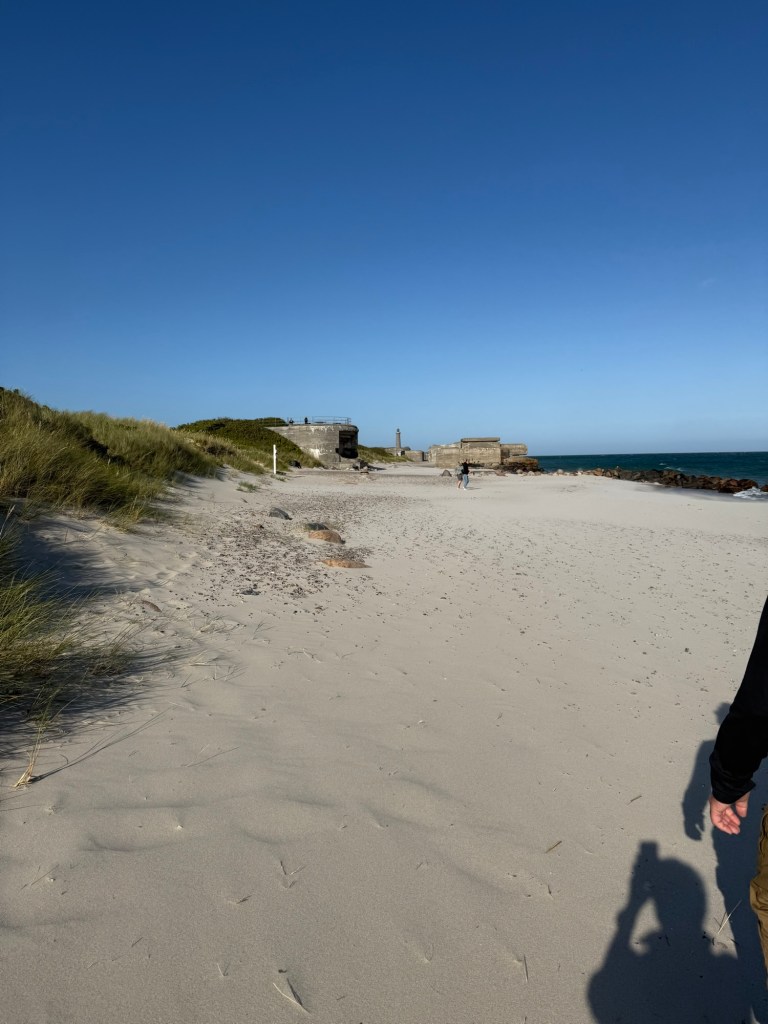
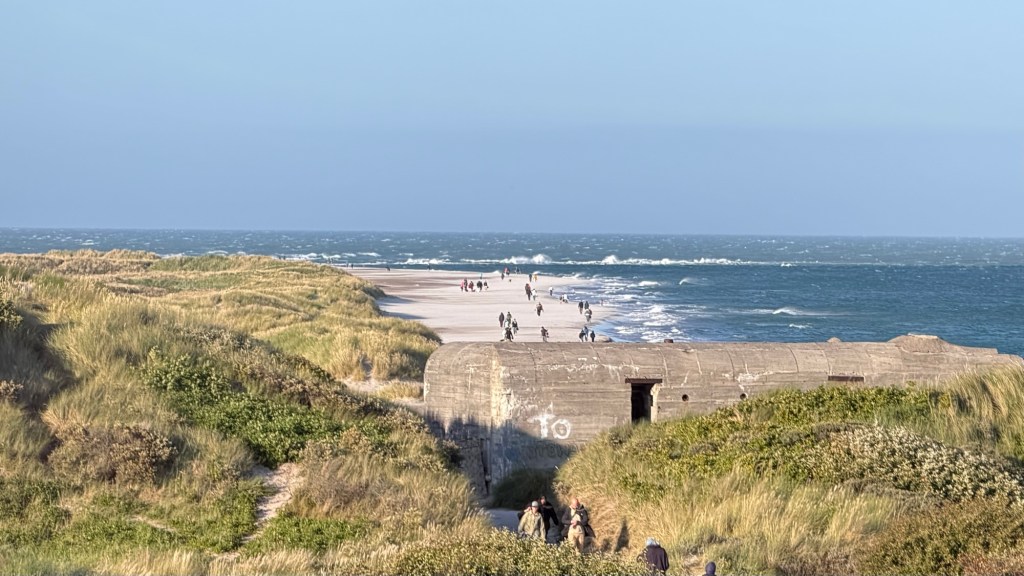
The beach around the Grey Lighthouse has bunkers emerging from the sand; the bunkers were built by the Germans during WWII.
The town was very busy when we arrived Friday afternoon. The town is packed on summer weekends with tourists from the cruise ships, as well as visitors from other parts of Scandinavia. Parts of the town are pretty rowdy with bars going strong til late.
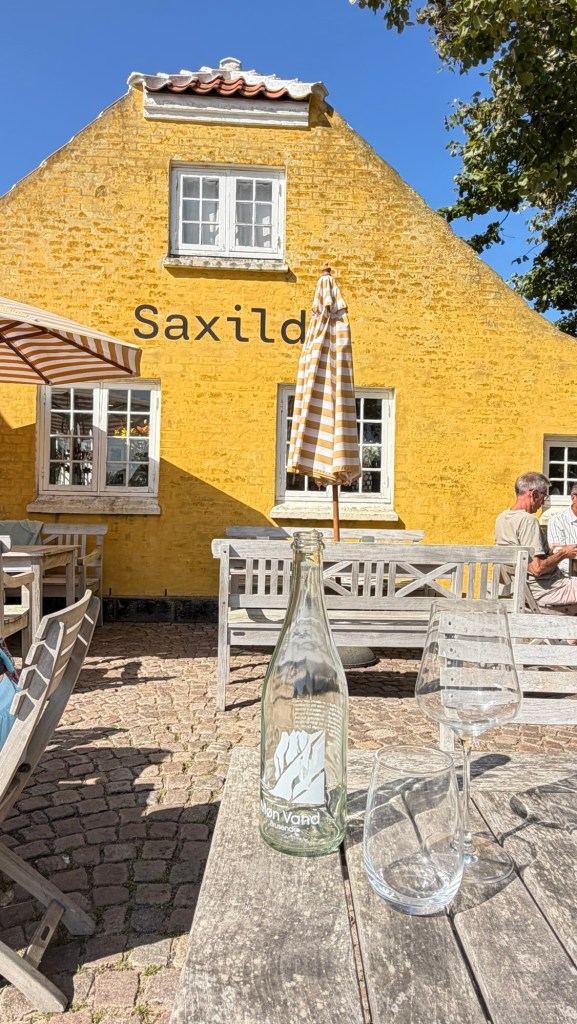
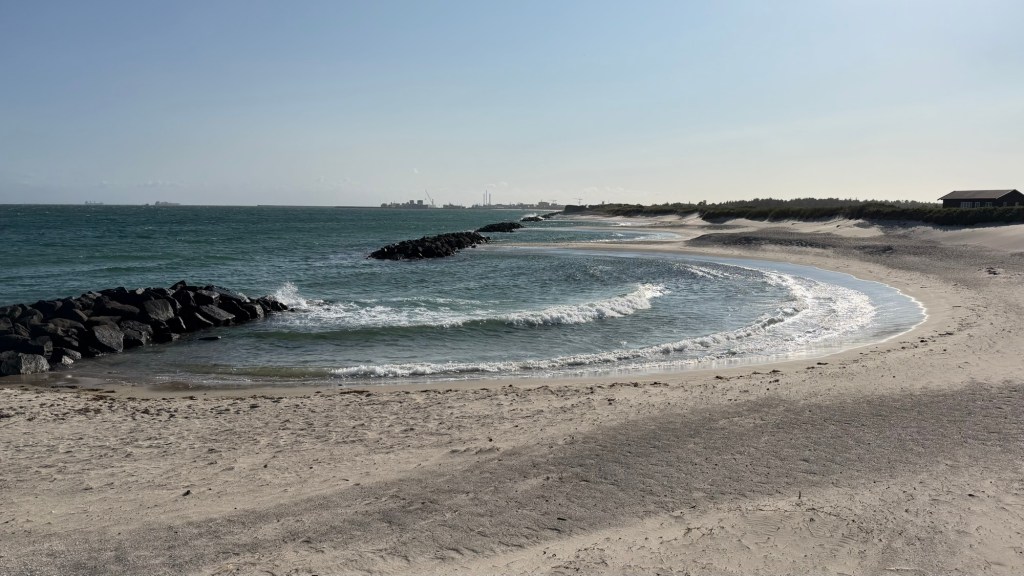
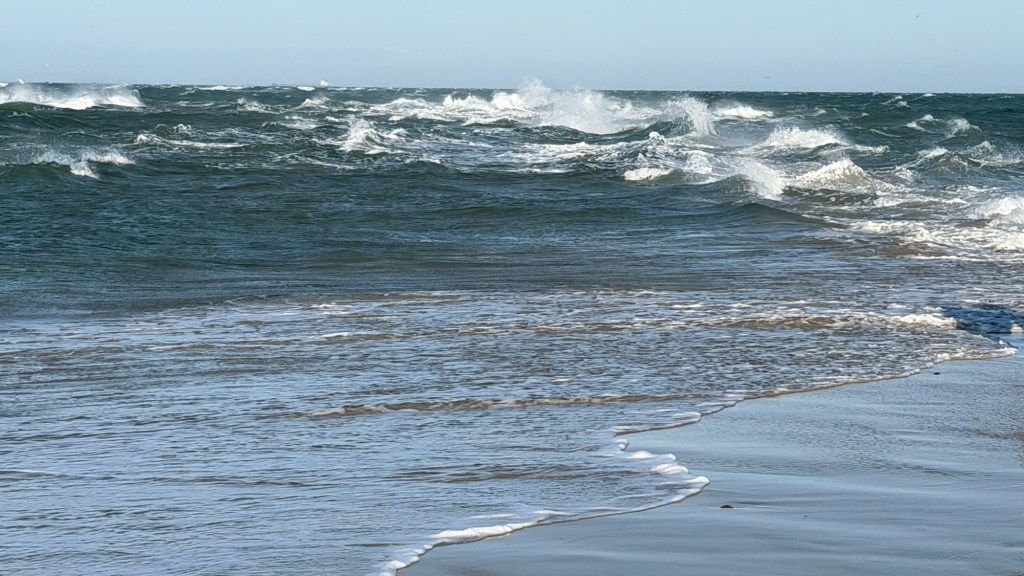
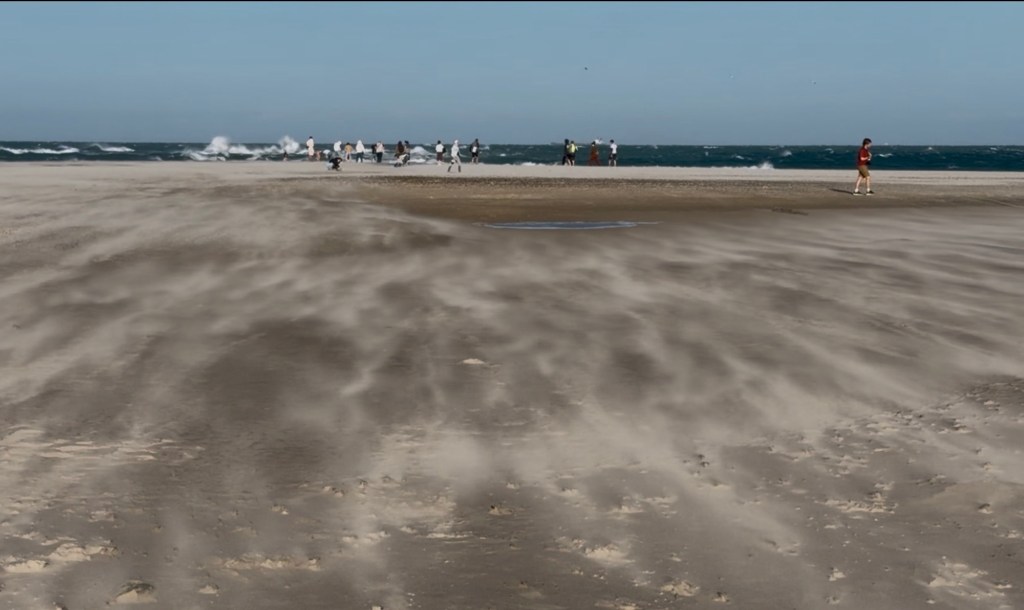
After a yummy lunch in a quieter part of the town Saturday, we started out on the circle loop walk to Grenen. Grenen is the point of land (beach) beyond Skagen where the Skagerak Sea (North Sea) and the Kattegat Sea (Baltic) meet. It was super windy that day, so we walked with the wind at our backs to head out there. Seeing the two seas’ waves crashing into each other felt a little like applause for finishing our coastal walk! It’s very dramatic.
We visited the Skagen Museum to see work of the painters of the late 1800’s-early 1900’s. It was an intriguing group of Danes, Swedes, Norwegians and others that shared their work and lives. They captured the fishermen and town folk as beautifully as the landscapes. A few paintings also chronicled a failed rescue and the funeral for a drowned fisherman while others depicted ordinary moments in daily life. They used gorgeous thick oils for the most part, and that gave most of the paintings a richness and depth.
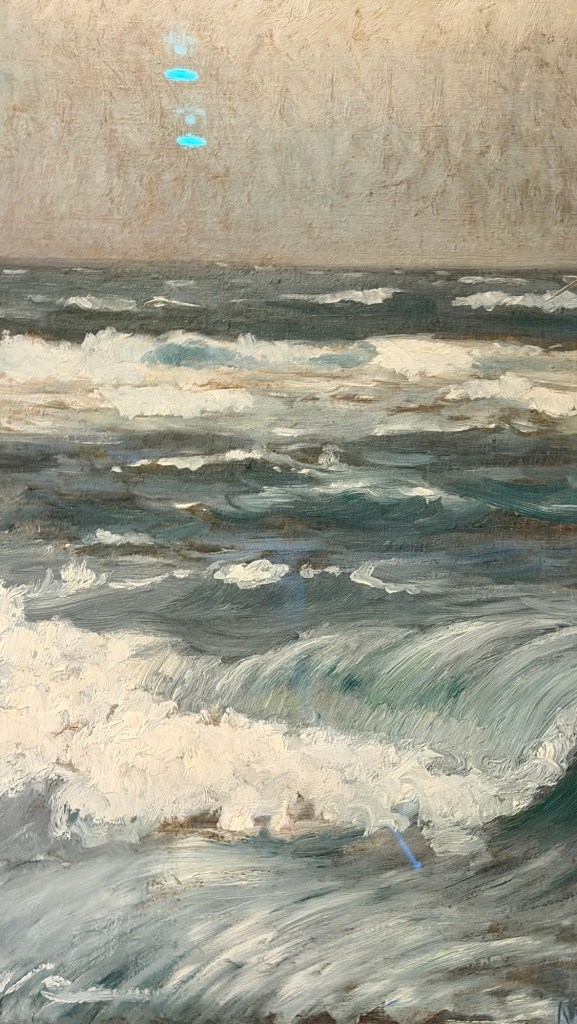


You have become such a walker! so healthy and such a great way to see the world. gorgeous final painting
LikeLiked by 1 person