Tallinn, Estonia

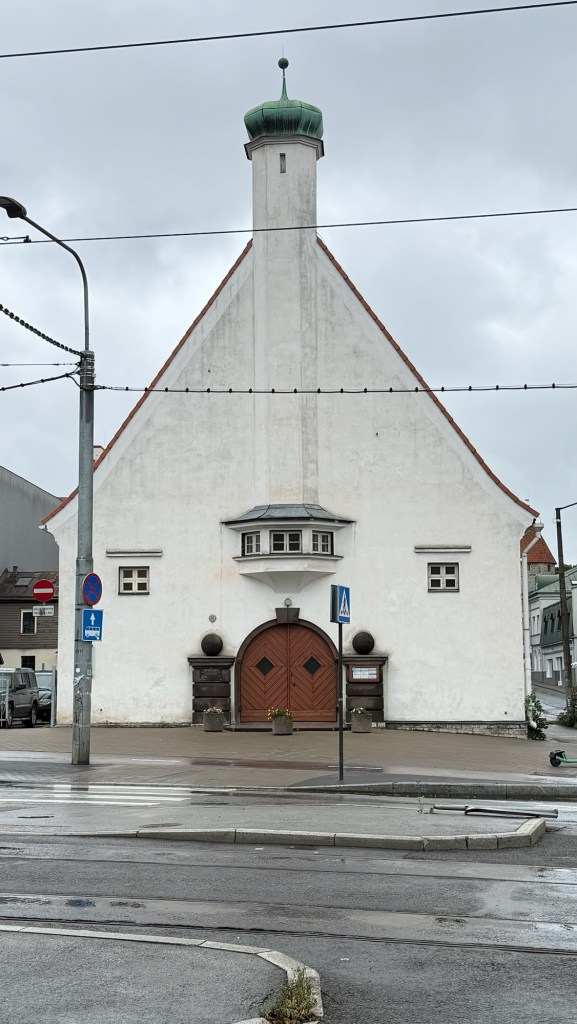
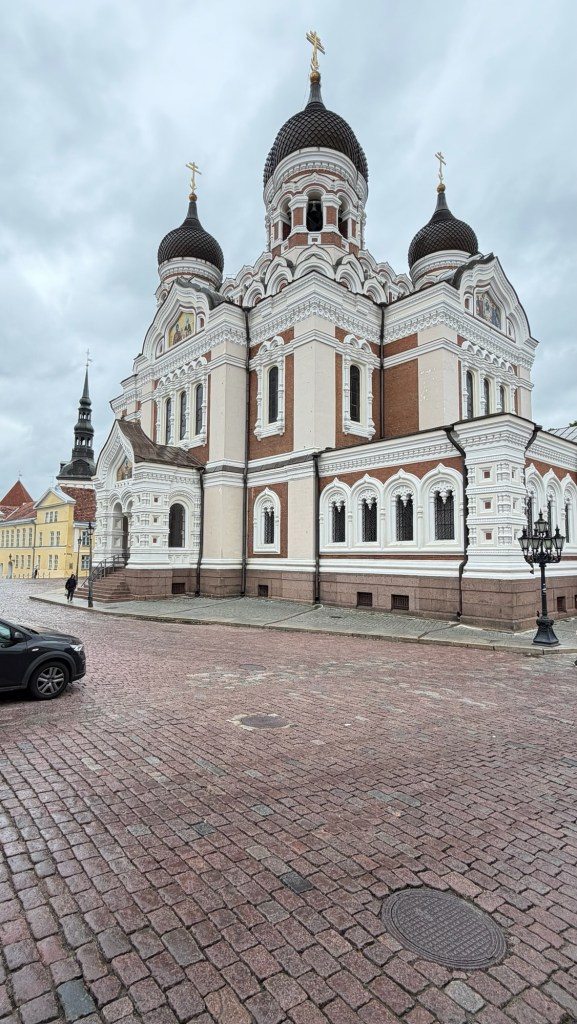
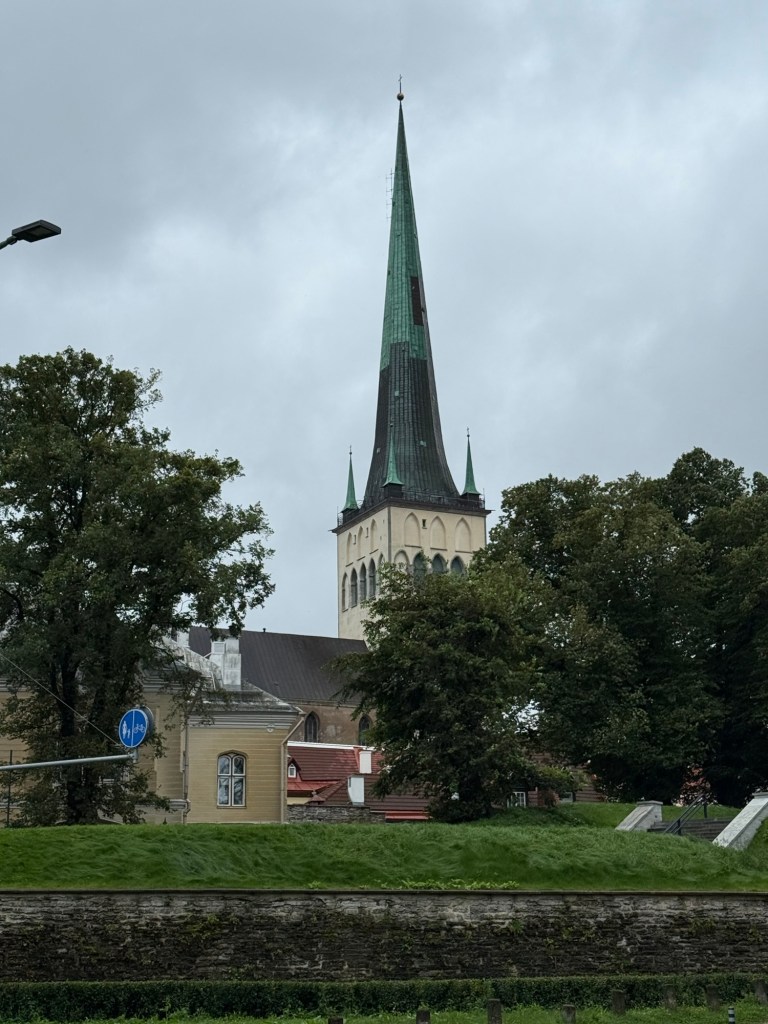
The first of many old churches we saw in Tallinn

The Tallink Silja ferry trip from Helsinki to Tallinn was 2 hours. The ferry was more like a cruise ship than a “ferry”. It had restaurants, casino, premier lounges, and room for over 2800 people and many cars and trucks. It is a busy port with 3 different ferry companies, and 5 Baltic routes to Helsinki, Tallinn, Stockholm, Turku, and Aland Islands. We were curious about our fellow passengers, some of whom had suitcases and others didn’t. From what little information I could find, it seems that there are many Estonians who work in Finland during the week and return home on weekends, and many Finns go to Estonia for cheaper costs of alcohol, tobacco, groceries, and a day trip or weekend away. I had seen ads in Helsinki for taking a day trip to Tallinn in a lot of tourist info.

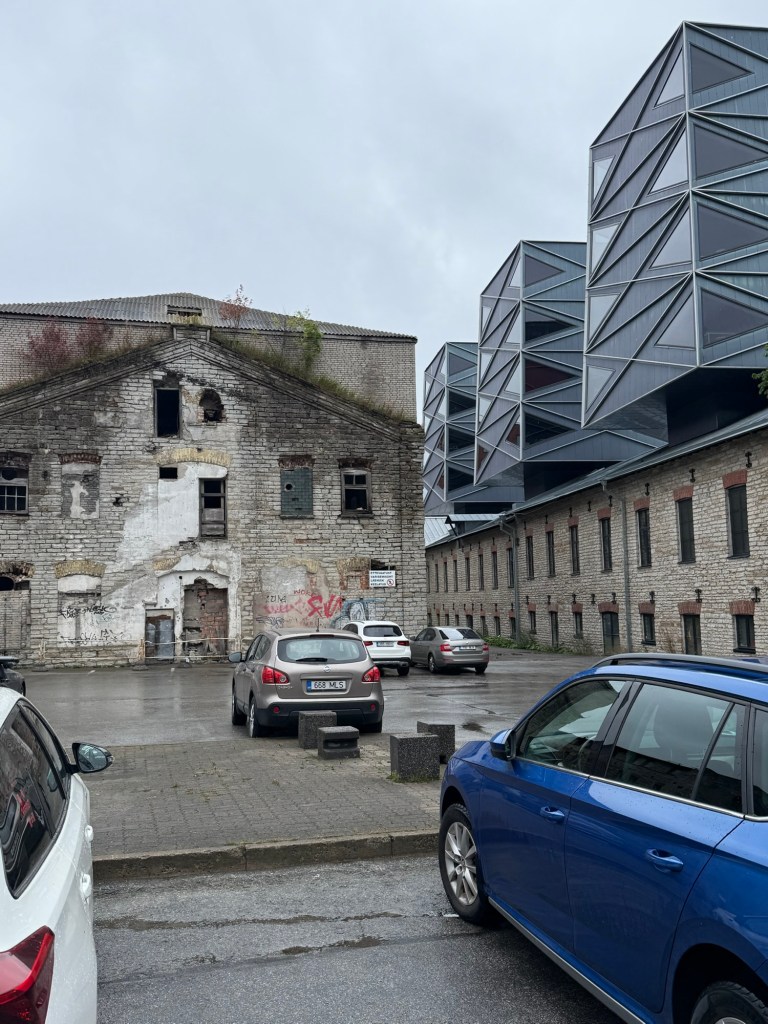
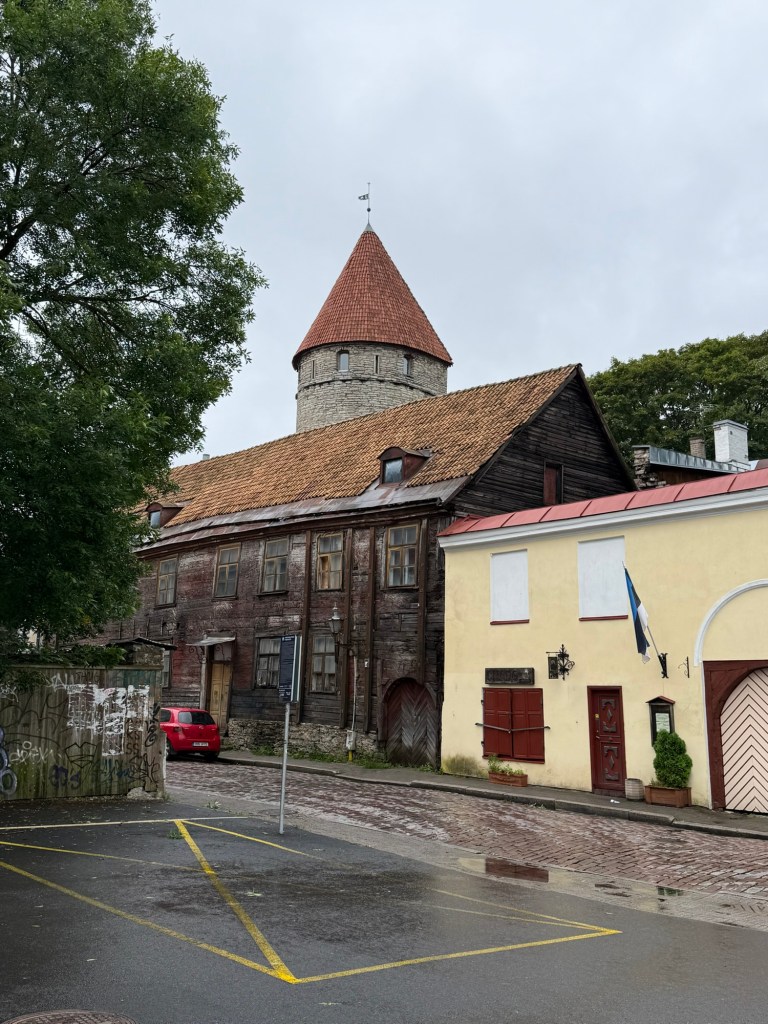
We saw many Old Town buildings in a state of repair or construction, right alongside new renovations/additions

It was pouring rain and high winds when we arrived in Tallinn on Saturday afternoon. I was really happy not to be on a ferry in big weather. We stayed right beside the Old Town in a newer section of buildings, apartments, and shops. Sunday was our full day there to explore; the weather was grey but it didn’t pour on us so we walked miles.

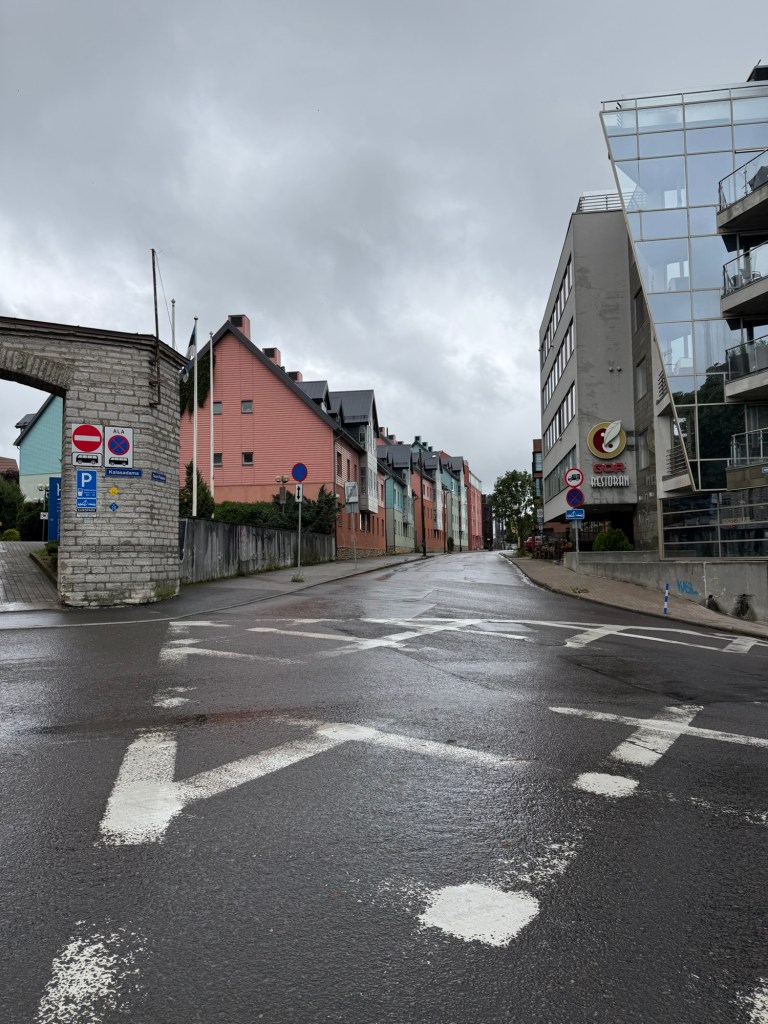
More glimpses of Old town with newer buildings
Orthodox cathedral built when Estonia was part of the Russian Empire

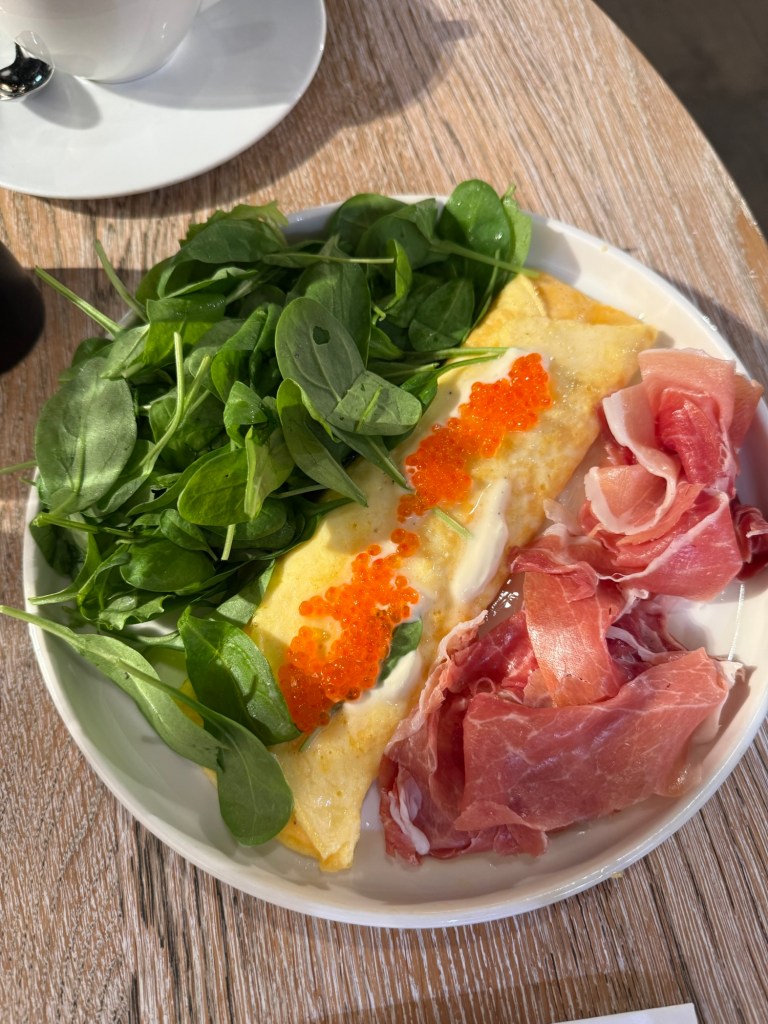
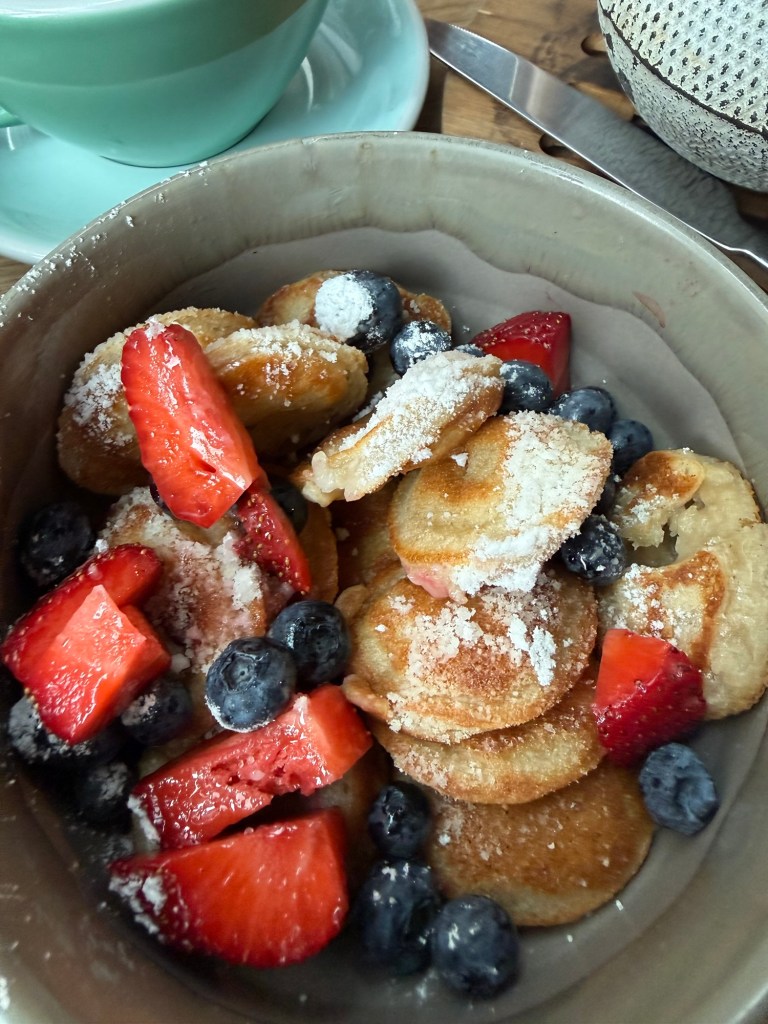
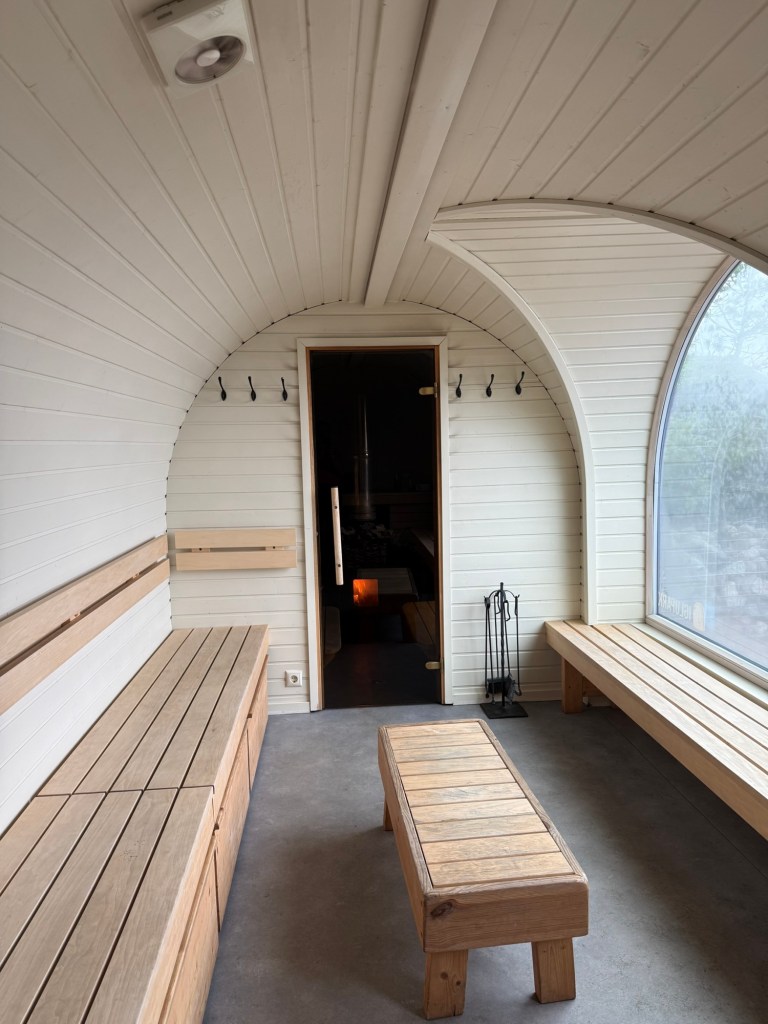
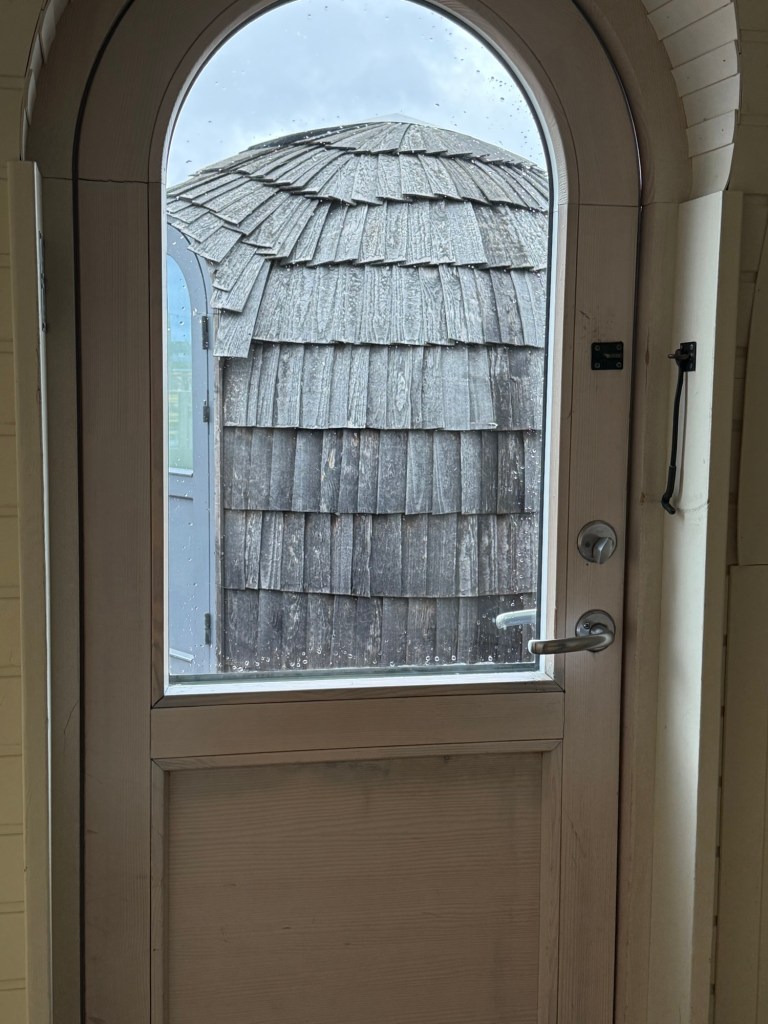
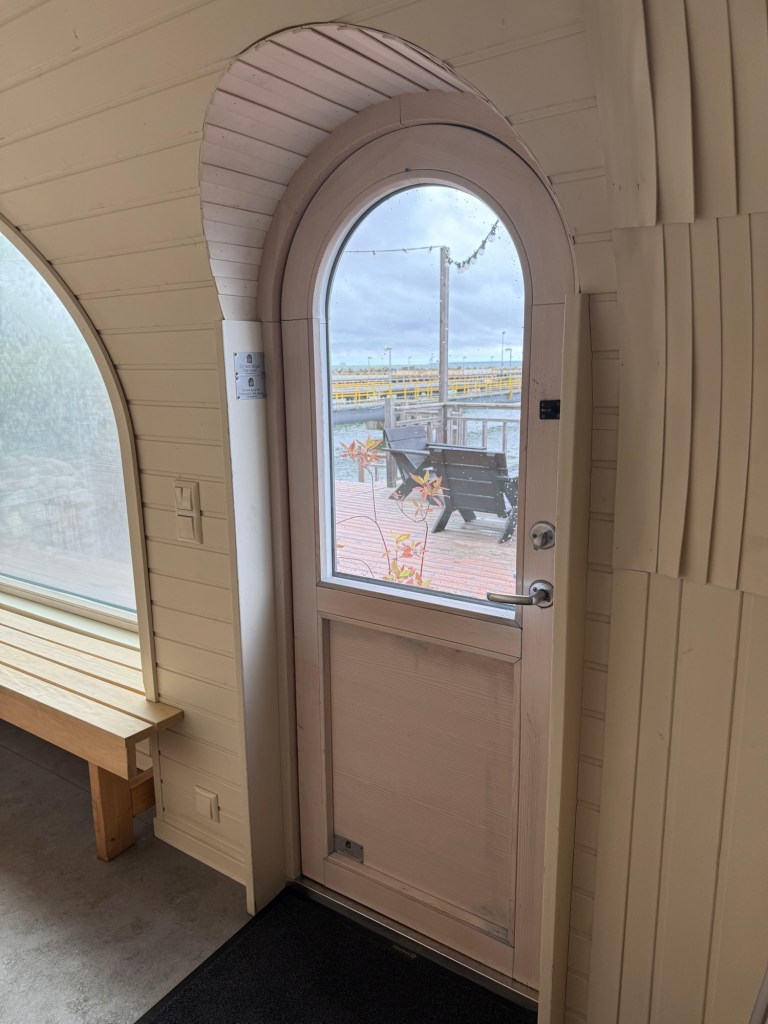
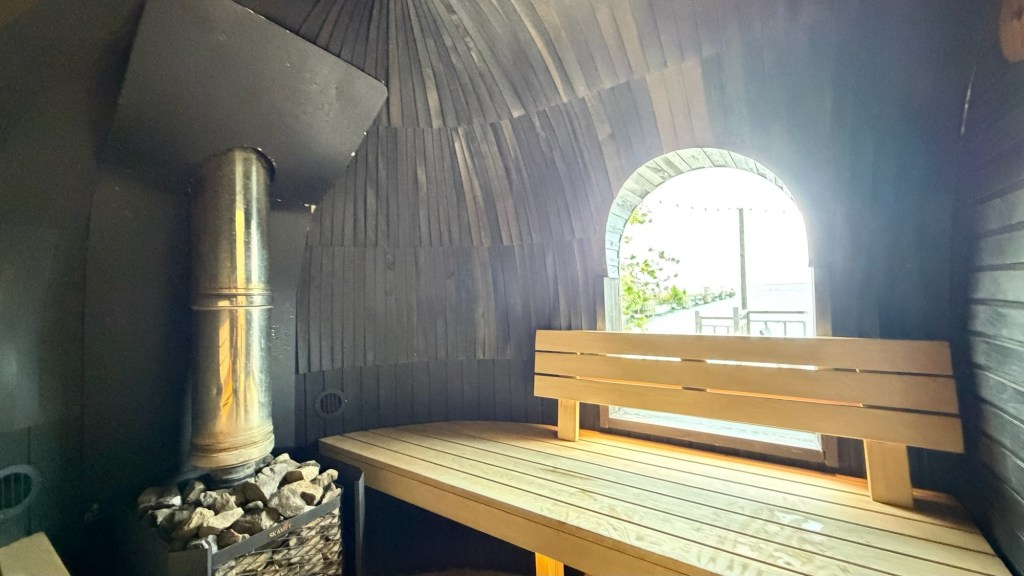
After eating a great brunch, we found our way through the Old Town farther along the harbor to an area called Noblessneri. Will had booked us a sauna (no surprise there) at Iglupark. We had our own little sauna in a row of small and larger saunas; farther down the dock were some ‘iglus” that were hotel rooms. All of the buildings were beautifully done. There was a ladder from the dock to swim in the Baltic Sea. It was wavy but not very cold.

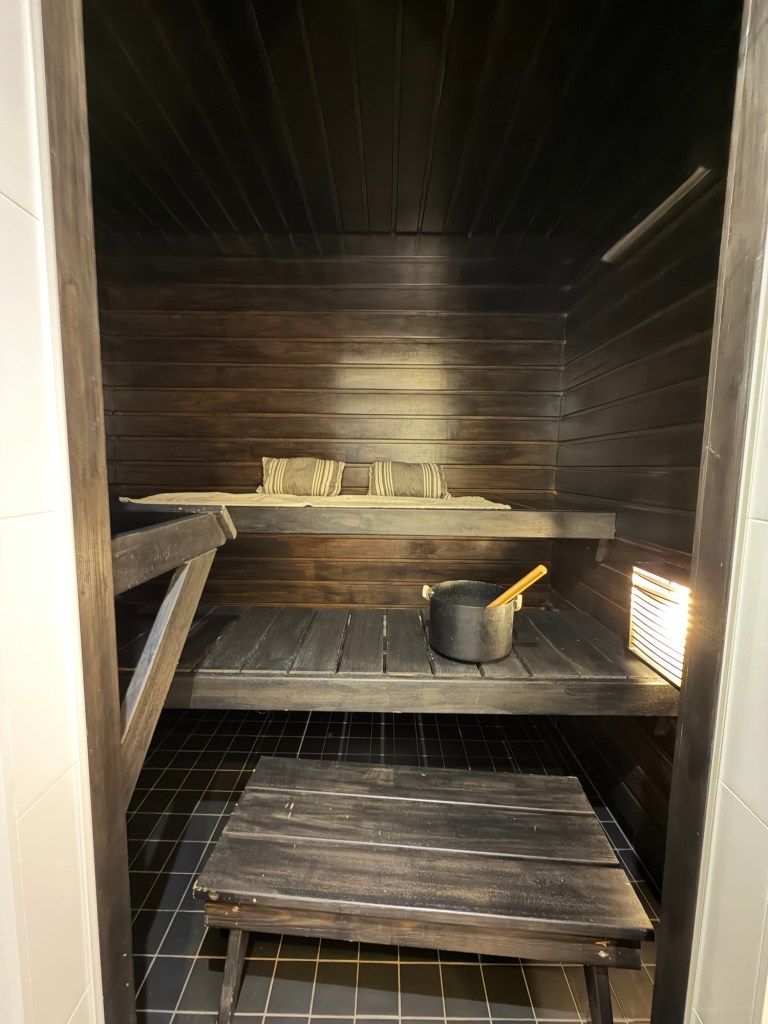
The dressing/resting area of our ‘iglu’ sauna
Inside the sauna

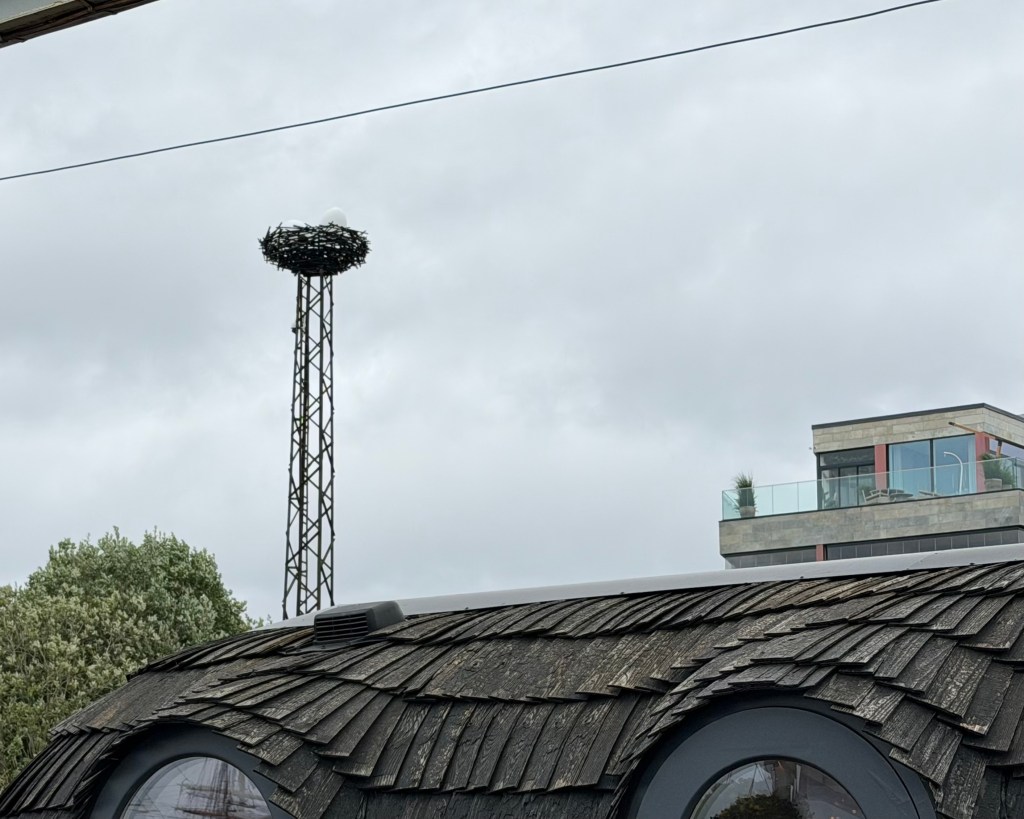
This steel nest with eggs up high was visible from several parts of Noblessneri!

We saw one of these delivery bots in Helsinki. I hadn’t even heard of them, but Will knew of them. This one was coming down the sidewalk towards us so I had a second to pull out my phone. I thought of trying to follow it, but we had places to go!!

I didn’t take any photos of the cinnamon rolls we found at two different bakeries, but they were both good!

A toy store window in the Old Town

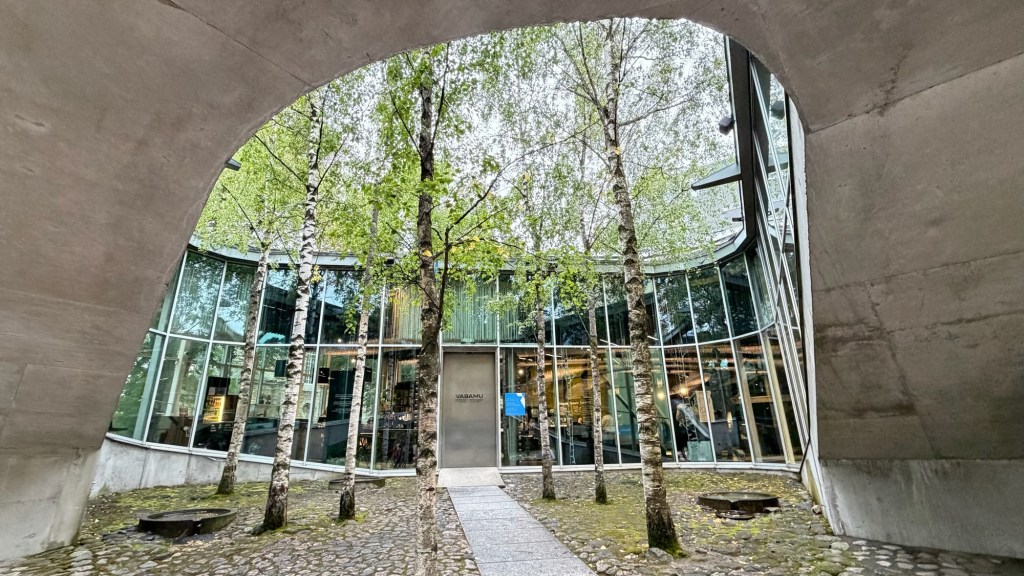
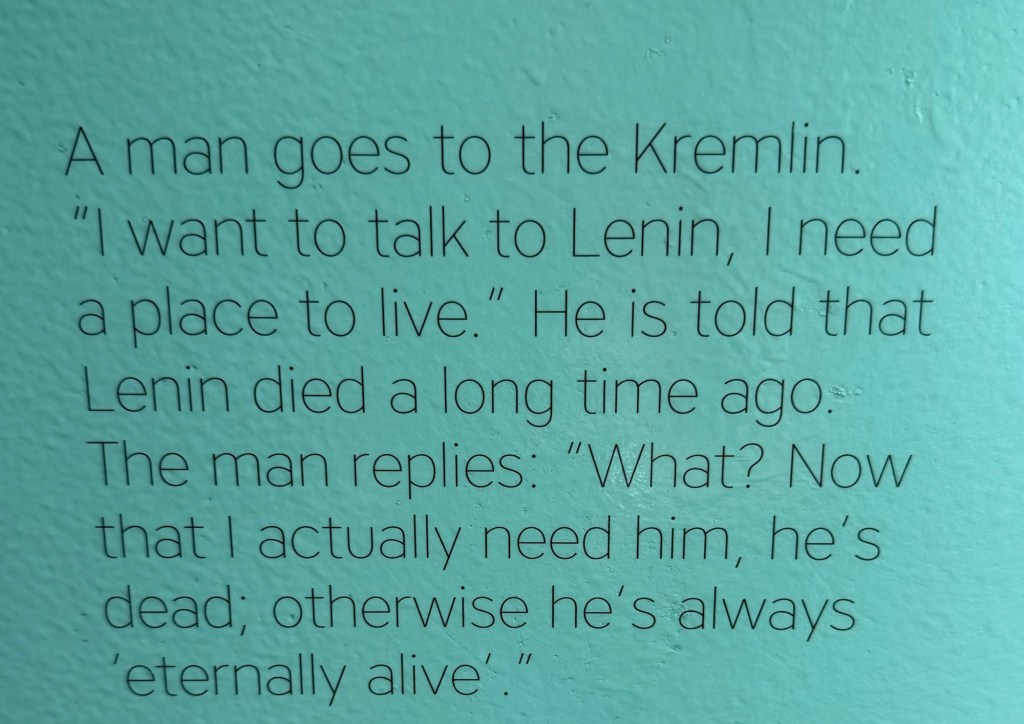
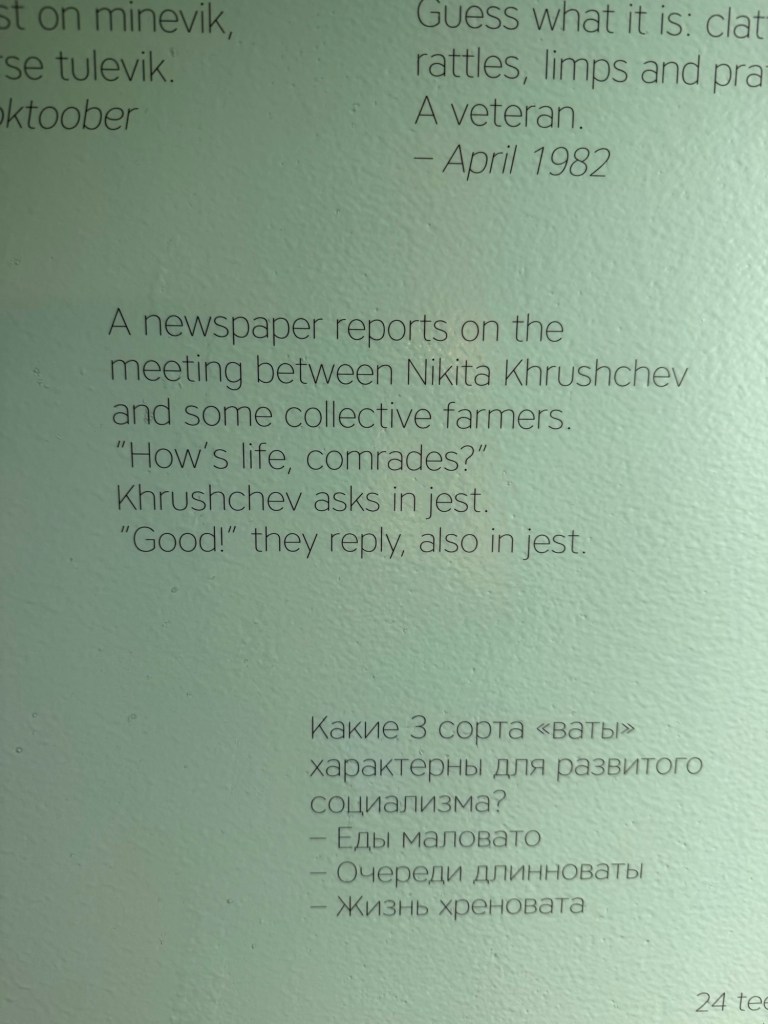
At the end of the day, we went to the Vabamu Museum of Occupations and Freedom. Estonia has so much history that I/we only know pieces of. The museum is incredibly well done and worthy of many visits. The exhibits shared painful individual stories as well as country history, but they emphasize hope too.

The entrance to the Vabamu Museum of Occupations and Freedom

The design was intentional with the many windows and light. Estonian Centre for Architecture explains much better than I ever could. We spent over an hour in the museum, with an audio English guide as we walked. Will and I were humbled by how much we didn’t know. I’m not sure we could’ve taken much more in if we’d stayed longer.

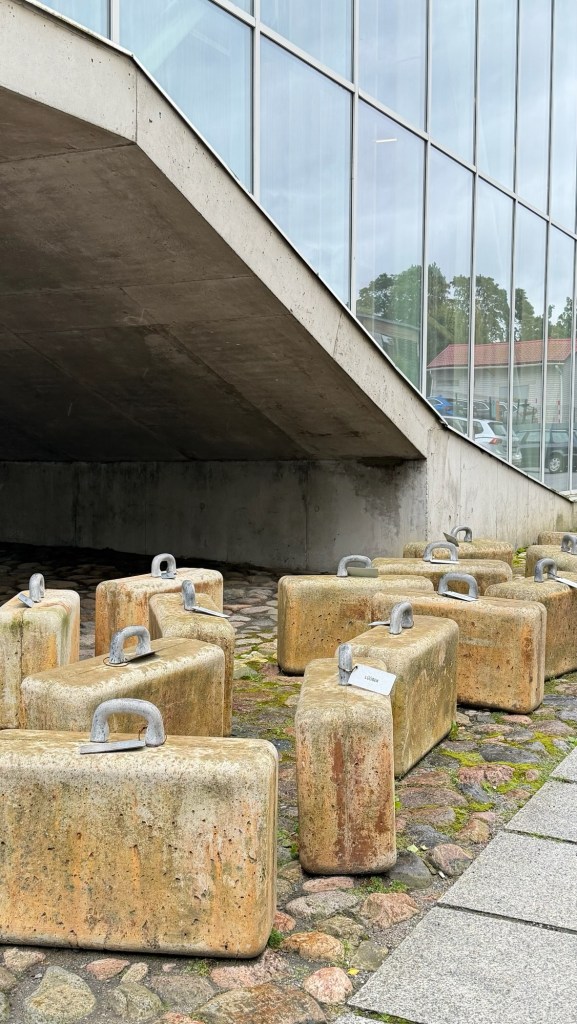
21 Suitcases– part of a larger public art piece to symbolize and remind of the thousands of Estonians who’ve had to leave their country against their will during occupation, and during/after WWII. This is at the entrance to the museum.

We came away with so much to think and read about. It was still grey outside. Everywhere we walked, there was art, sculptures, memorials and green gardens.

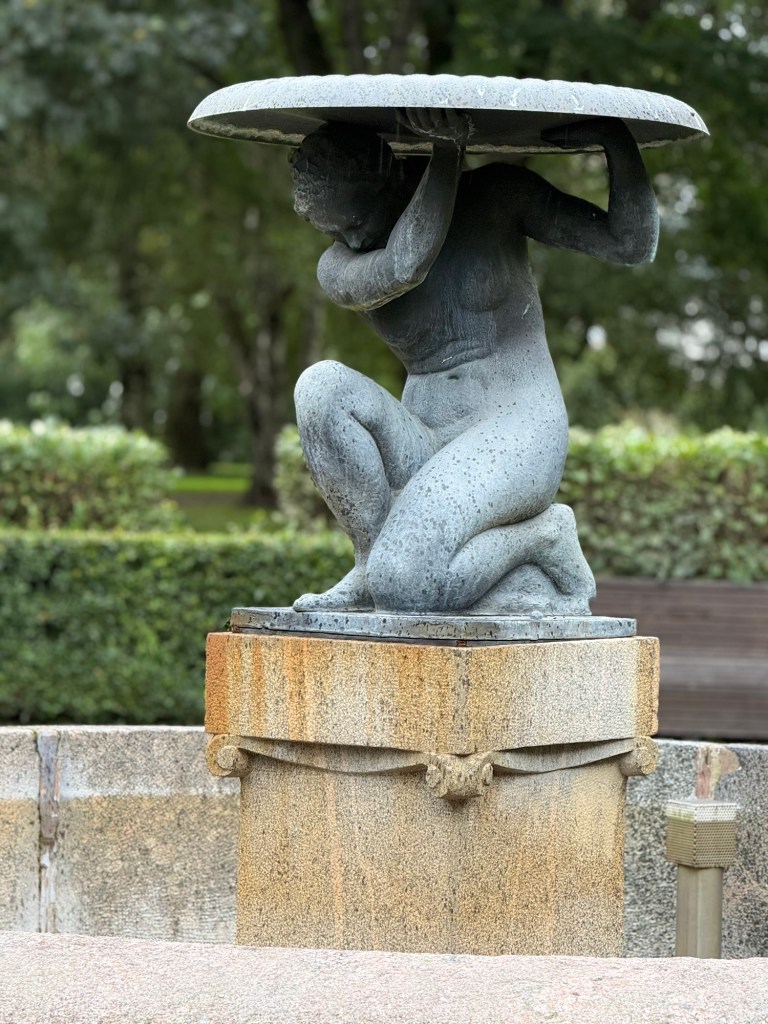
Woman with a Platter by Estonian sculpture Juhan Raudsepp
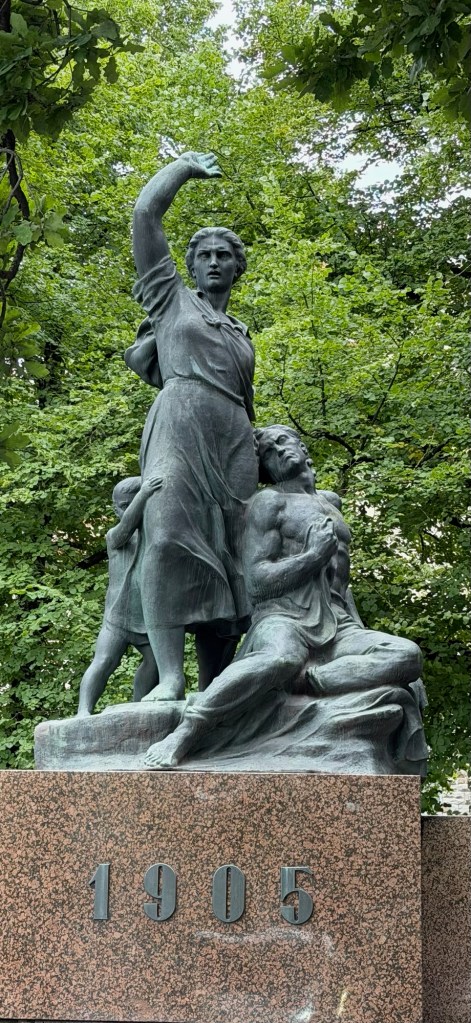
Monument to the Revolution of 1905
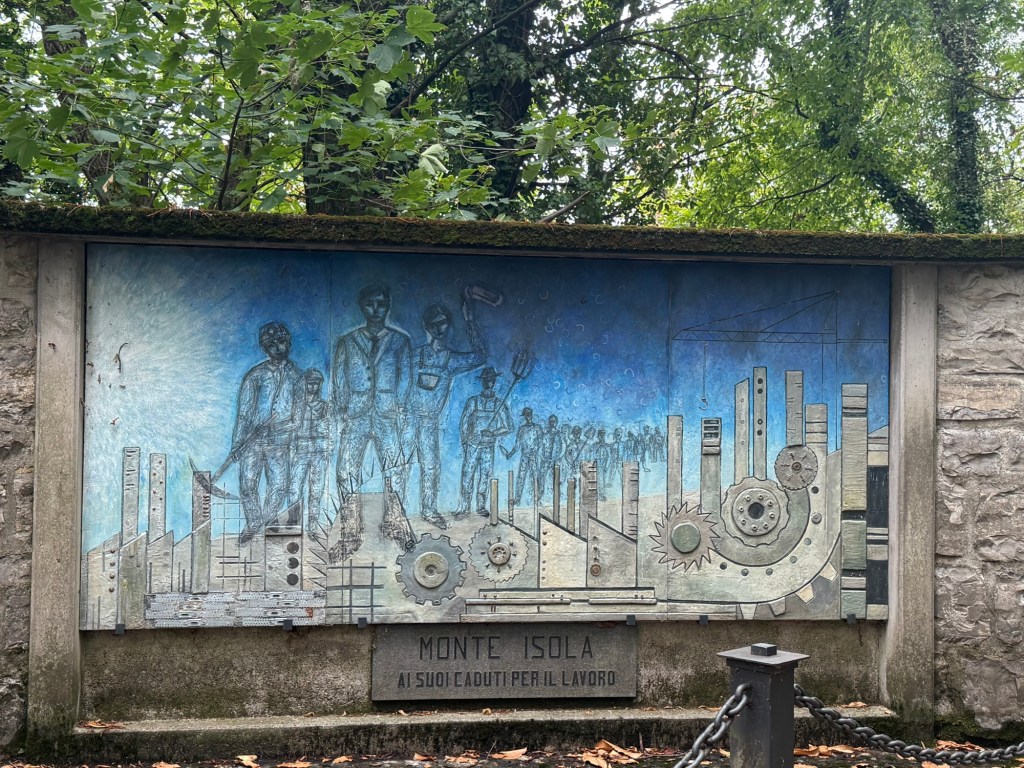
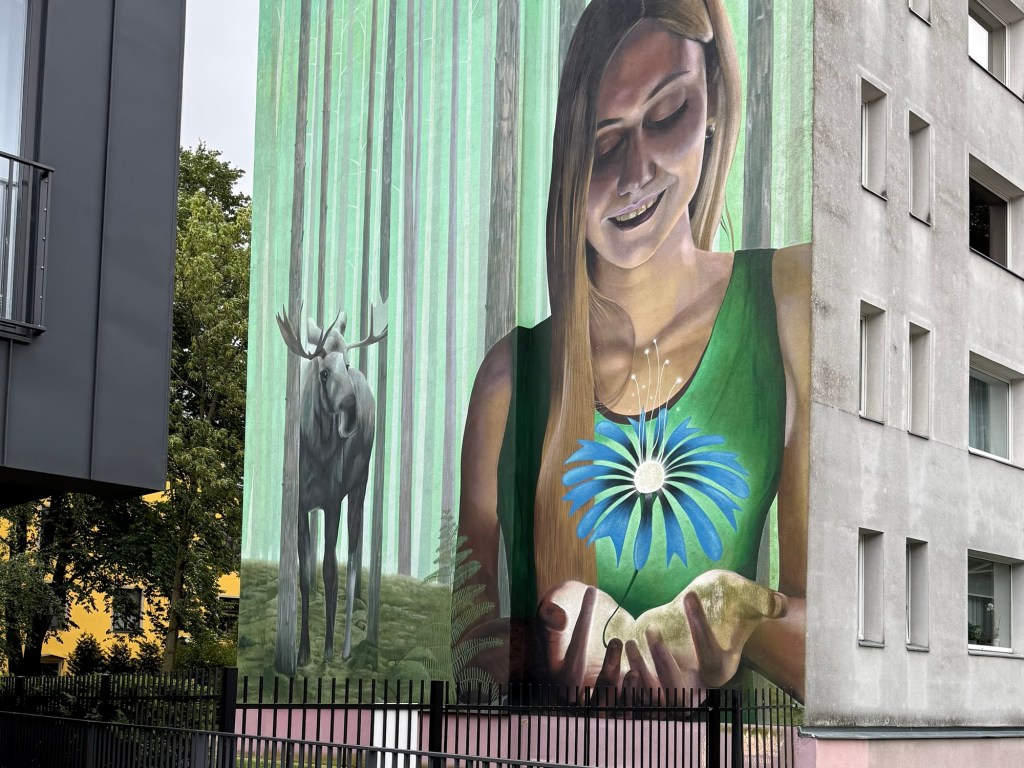
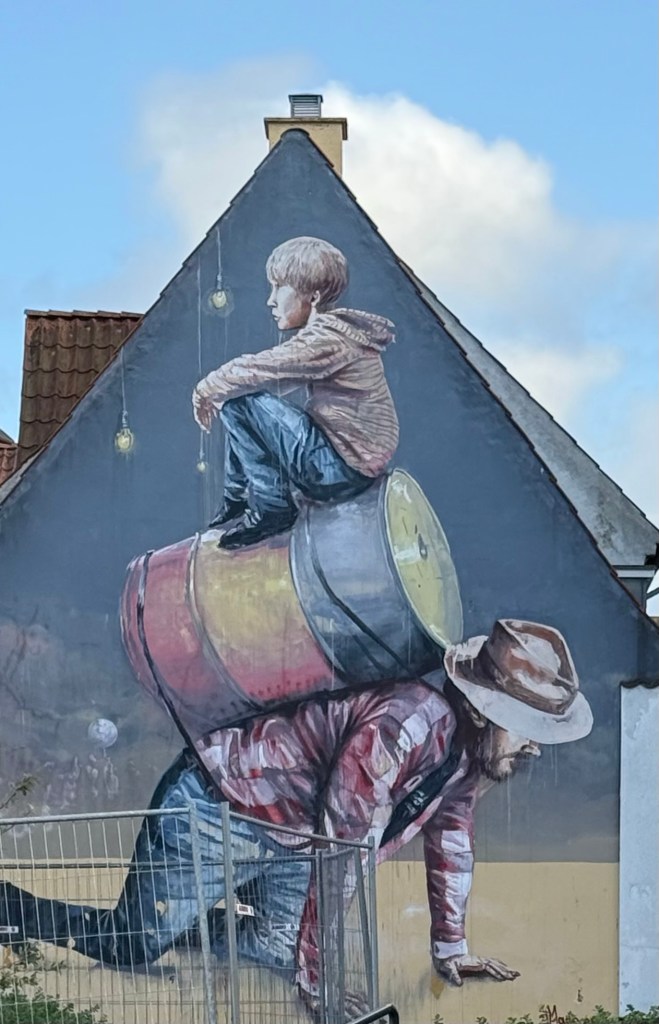
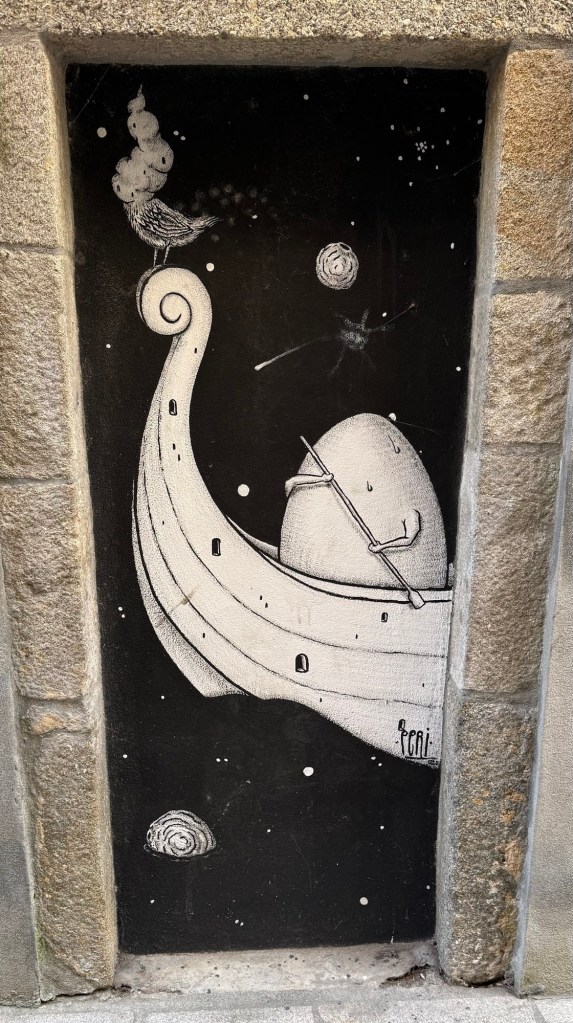
Mural in the Noblessneri

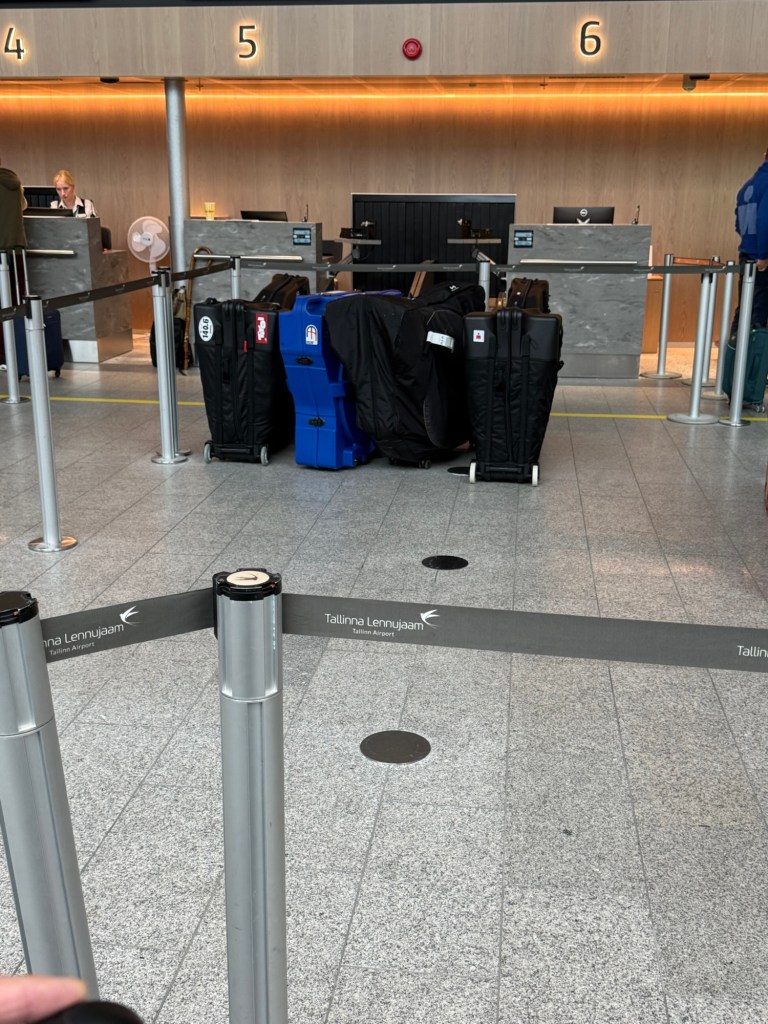
Monday morning we boarded a tram for the easy transit to the airport. Outside we saw a few people with bike boxes; when we went inside, the check-in line went all the way to the door! I left Will in line and found my way to the information desk where the woman told me we could go ahead to the self check-in machines, and on to bag drop. The Ironman Tallinn competition had been on the weekend, and all those people in line had bike boxes to check in. Our flight left a little late; the flight captain came on to say congratulations and that we’d be delayed so they could load all the bikes that were on our flight. I learned more from the Northern Irish couple who sat beside me on the plane. He had sent his bike by truck to, and now from, Estonia!

Just a few of the many (maybe 50?) bike boxes we saw at Tallinn airport. There’s always something to learn about when you travel.

Helsinki

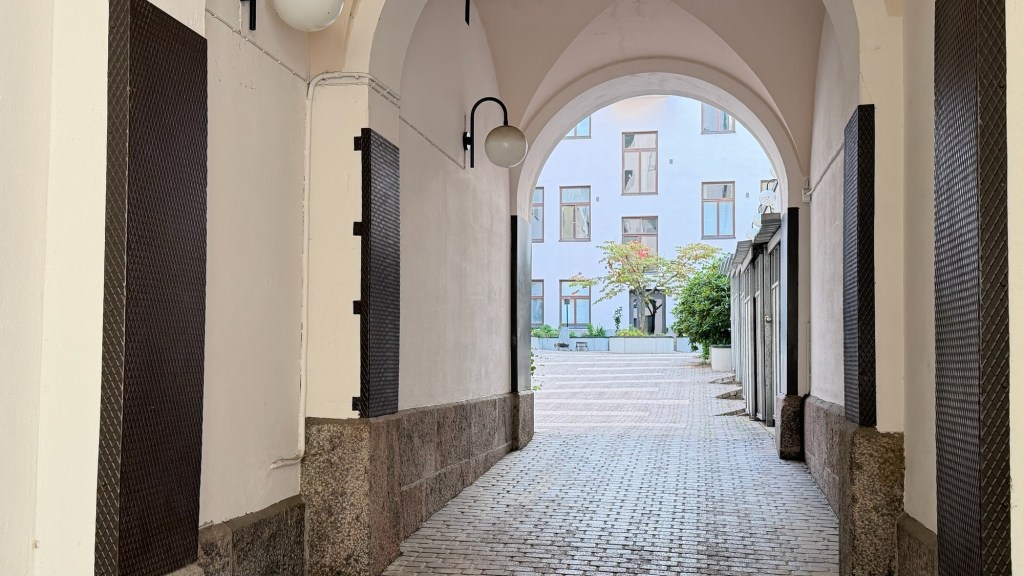
Courtyard to the apartment where we stayed in Helsinki

It was a short afternoon flight to reach Helsinki. One of the things we’re constantly amazed by is not having to show a passport when flying between EU countries. Just show your boarding pass and on you go. And then you’re there wherever it is you’re heading to- in a few short hours.

It seemed like the whole city was under construction from what I could see from the taxi window as we came into the city. Then we stepped out of the cab at the gate to the courtyard of the apartment building, and saw tall beautiful buildings of different colors and materials up and down the street.

The sauna in the apartment

Our home for our time in Helsinki was an apartment at the top of a building. It was small and very comfortable, with this lovely sauna off of the bathroom!

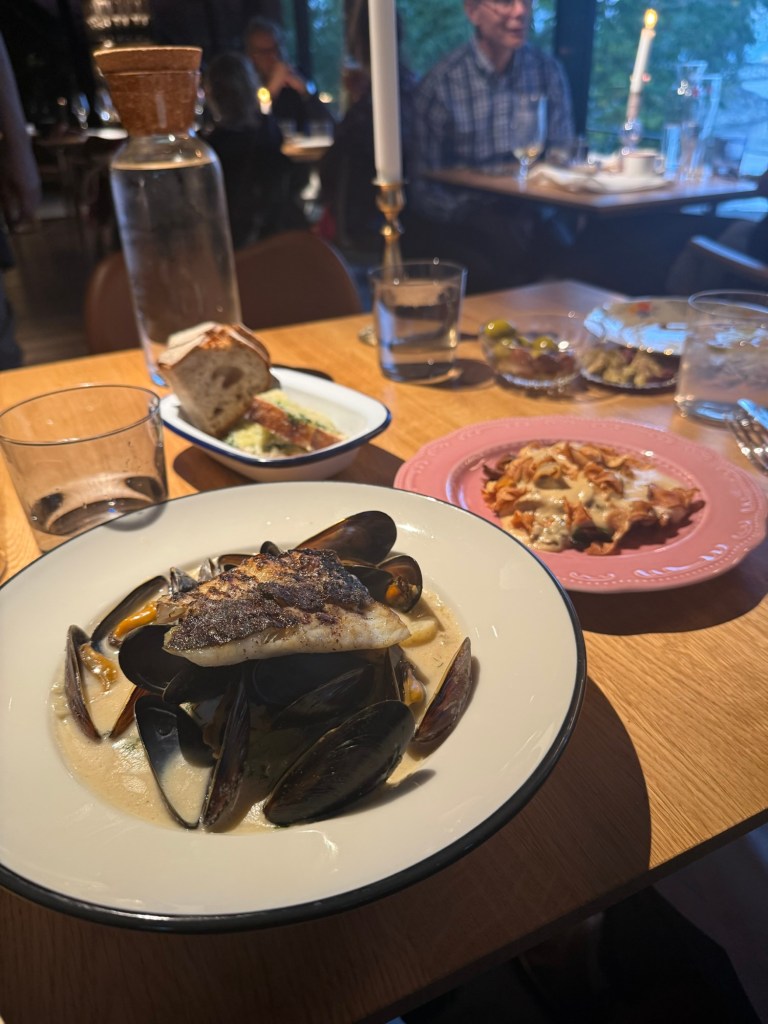
Rogue Rouge was close to our apartment and had been a tar warehouse back in the day. The two guys who own it are young and seem to be having fun serving Finnish fare with a bit of a French twist. It was a warm friendly place with good food.

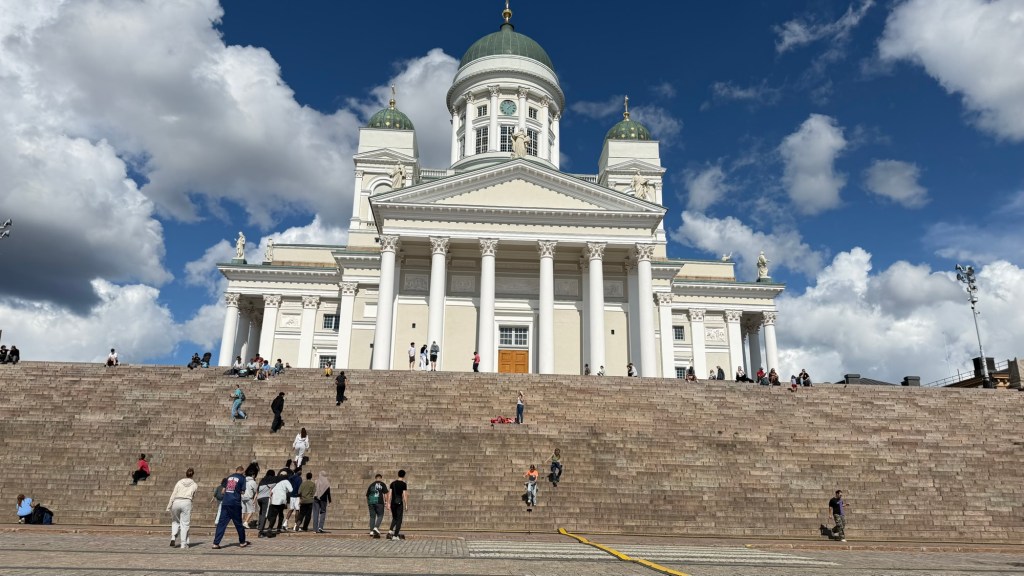
Senate Square

I signed us up for a Red Umbrella Walking Tour of the city. Our tour guide introduced herself as a history and geography student who loves her city. We saw a lot and heard even more about Finland and Finnish culture. She was a good ambassador for her city, encouraging us to try the famous cinnamon buns at a few of her favorite bakeries around the city. She also shared a lot about how education is valued and free for students K-university! Or mostly free in university- she said many students have to work as well.

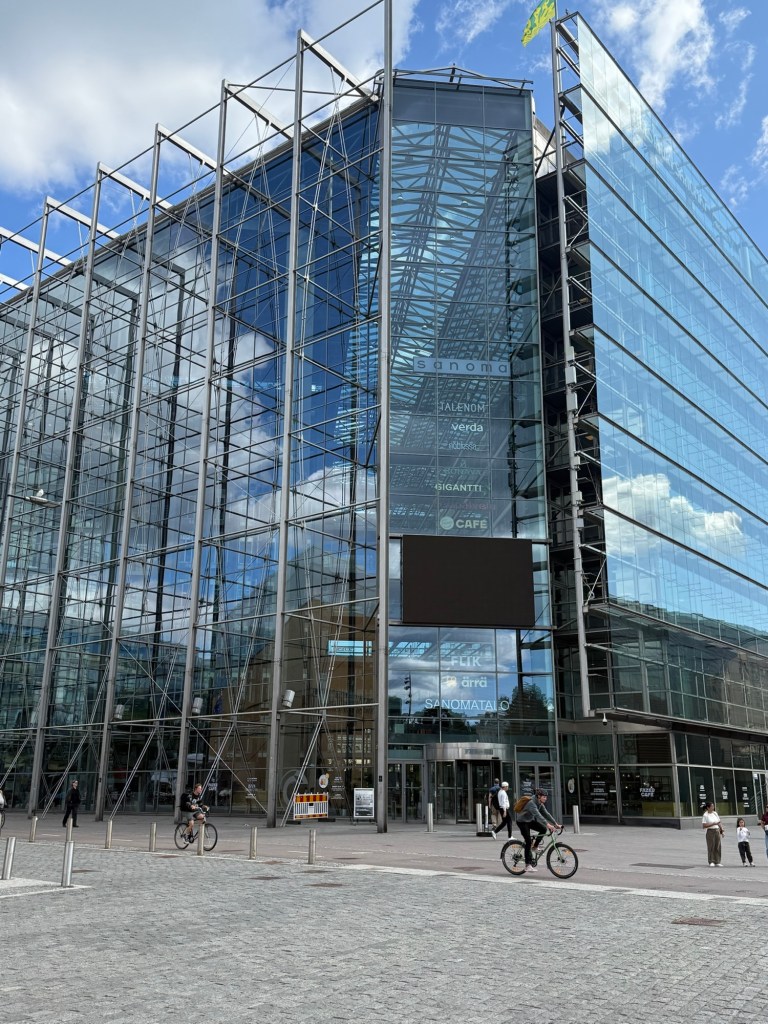
This is the Sanomotalo building in the center of the city. It houses the newspapers’ editorial offices, and other media outlets like radio stations. As we walked through it, we could see into radio studios and hear the various programs playing.

It was the intention of the architect and designers that this building highlight transparency and illumination of communications. The elevators are glass, notably Kone elevators that our tour guide pointed out to us; Kone is a multinational Finnish company.

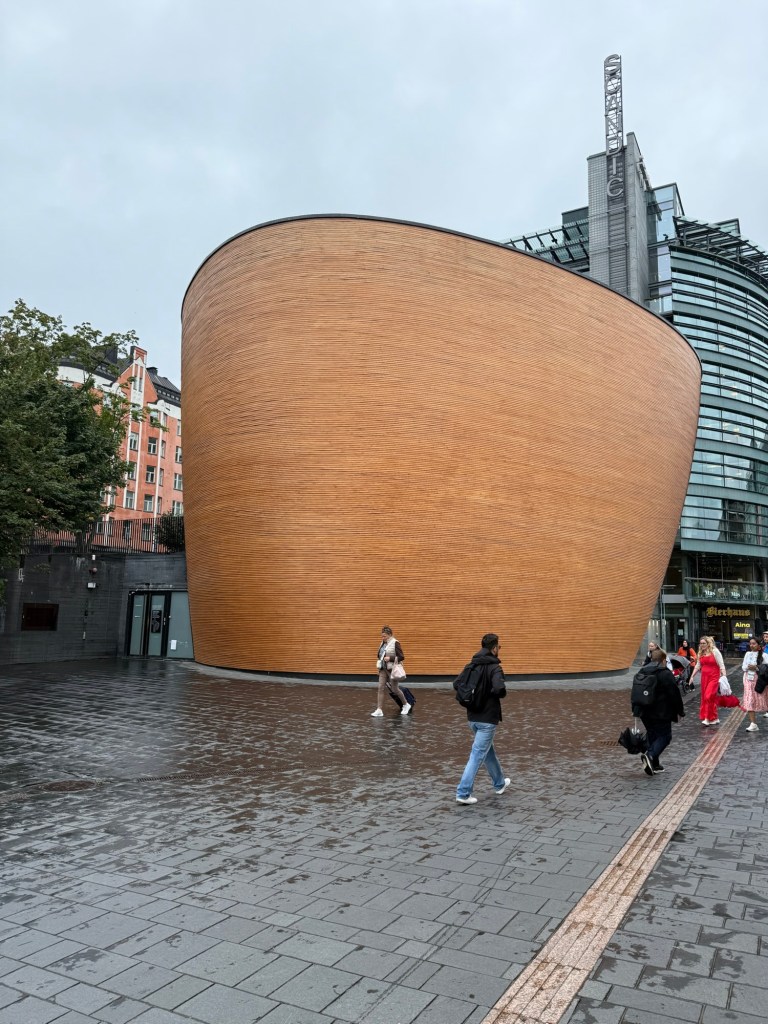
This is the Kamppi Chapel of silence; located in the Kamppi area of the city across from the library, Sanomotalo building, and train station. We didn’t get inside because it was closed both times we were walking in that area, but the shape and intent of it really intrigued both of us.
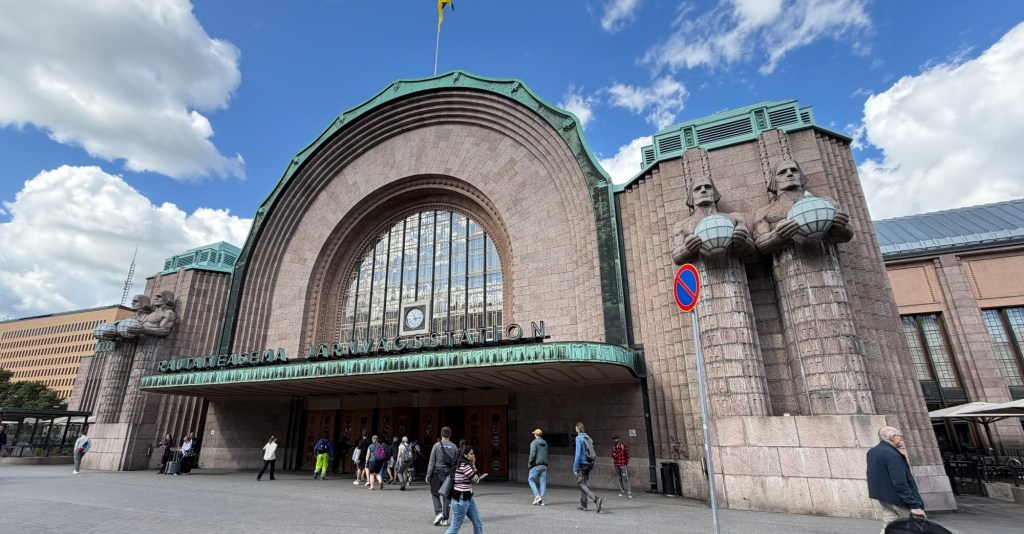
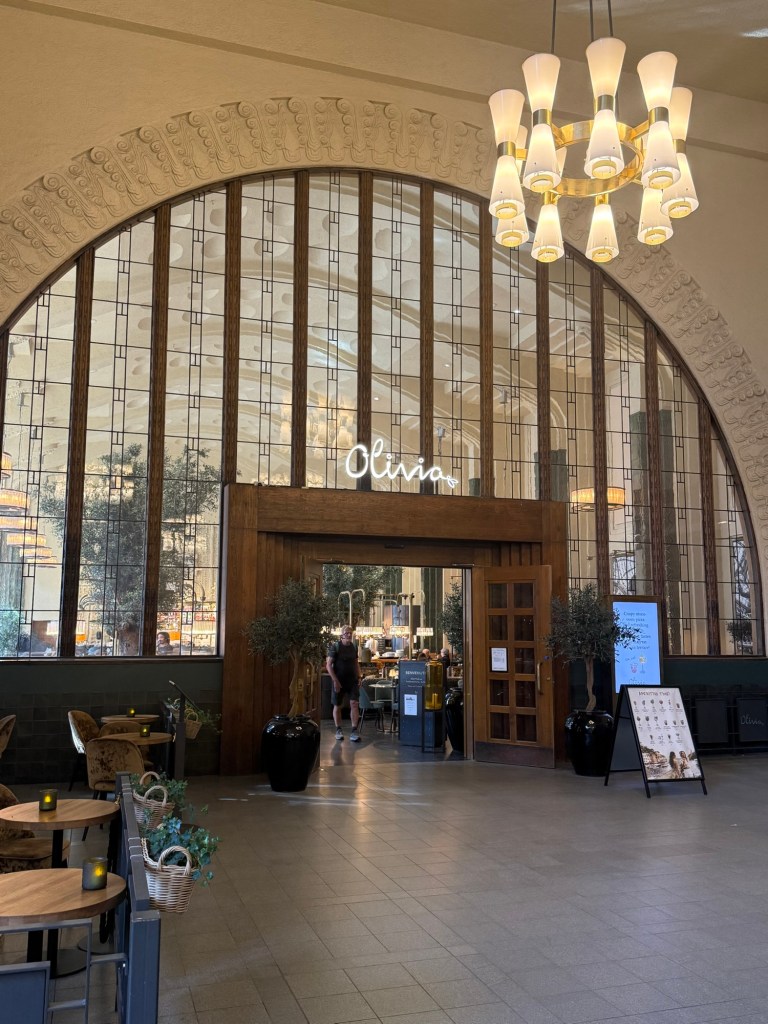
The Helsinki train station
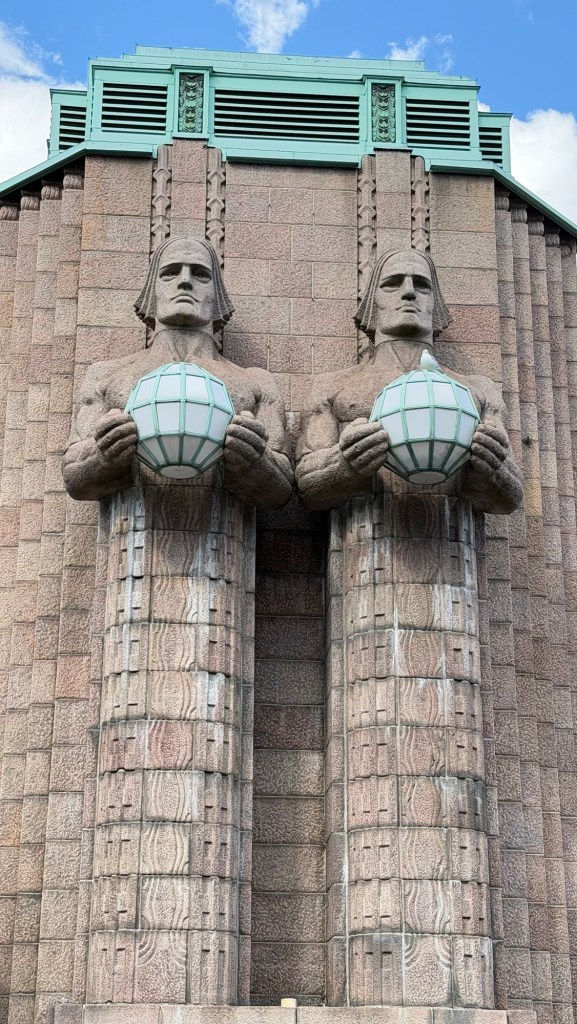
The Lantern Bearers– there are 4 of these, designed by a Finnish sculptor, two on each side of the entrance to the train station
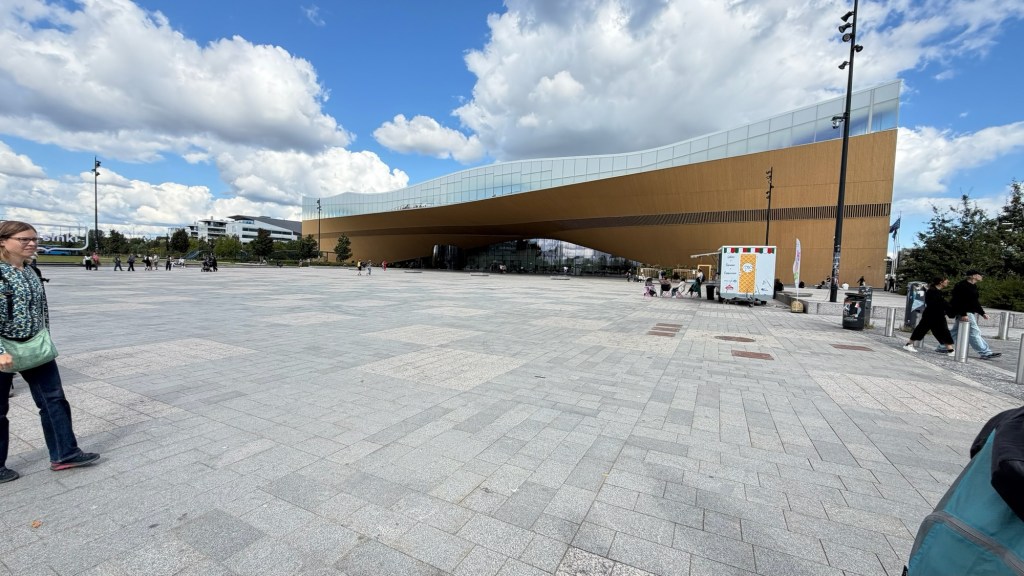
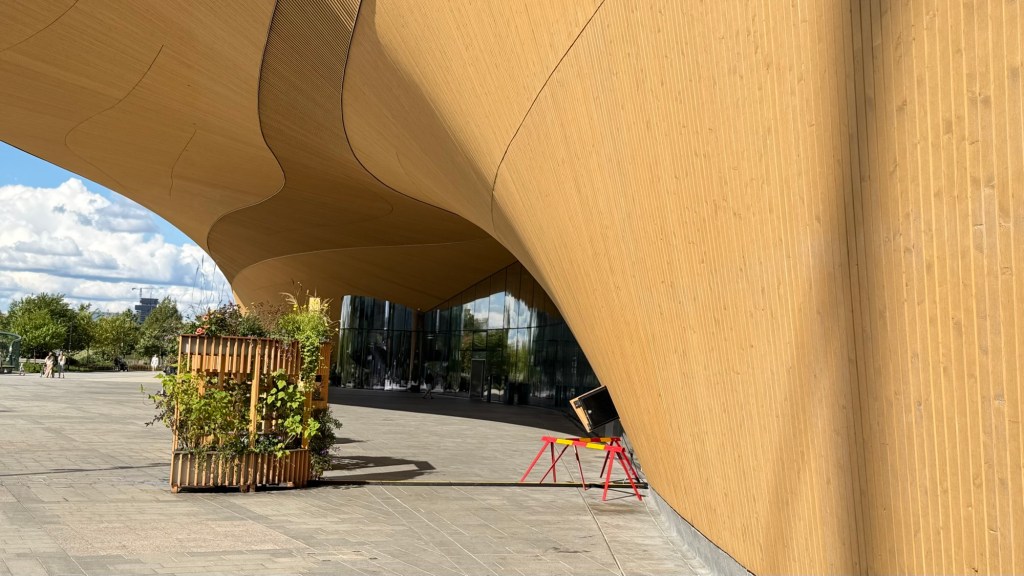
The Helsinki Libray

I sat outside on the upper outside deck of the library to watch people as they worked at tables or just sat in the sun. The library was very busy, and I was excited to see the variety of librarians’ ages and styles as I walked through the building.

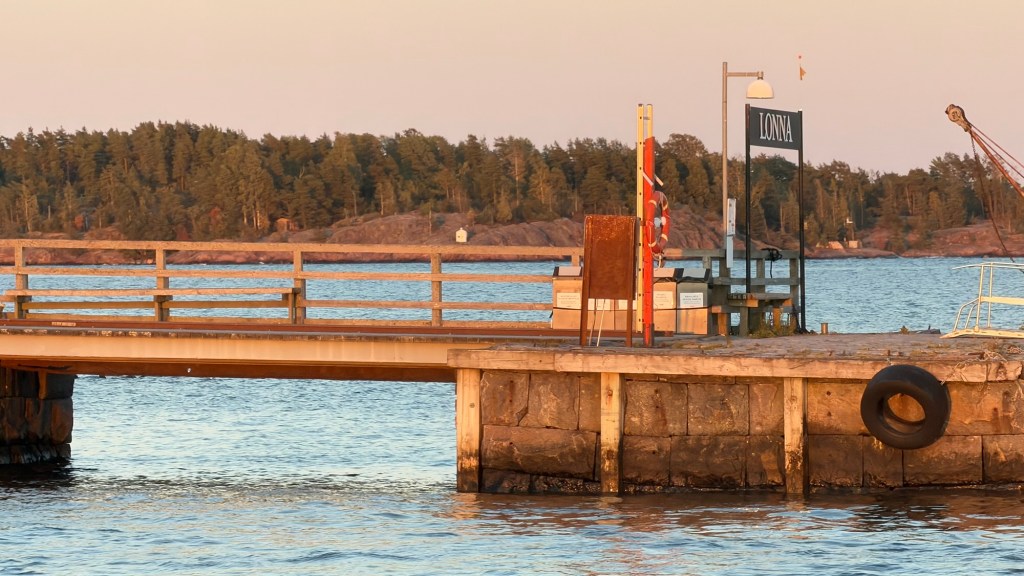
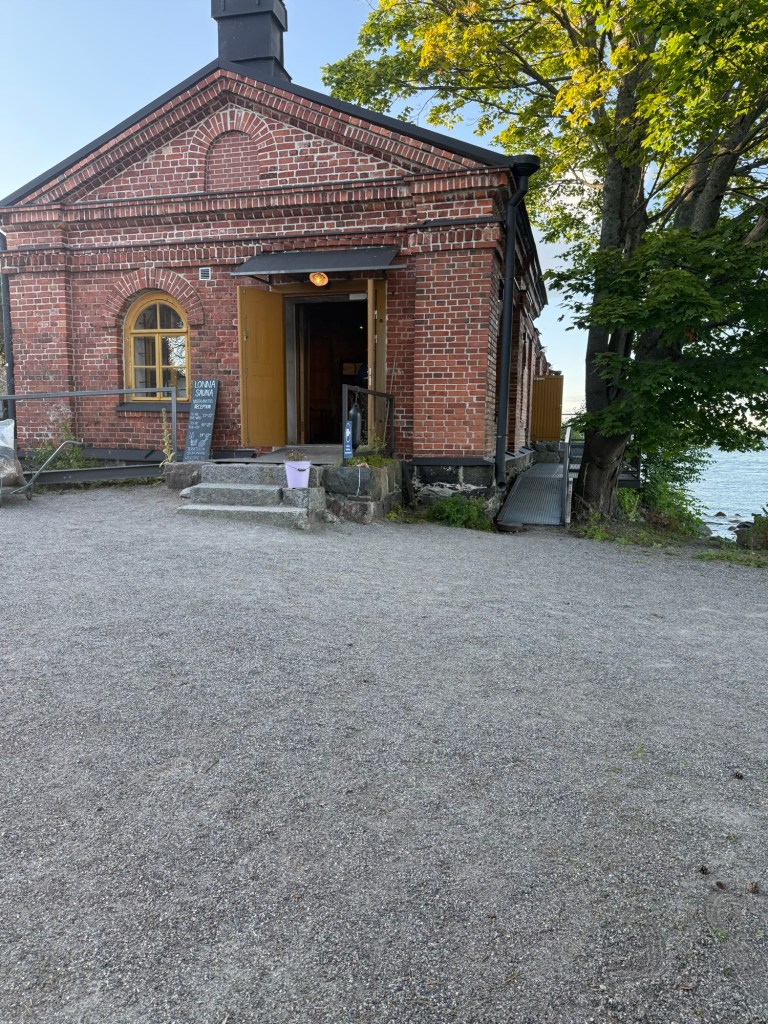
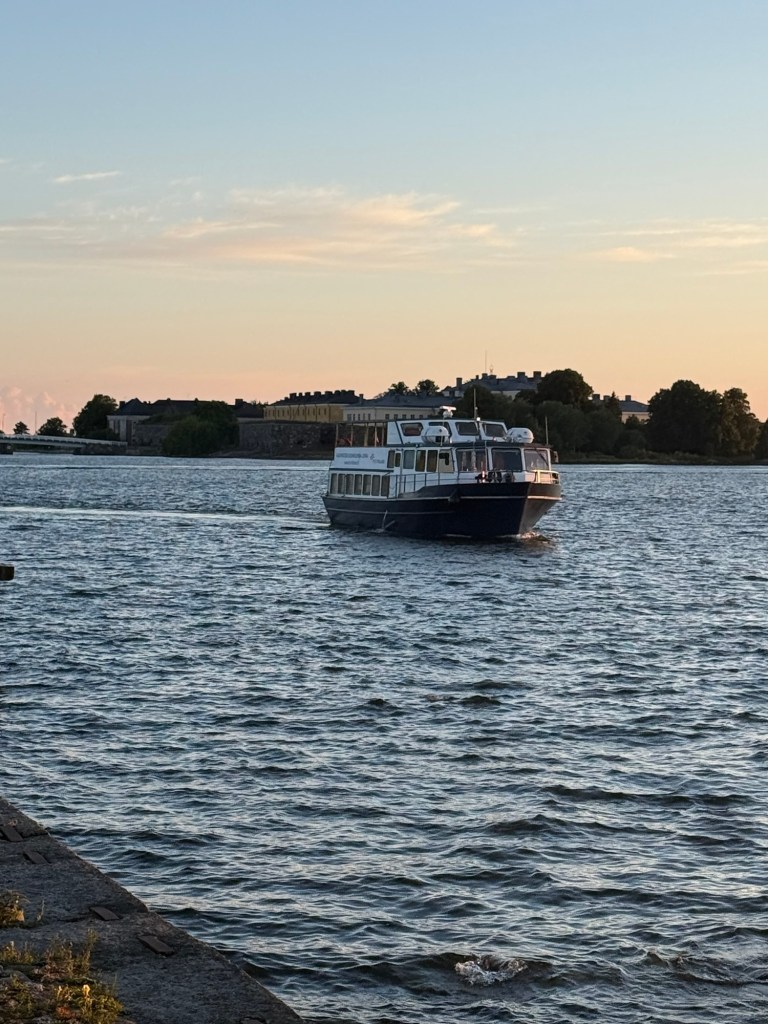
The dock at Lonna island where we went for a sauna late one afternoon.

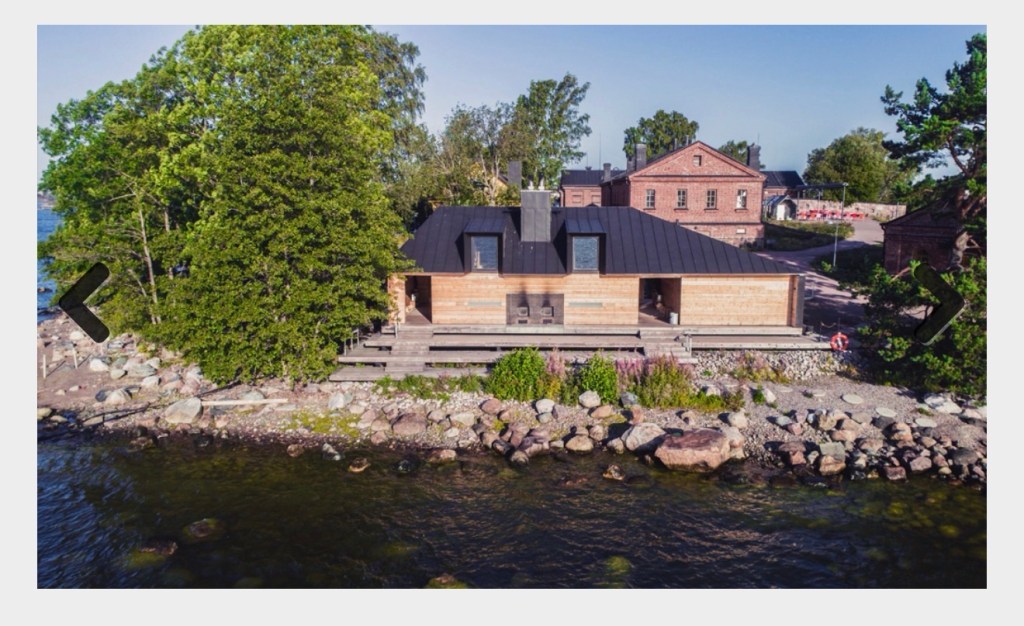
We caught a ferry to Lonna island where there is a sauna and restaurant too. The saunas were busy, and we were definitely on the older end of the age group that predominated. But it was really nice to start off chilly from the wind that was coming off the water, and then to get in the Baltic Sea after a little while in the sauna.

We’d popped into the restaurant when we got to the island to ask about making a reservation, and were excited to get one. After such a nice sauna and swim, it was very cool to be served a meal of simple and beautiful food. The brown bread was soft, with butter with coarse salt on it to put on the bread. The salad was artful. The restaurant got slammed with sauna goers though, and we could tell that things were backed up with lots of folks waiting for main courses. Someone who looked like a manager started filling water glasses and helping to get food to tables. Will and I had decided we’d just take a later boat, but when we finished up sooner than expected, we did what everyone else was doing— we ran for the boat!! Sometimes, life experience just follows us to other places huh? As it turned out, the crowd was well organized on the dock before the ferry even pulled it. All was well.

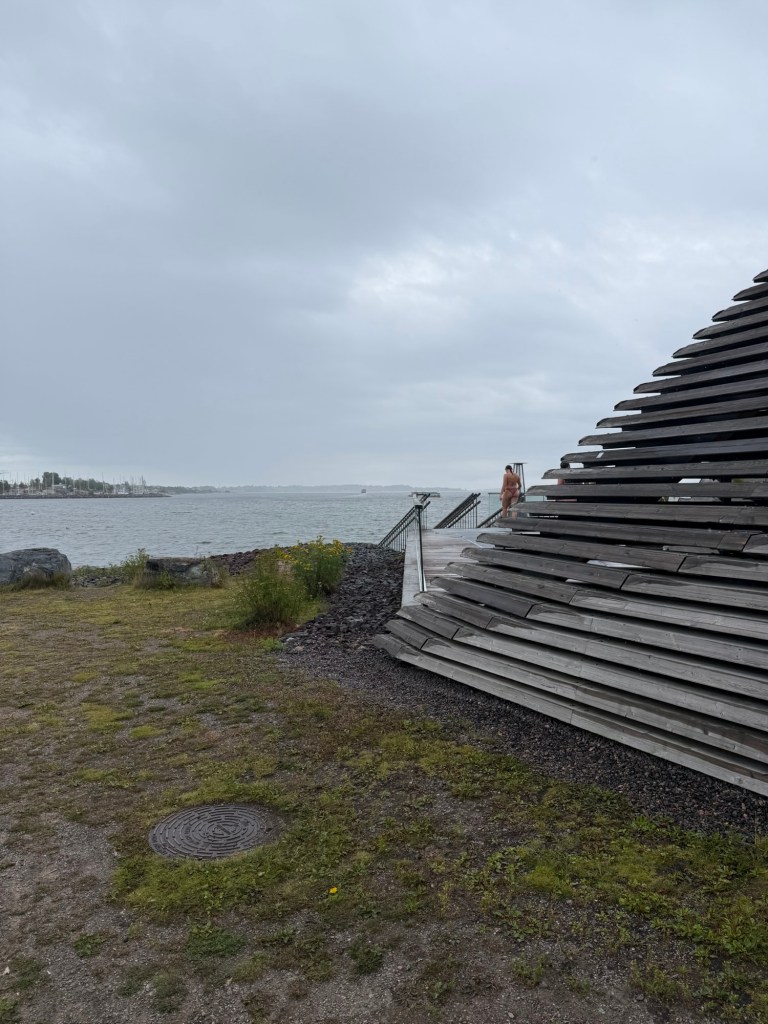
A view from the outside of Loyly Sauna Helsinki– it was a rainy day so there weren’t any people laying out like there is on their website.

Loyly was busy but not packed on a rainy afternoon. We tried the various saunas and I found one that was not too hot to hang in for a while. Will and I got in the choppy sea outside a couple of times; it had some bounce to it but it wasn’t cold surprisingly.

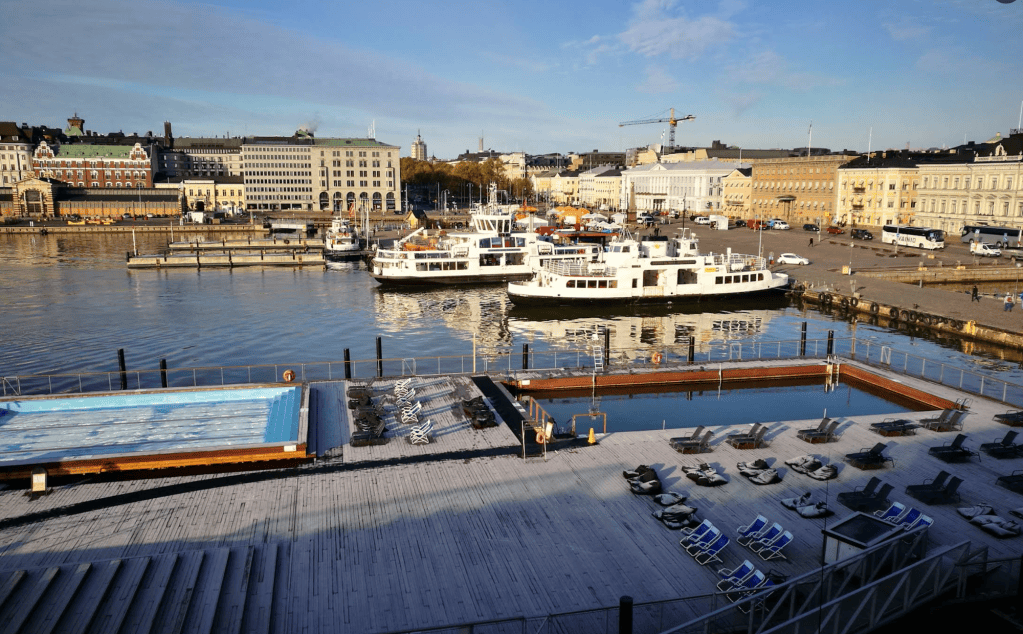
The last sauna we tried is a local pool and sauna place right down on the waterfront. It was a beautiful sunny morning, so there were plenty of people swimming in the 2 warm outdoor pools they have surrounded by loungers and deck chairs. Will got into the ocean pool but said it was a little green and slimy. The saunas had views looking out to the water in most of them; very meditative and dreamy to hang out there.

Here’s a photo from Allas Pools website- it gives a good idea of how the pools and sun areas are right there in the middle of the ferries and other waterfront life.
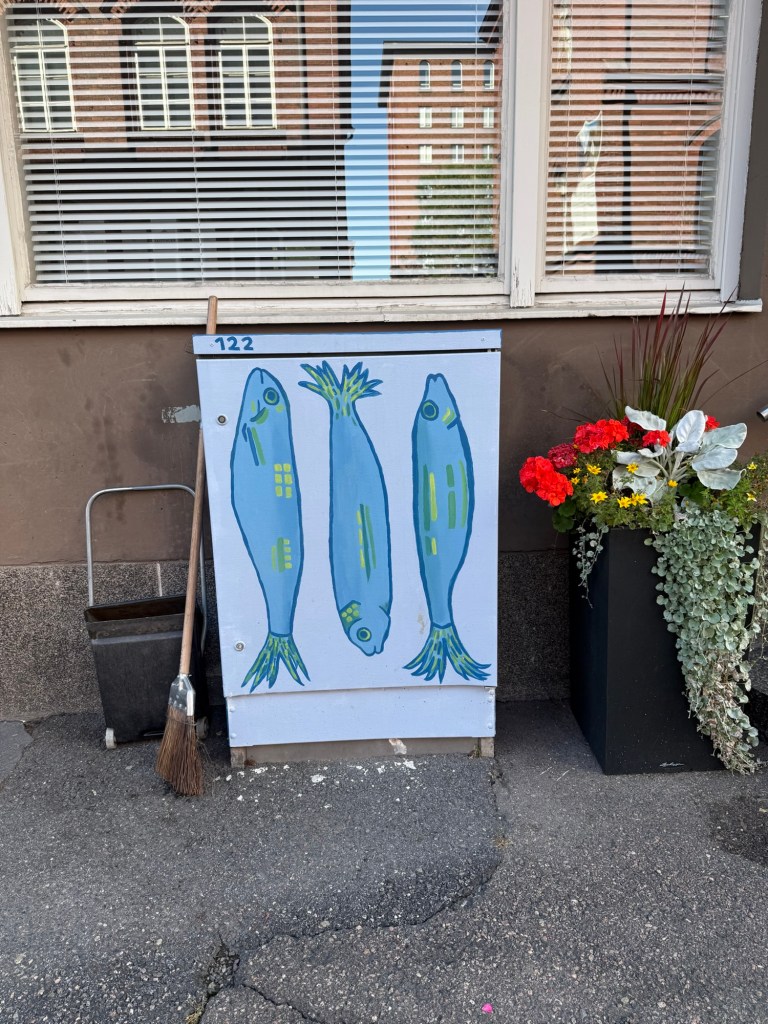
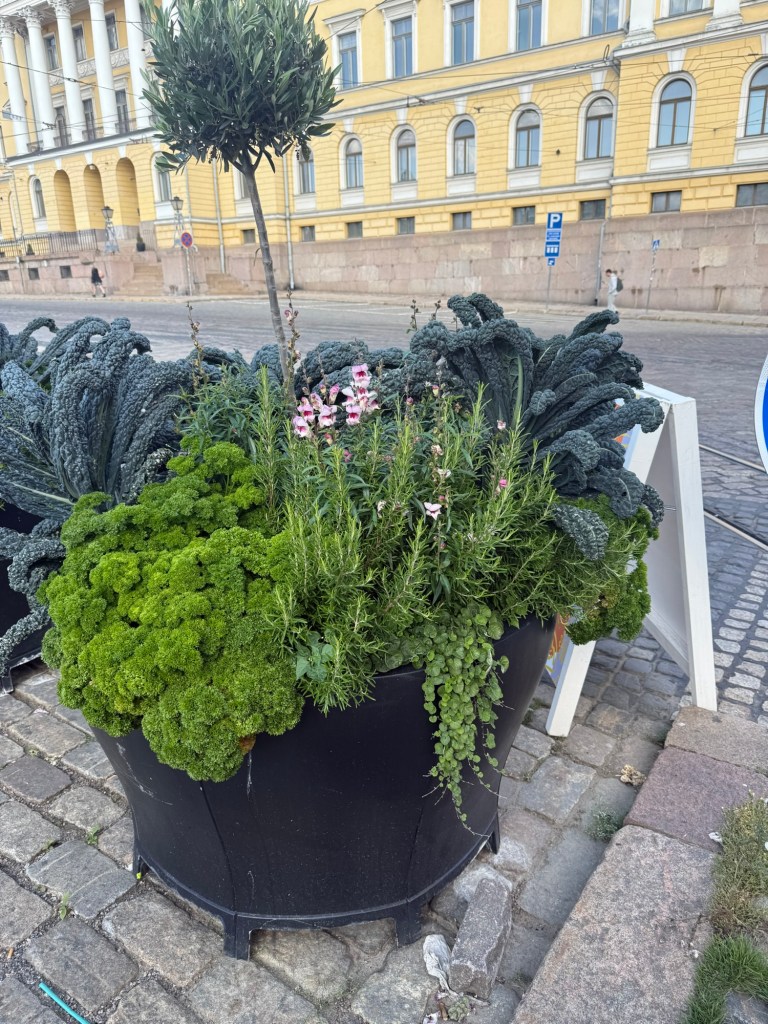
A useful and artistic pot of herbs and kale in Helsinki

I wish Will and I had taken more photos of the buildings all through the city. They are mostly tall, mult-unit apartment buildings with varying stone/veneers/ or skins as Will calls them. They were often lovely pale colors like pink or grey, and many had charming gates to open into the courtyards around which so many of the apartments are situated. The little we read about the housing styles is that these are likely the result of post WWII building for workers as Helsinki grew rapidly.

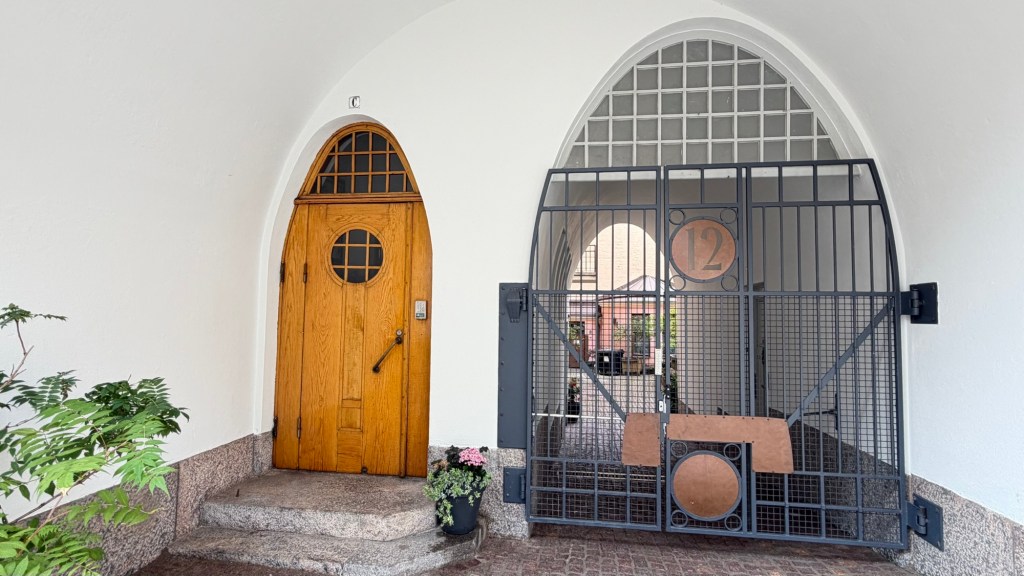
One of many enticing doorways and gates to the courtyards we saw in Helsinki.

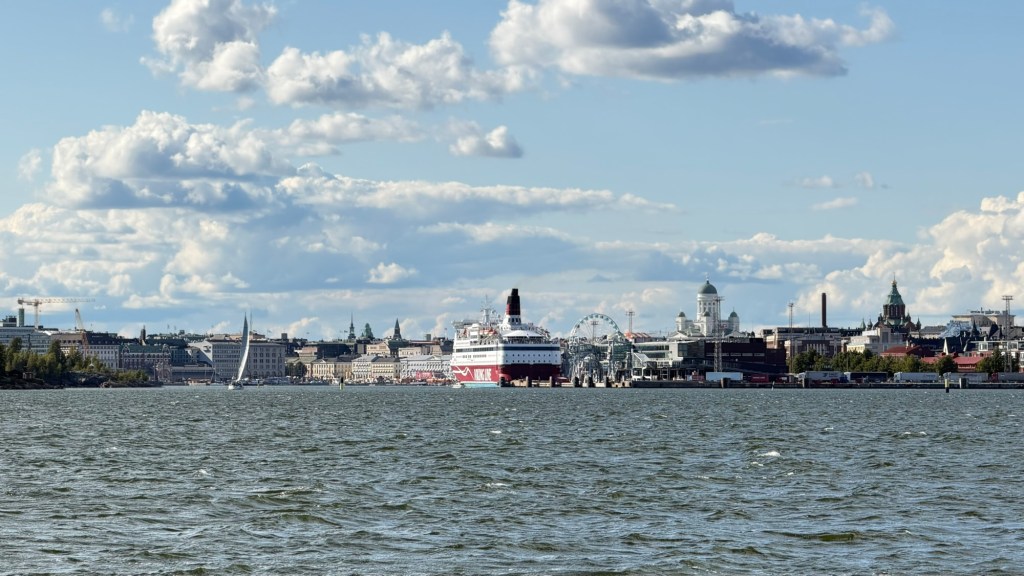
It was another rainy day when we boarded the ferry to head to Tallinn Estonia, a mere 2 hours away. But that’s for another blog post.

Copenhagen- beautiful and intriguing

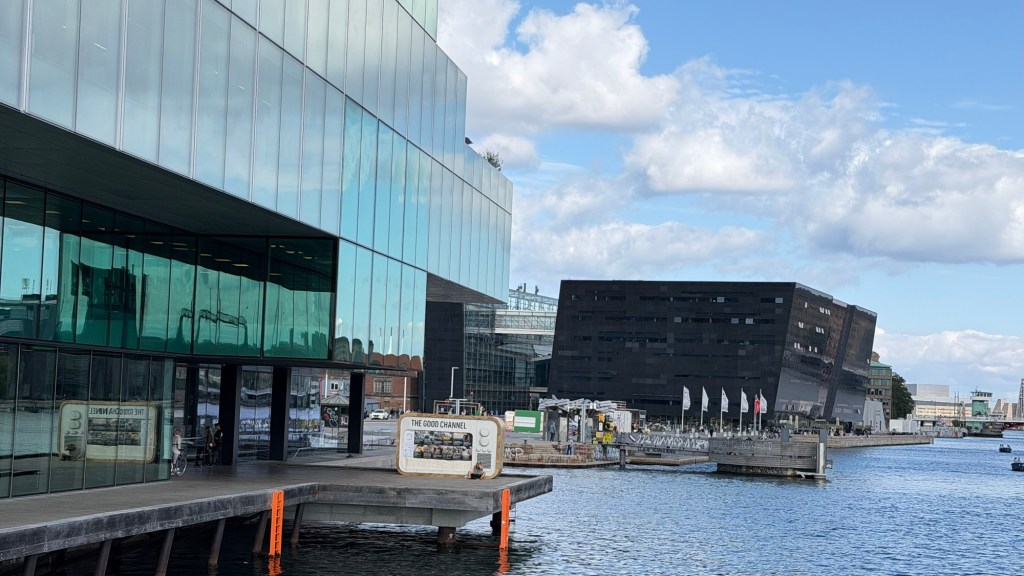
The Black Diamond- the Royal Danish Library

It was a little hard to leave the beauty of north Denmark, and it seemed that most of Denmark was traveling south to Copenhagen with us on the train. Just before our train change in Aalborg, the conductor told us that our connecting train was cancelled. Instead we would wait an hour and hope for a seat on the next train for the 4+ hr trip to Copenhagen. Will and I managed to get 2 of the drop down seats in the bike/stroller area of a train car. At every stop, more and more weekend travelers boarded, and we were surrounded by bikes and baby prams. There are lots of brave young parents traveling with very young babies all over Denmark!

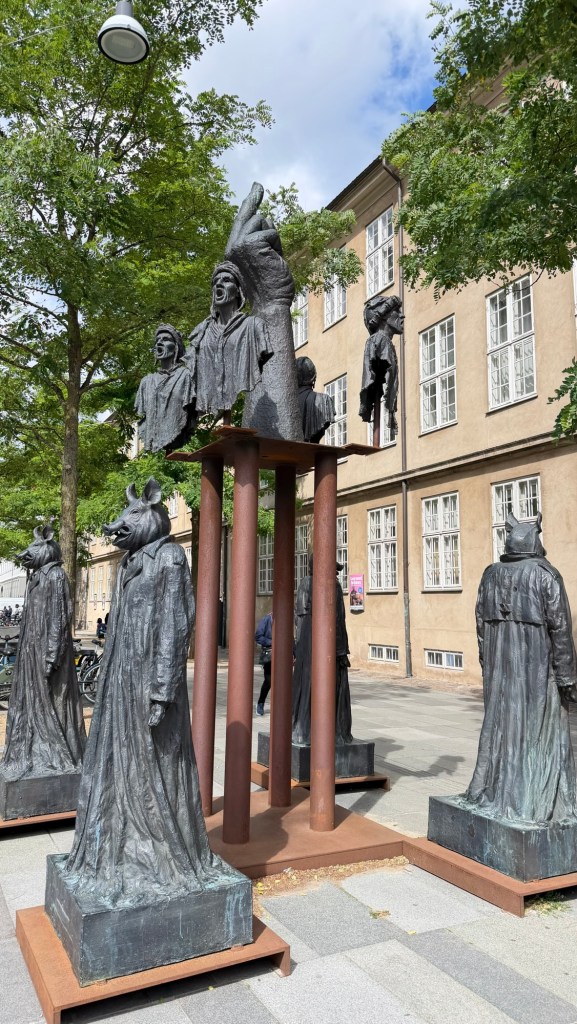
Dante In Dialog with the 21st Century statue

Walking around Copenhagen is like walking in a huge museum of life with all its beauty and bumps. The statue above was created to protest the City’s plan to build an underground parking garage in the area, causing destruction of buildings, a playground and old trees. The sculptor Jens Galschiot was recruited by residents to create this eloquent sculpture. He has works in other cities that are as equally profound.

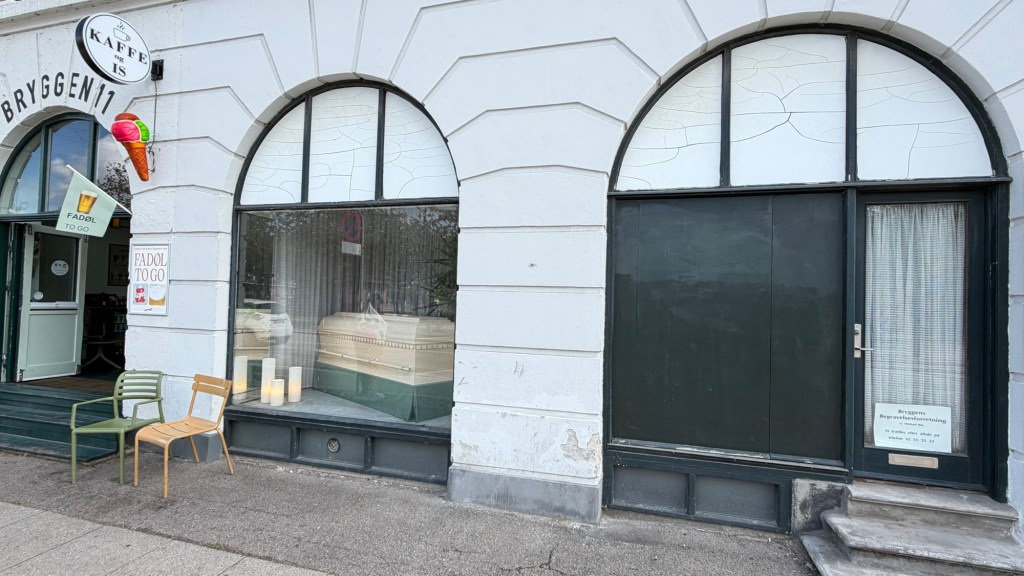
A store window advertising coffins- NEVER seen this before!
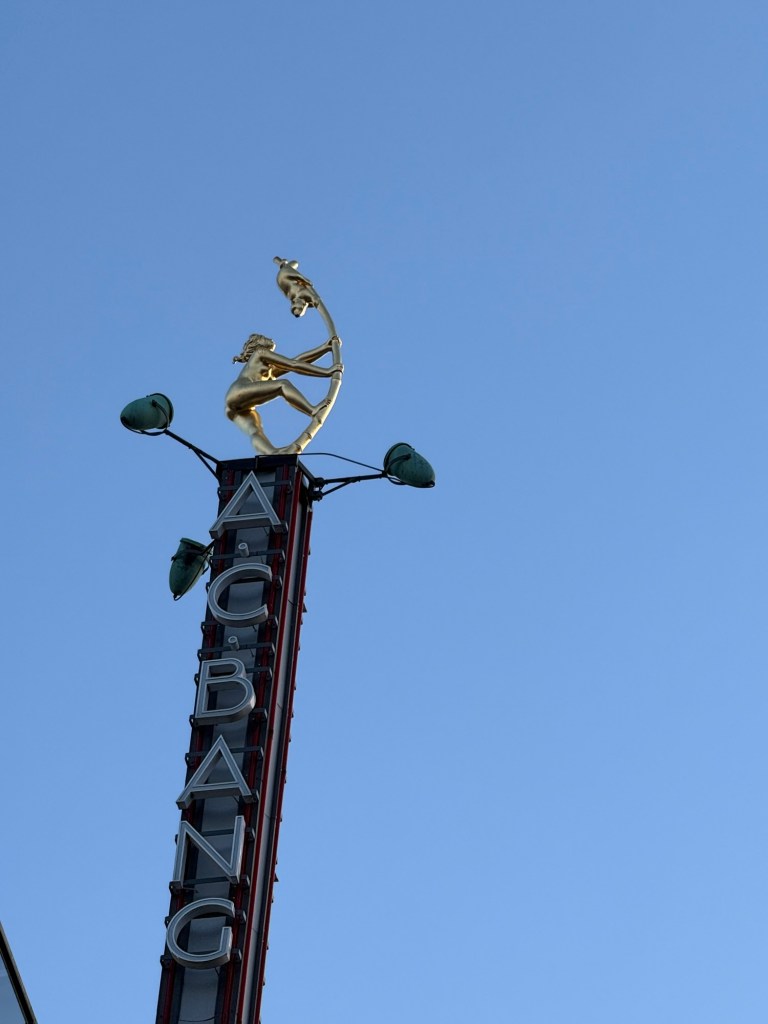
Gold figure on top of the AC Bang building; the figure is the Roman goddess of the hunt. AC Bang is a furrier company founded in the 1800’s.
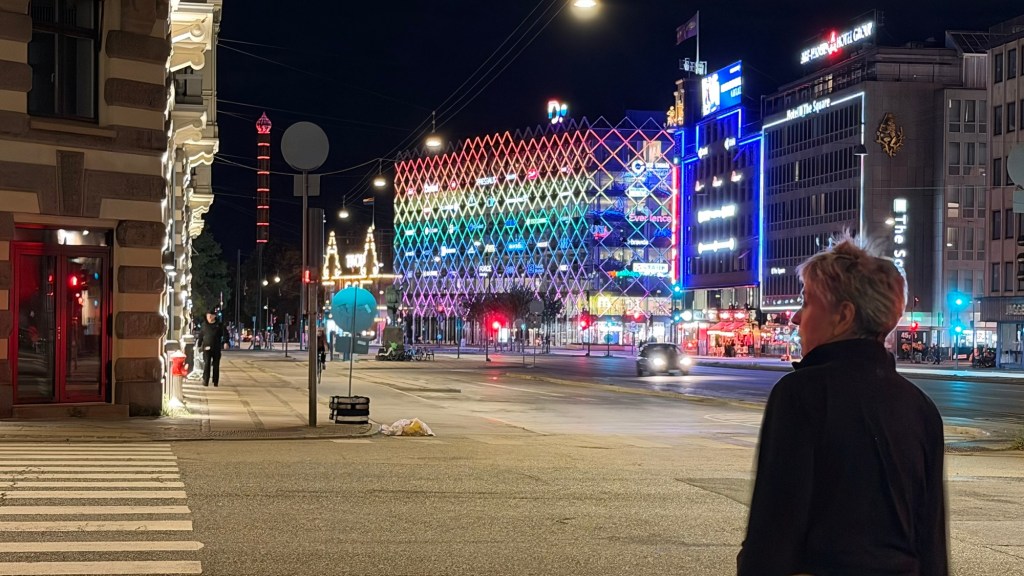
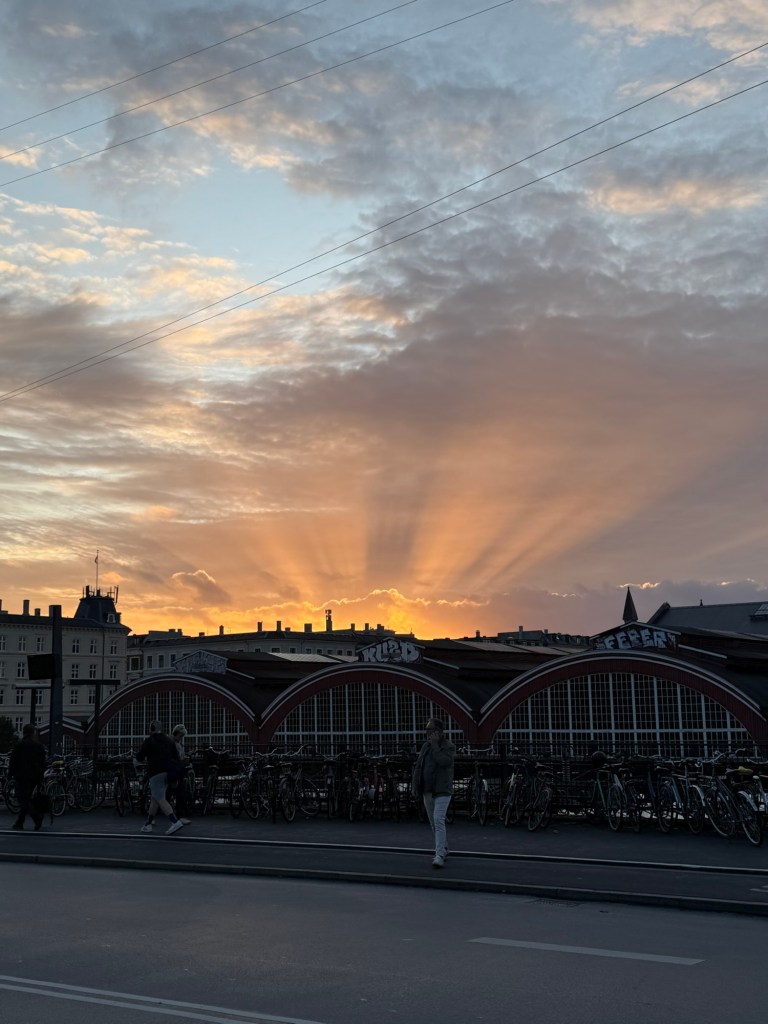
Mother Nature puts on the best show with this end of day light show over the central train station

Walking the north coast of Denmark : pt 3 Skagen

Hotel Inger gave us a hearty Danish breakfast to fuel our 8-9 mile day. The town of Hulsig (pronounced Hulsee) is very small so it was easy to find the trail near the train stop. The trail followed a bike path and then left the forest to wind through the dunes again. Our legs were still tired from our dune hike the day before. When we stopped to lay in the sun, we fell sound asleep! We slept for over an hour, that deep sleep that feels like you swim your way out of it,and emerge feeling like everything looks new.

The sky on the beach walk to Skagen.

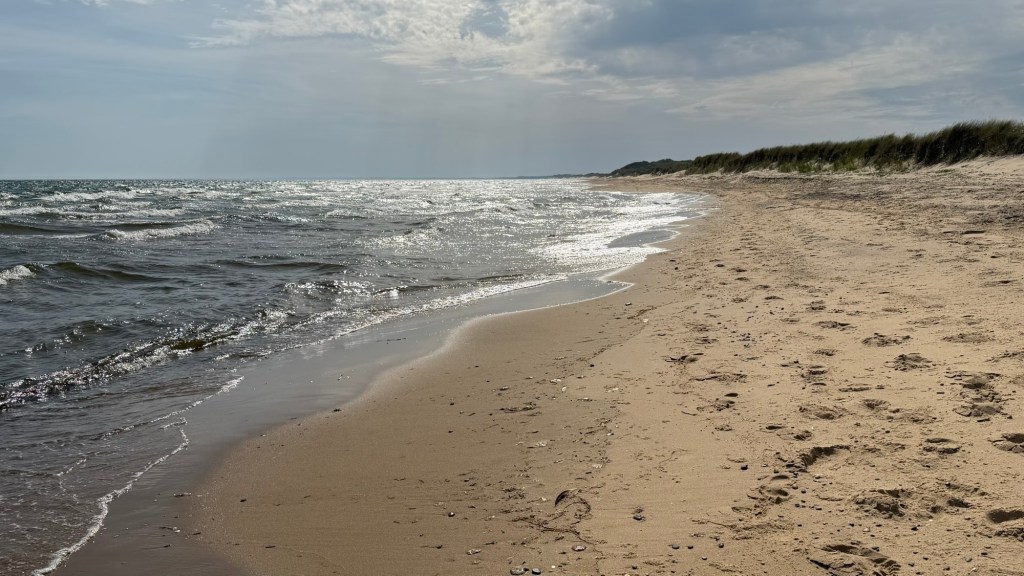
The walk felt shorter striding along the beach that afternoon. The colors and light in the sky were shimmery. No wonder painters were drawn here in the late 1800’s.

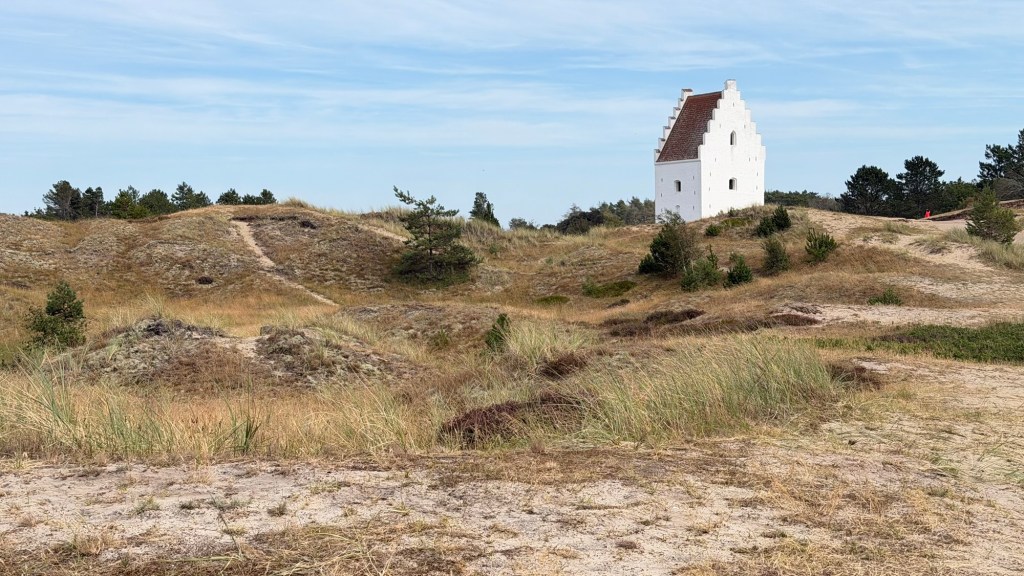
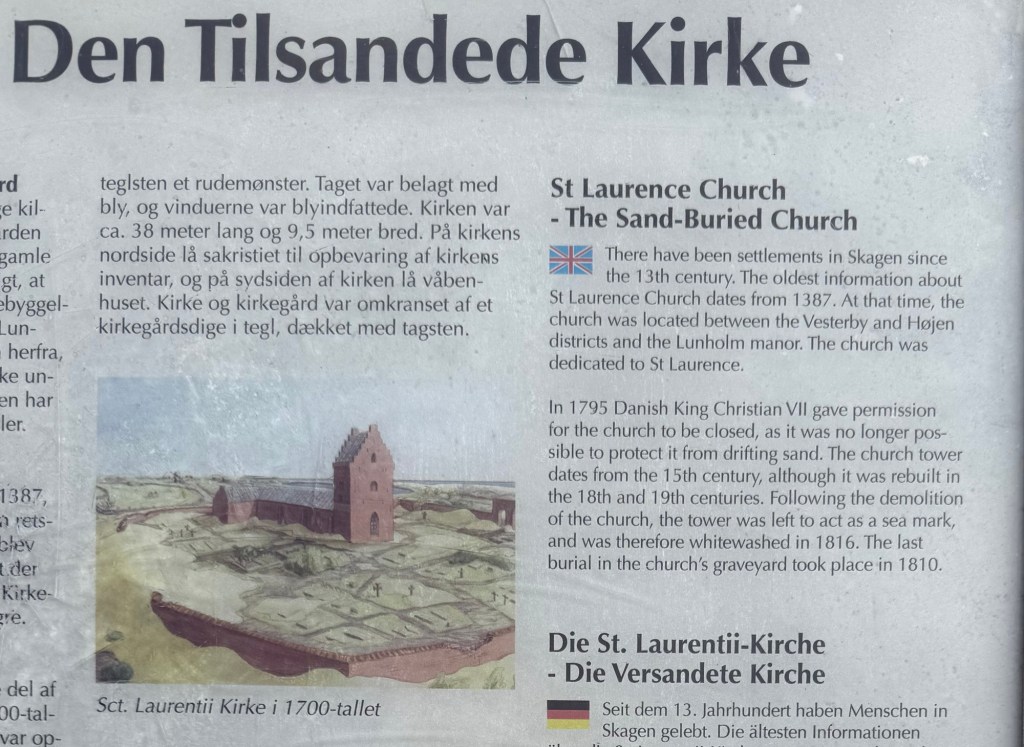
The Sand Covered Church

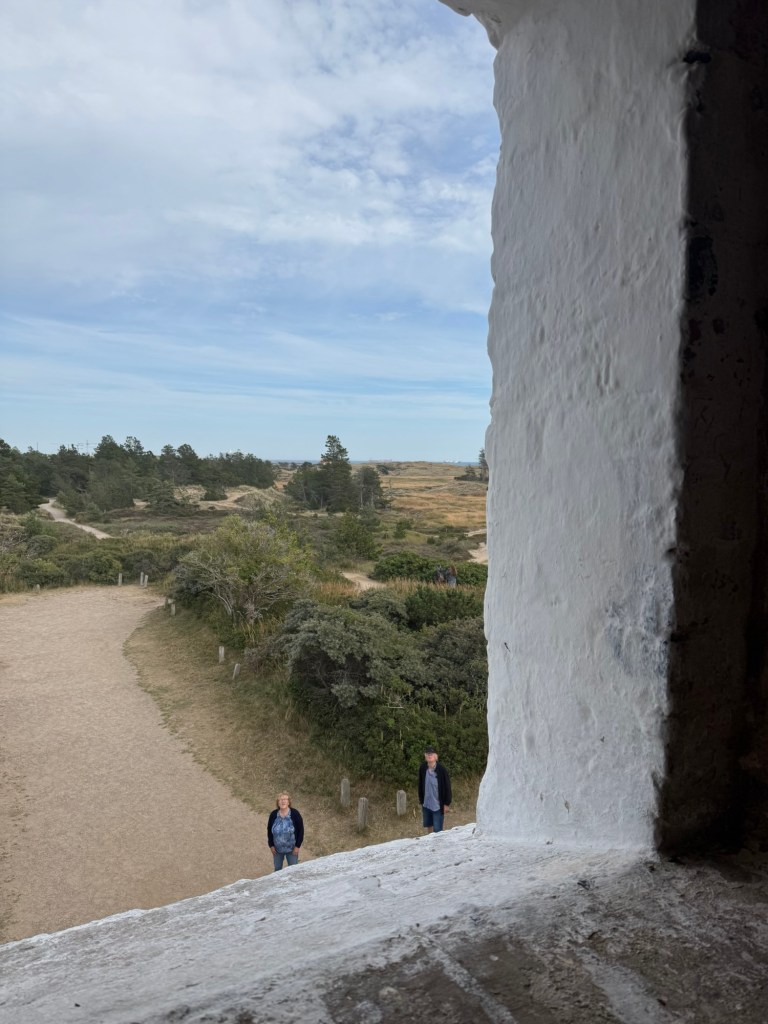
A turn back into the dunes brought us to the the sand covered church. Sand began drifting from Rabjerg Mile to cover the church, a village and land around the church in the early 1600’s. By the late 1700s the people had to dig out the entry each time they used the church! The church was closed by royal edict and demolished except for the bell tower. It’s empty inside with a narrow stair that goes up inside.

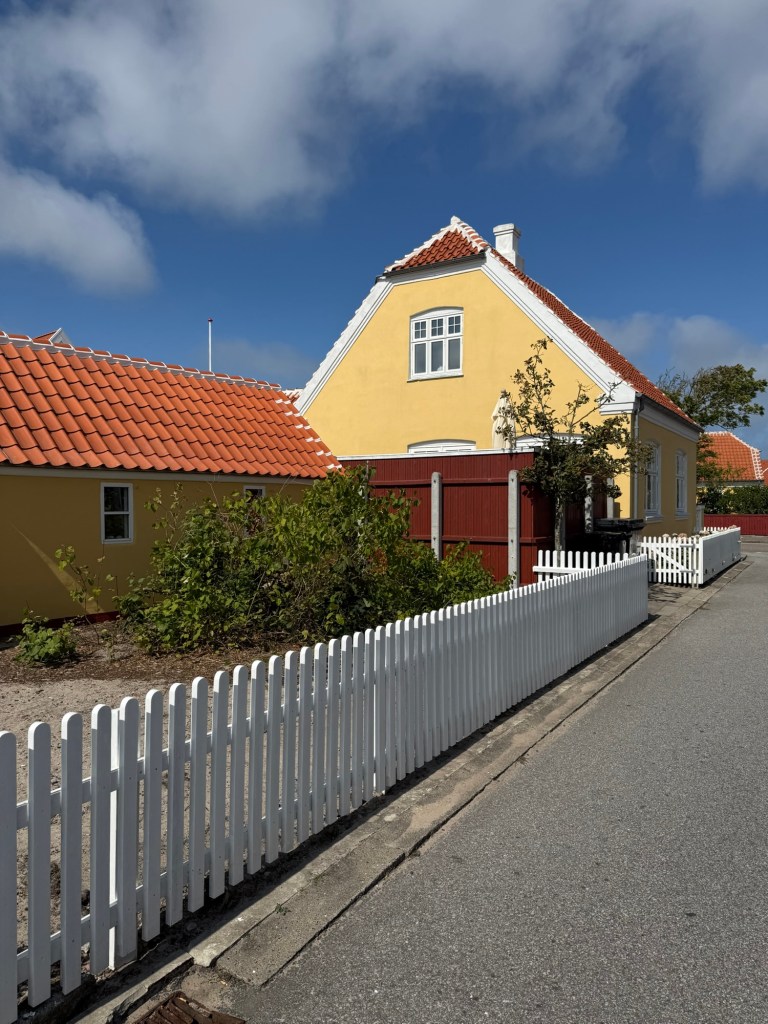
The coastal walk ‘finishes’ in Skagen, the port town at the top of northern Denmark. It’s very pretty with yellow houses, lots of boats of all sizes, gardens, shops and museums. Artists began coming here from other parts of Denmark, Sweden and Norway in the late 1800’s because of the beautiful light and landscape. We stayed two nights to explore the town and the Skagen Museum.

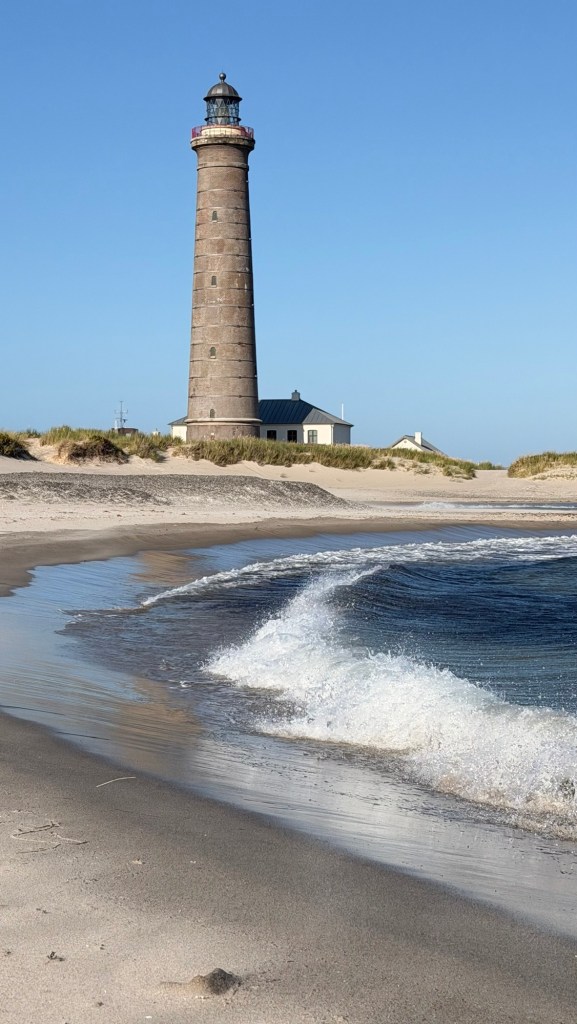
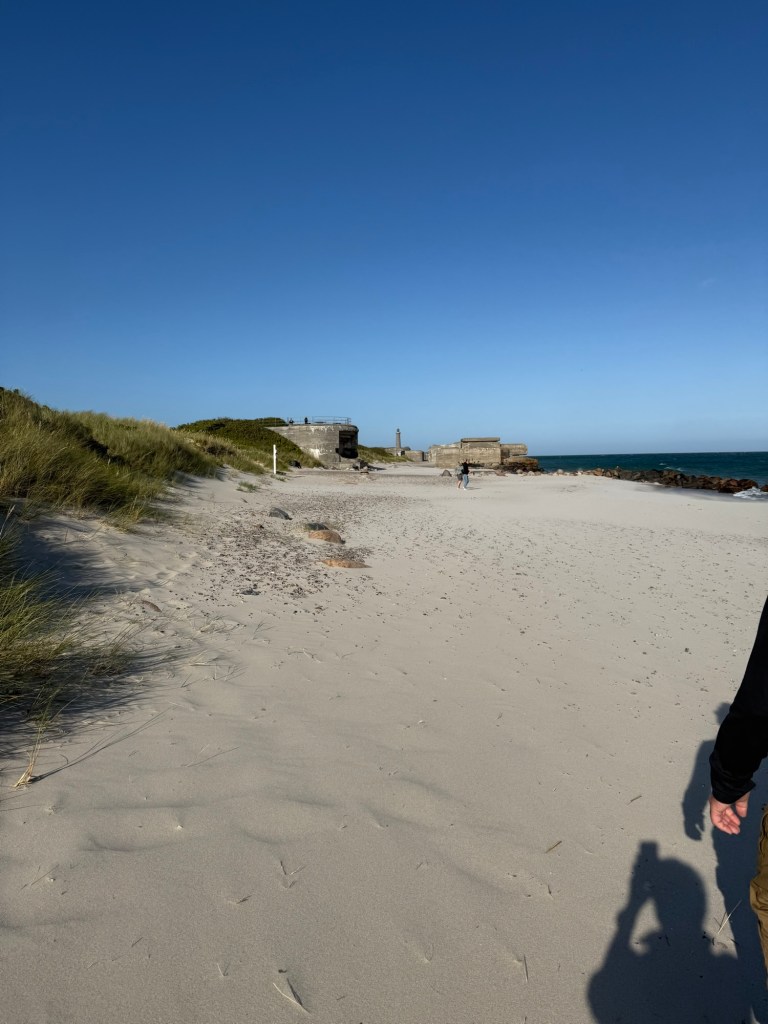
The Grey Lighthouse in Skagen

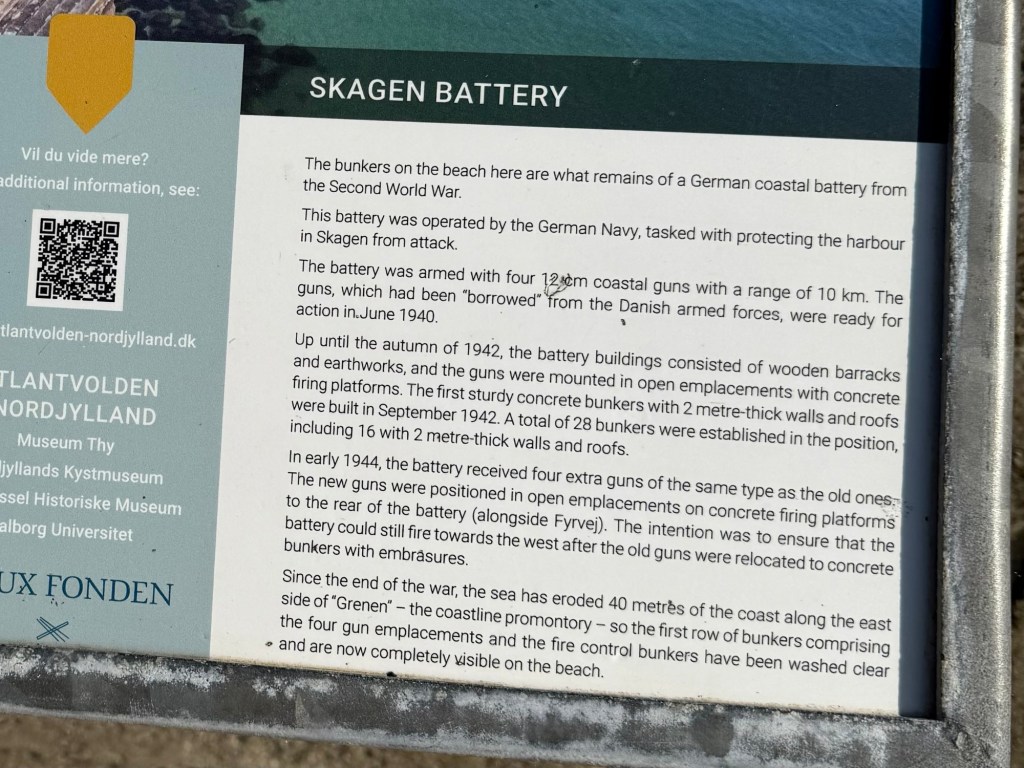
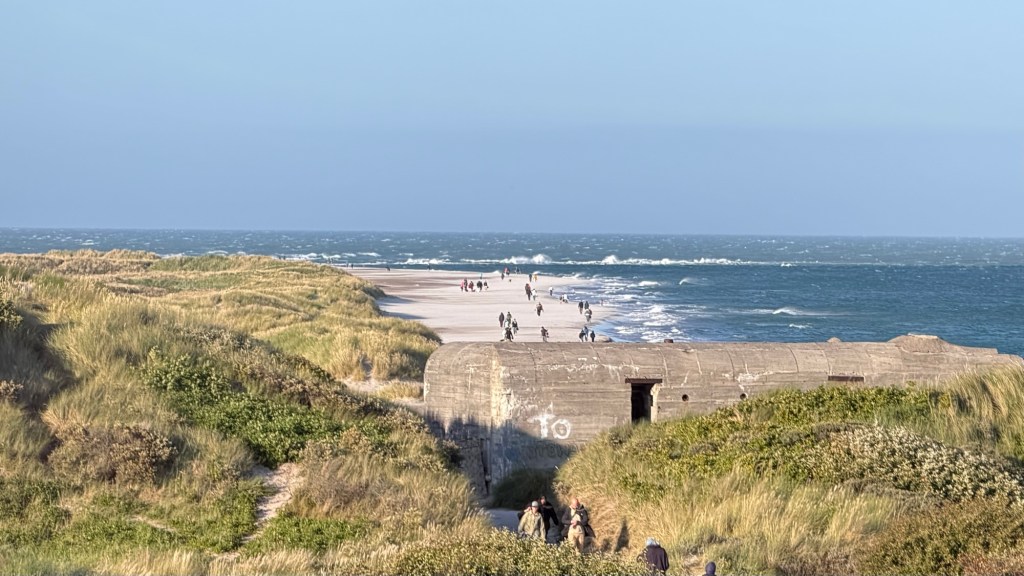
The beach around the Grey Lighthouse has bunkers emerging from the sand; the bunkers were built by the Germans during WWII.

The town was very busy when we arrived Friday afternoon. The town is packed on summer weekends with tourists from the cruise ships, as well as visitors from other parts of Scandinavia. Parts of the town are pretty rowdy with bars going strong til late.

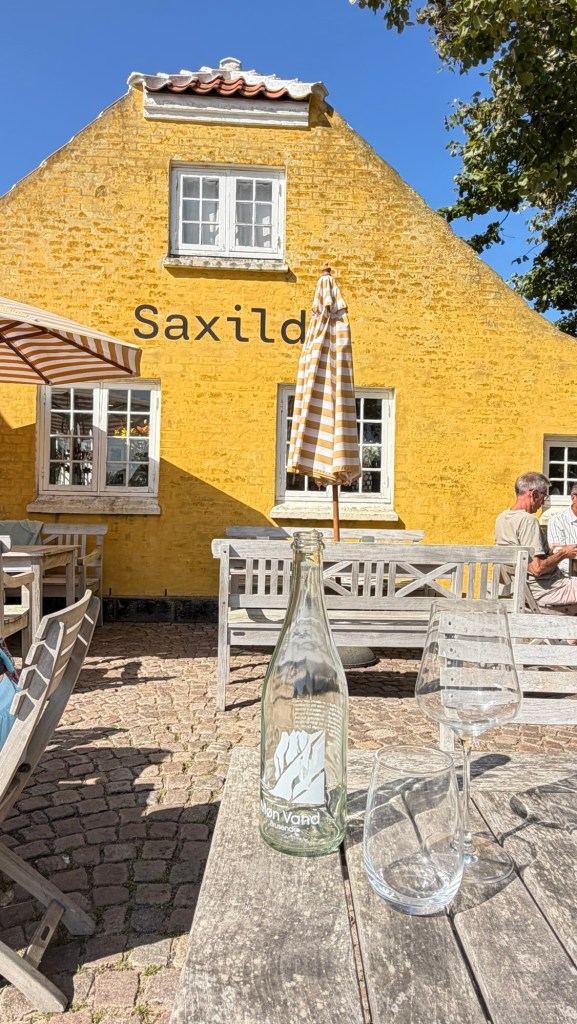
Sunny Saturday lunch in the garden at Saxild in Skagen

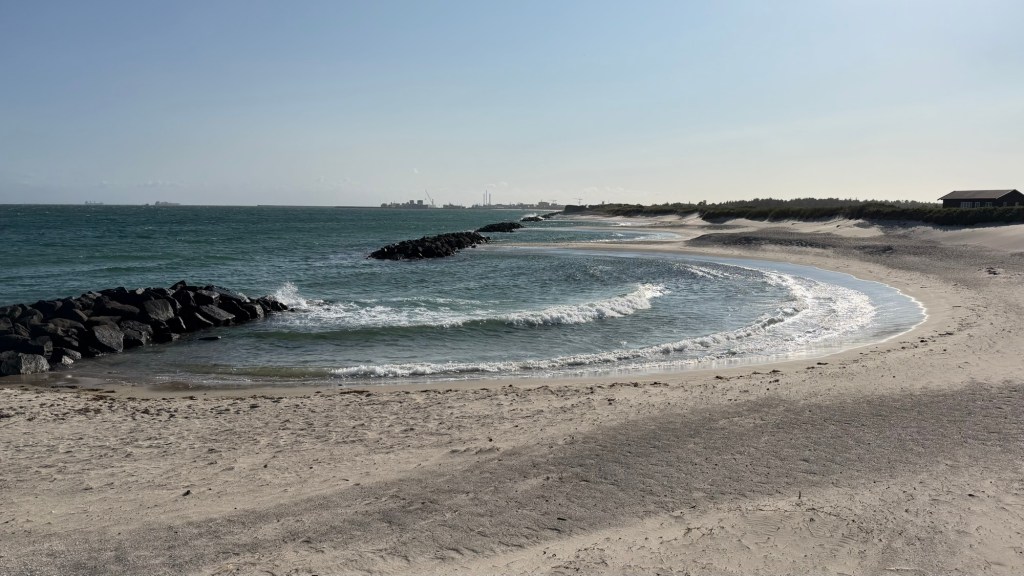
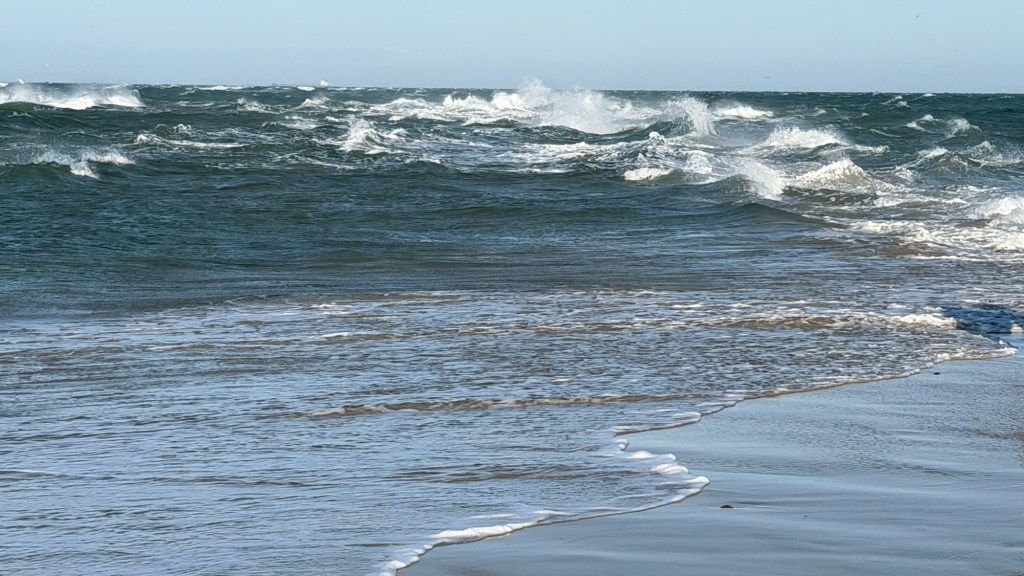
After a yummy lunch in a quieter part of the town Saturday, we started out on the circle loop walk to Grenen. Grenen is the point of land (beach) beyond Skagen where the Skagerak Sea (North Sea) and the Kattegat Sea (Baltic) meet. It was super windy that day, so we walked with the wind at our backs to head out there. Seeing the two seas’ waves crashing into each other felt a little like applause for finishing our coastal walk! It’s very dramatic.

View out toward Grenen over one of the bunkers
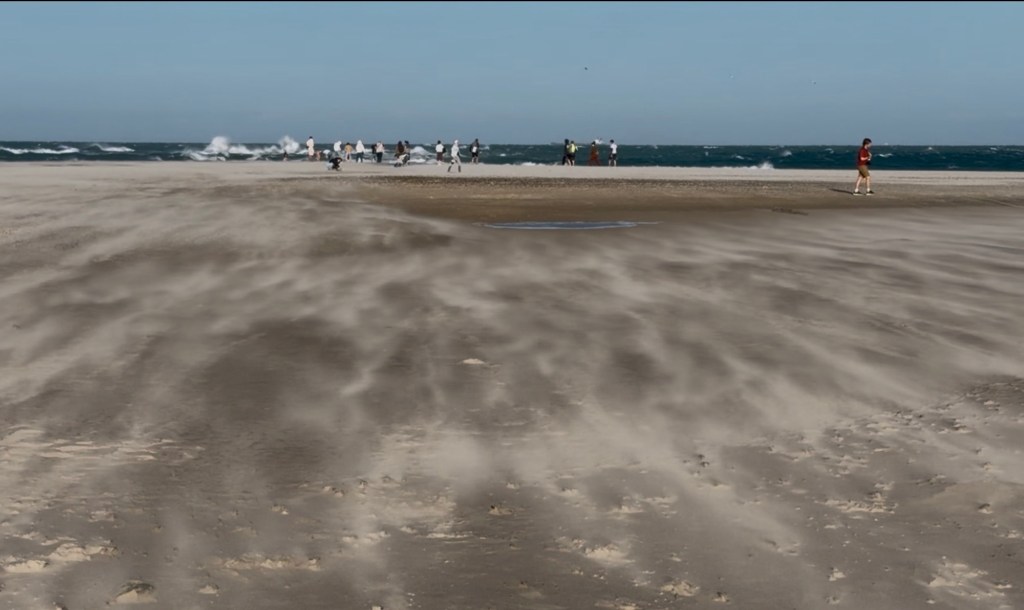
The wind carried the sand at our backs on the way out to the point. It made for a hard walk on the way back to town.
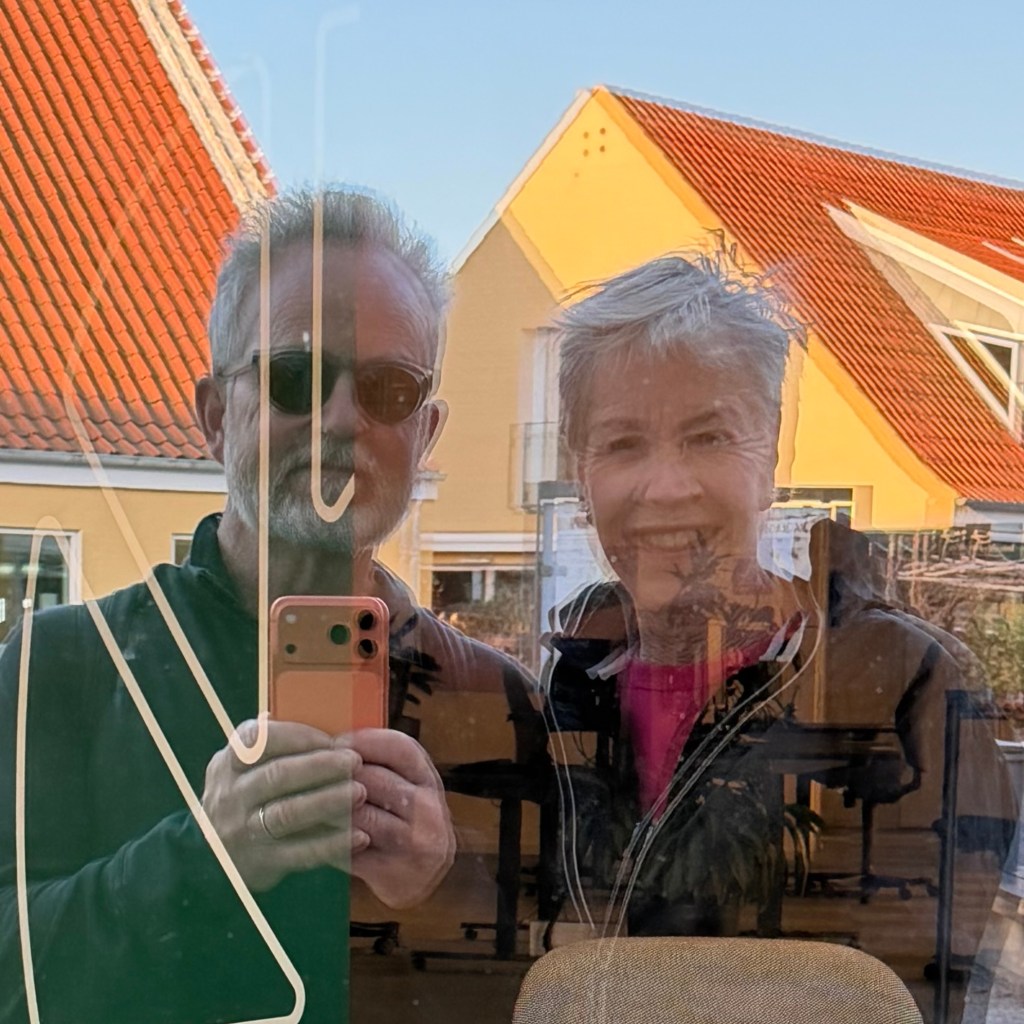
Will took this (store window) reflection photo to capture how windblown we were from the walk out to Grenen and back. What it doesn’t say is how tired our legs were too!

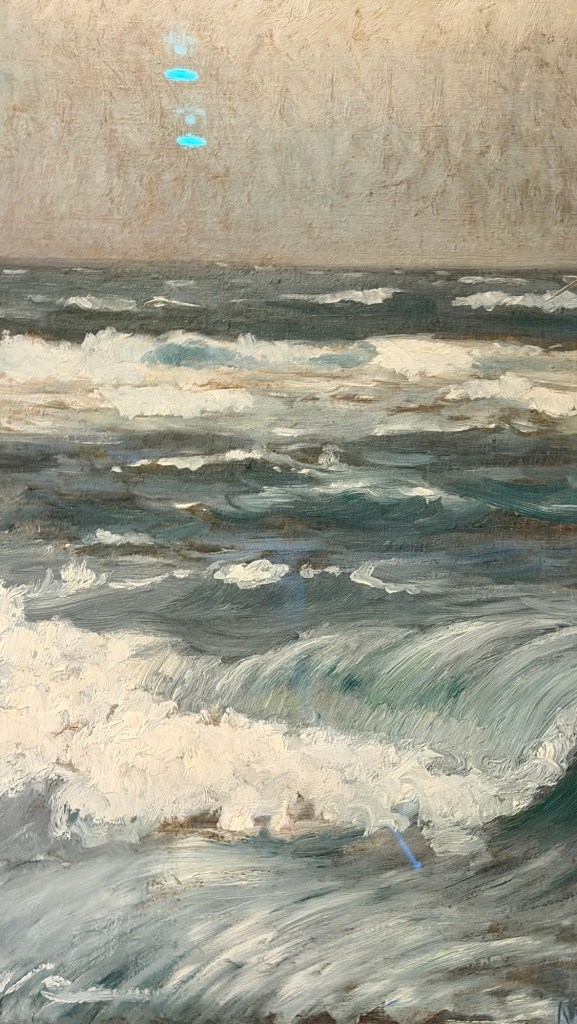
We visited the Skagen Museum to see work of the painters of the late 1800’s-early 1900’s. It was an intriguing group of Danes, Swedes, Norwegians and others that shared their work and lives. They captured the fishermen and town folk as beautifully as the landscapes. A few paintings also chronicled a failed rescue and the funeral for a drowned fisherman while others depicted ordinary moments in daily life. They used gorgeous thick oils for the most part, and that gave most of the paintings a richness and depth.

Walking the north coast of Denmark pt 2

The second day of our North Coast Trail walking was warmer with varied terrain at every turn. We had about 17 miles to walk, so we planned to have a swim somewhere along the way.

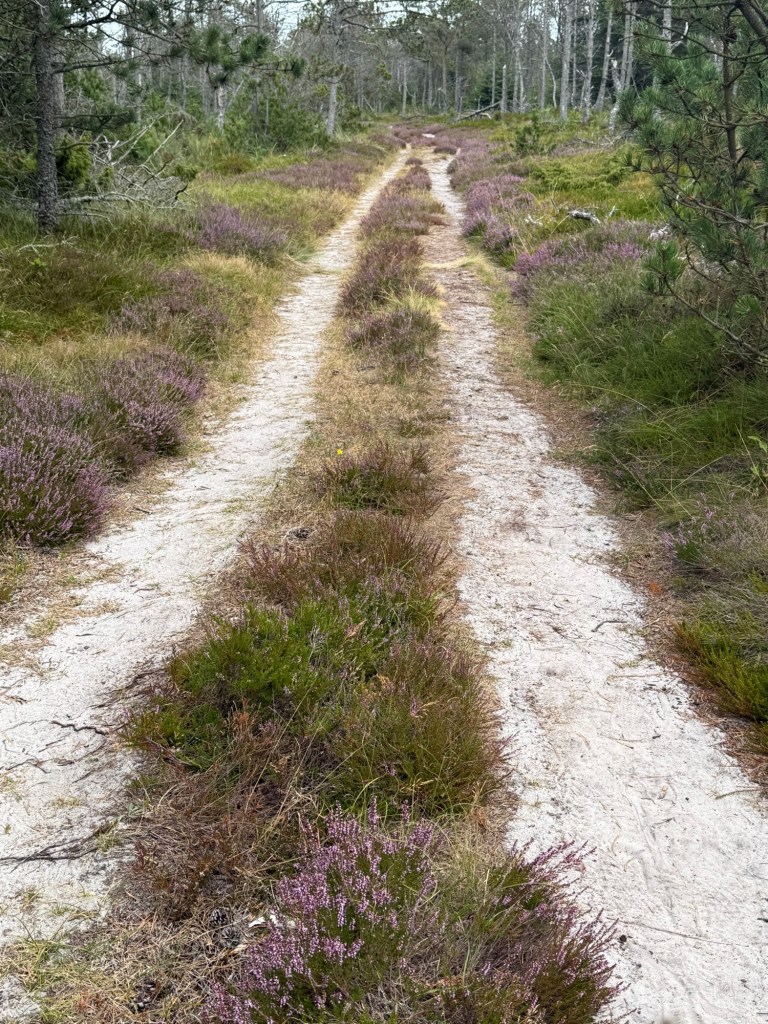
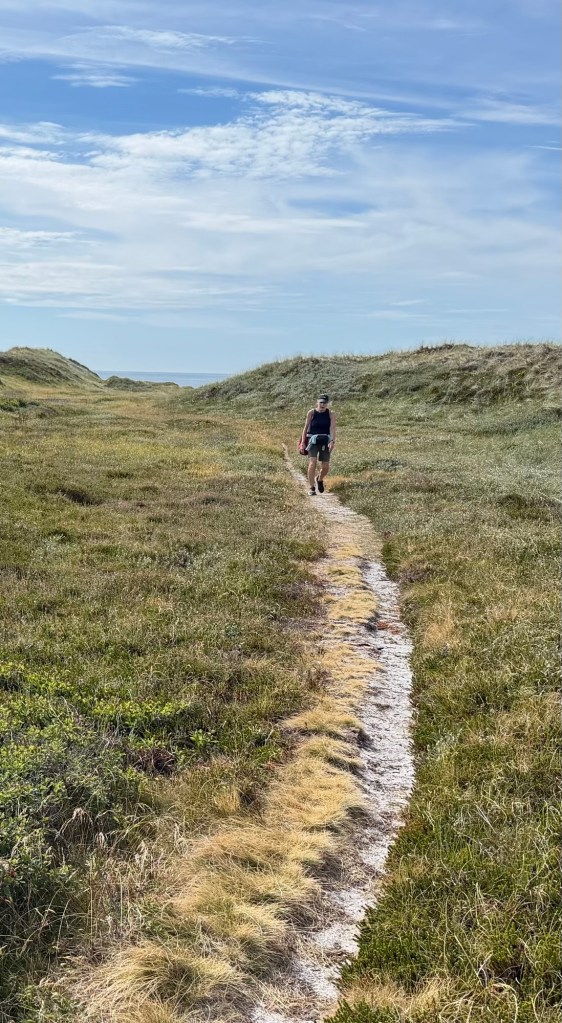
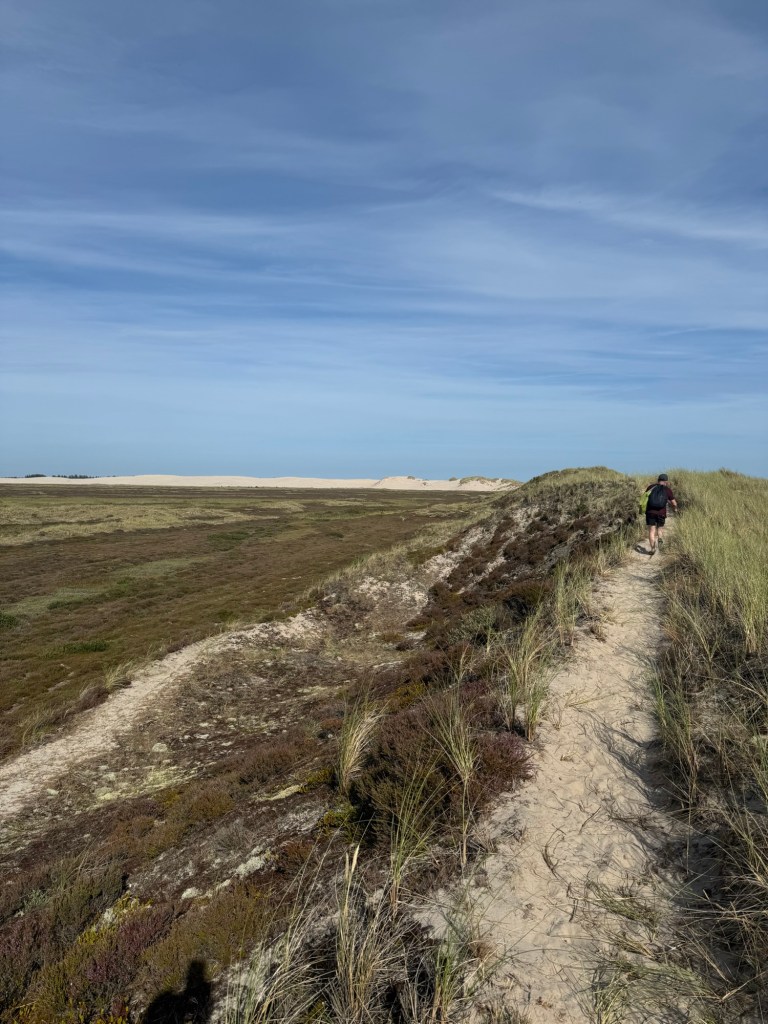
Heather in and around the track

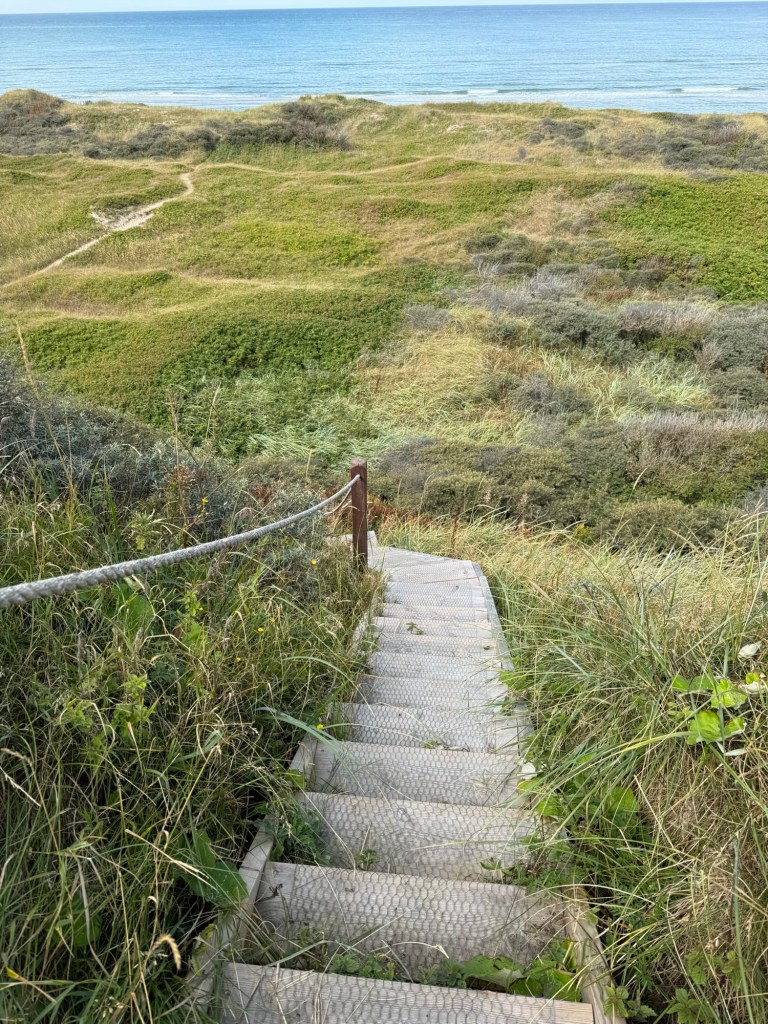
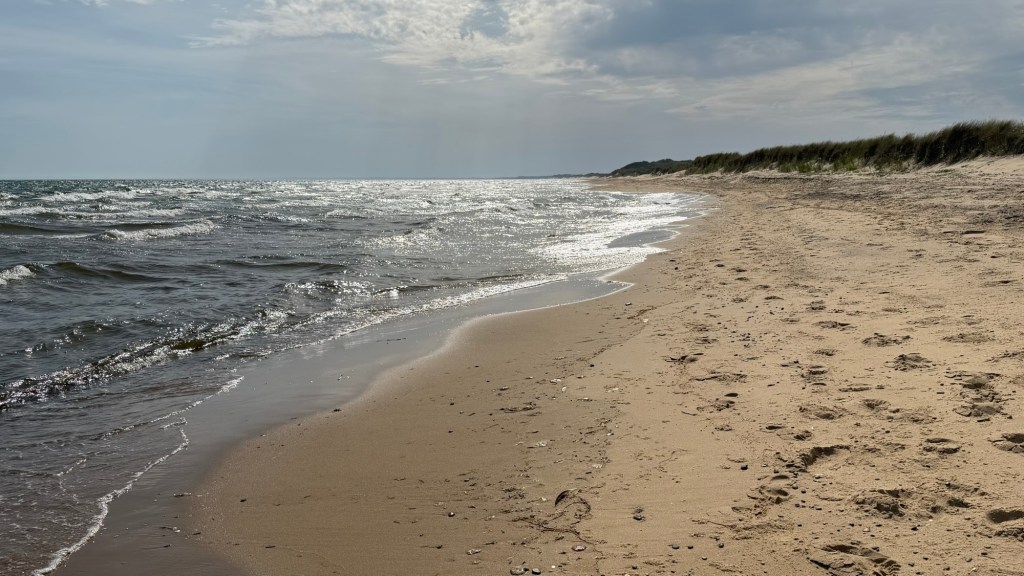
Eventually this stairway appeared, leading the way to the long flat beach. It was cooler with every step. Will and I were excited to get into the water. No one was close by to see us running in without any suits. When I was dry and dressed, 2 friendly Danish walkers stopped to chat. They have been walking the 500 km of the whole Danish coast on long weekends since May. They’re friends who made this plan in the winter and now, they were nearing the end of the journey. I mentioned to them that Wild Rover Travel had called that morning to alert us to the possible presence of wolves and their pups in a forest further along on our day’s journey. They’d had the same news when they were further south weeks before, but hadn’t seen any wolves in their travels.

The sky was beginning to give us an idea of the light that attracted artists to the North coast of Denmark in the late 1800’s and onwards.

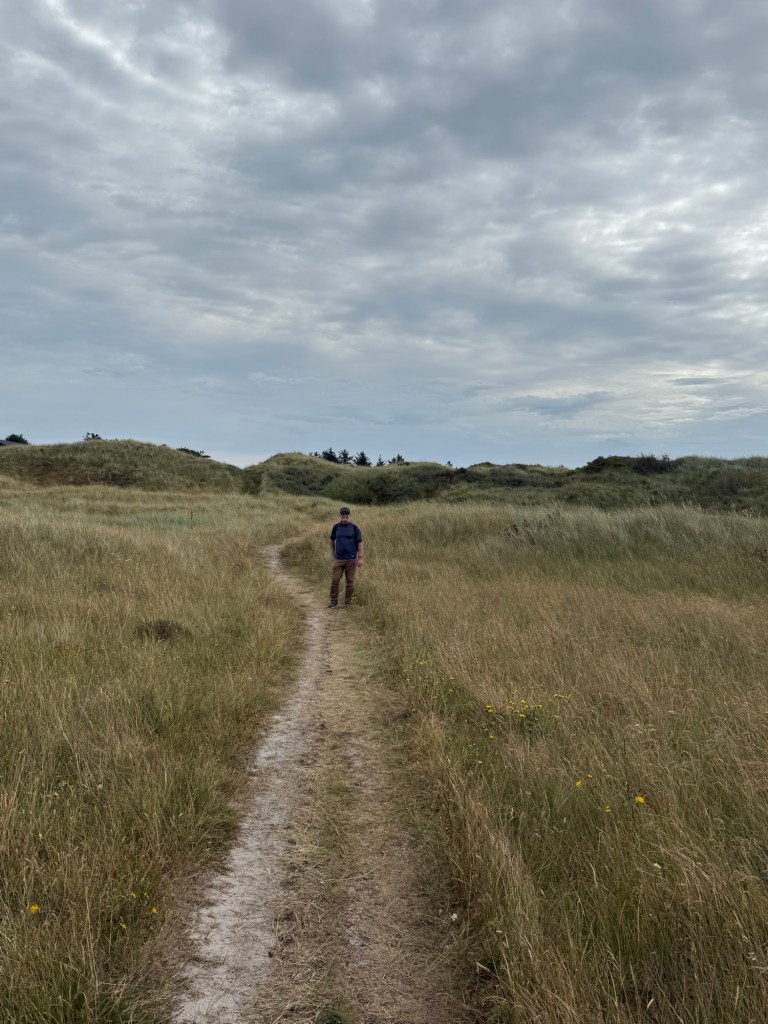
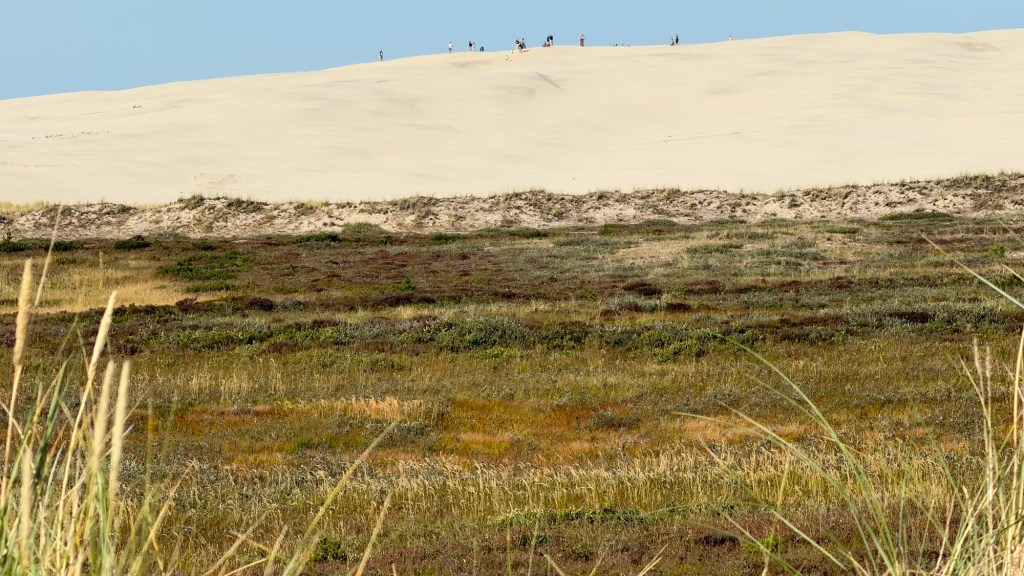
The breeze didn’t follow us into the paths between the dunes when we left the beach. These paths were very narrow with ankle scratchy twigs and grasses. At one point, we lost the way and had to backtrack to find the right trail. We kept going and the famous Rabjerg Mile began to emerge in the distance. It’s famous for being an inland dune, 1km x 1km in size, and moving 15 cm each year. It’s expected to reach the farthest tip of Denmark, covering the road to Skagen, in 100 years or so!!

The trail goes atop the dunes- we had to work hard not to touch the sharp grasses as we looked ahead at the Rabjerg Mile.

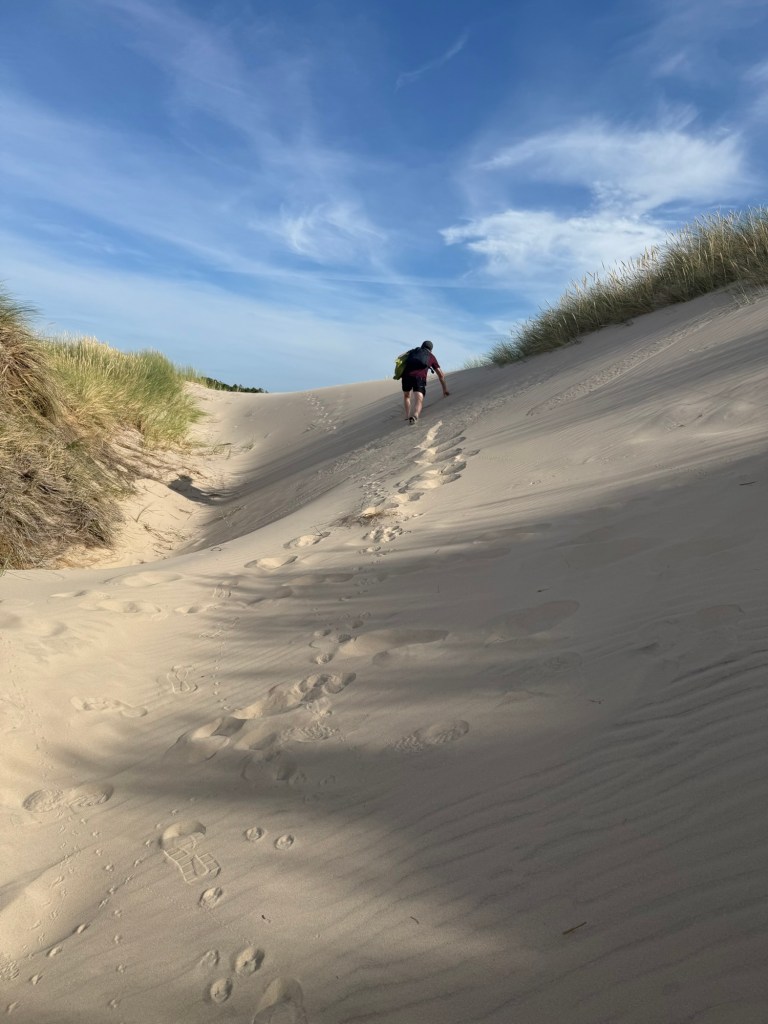
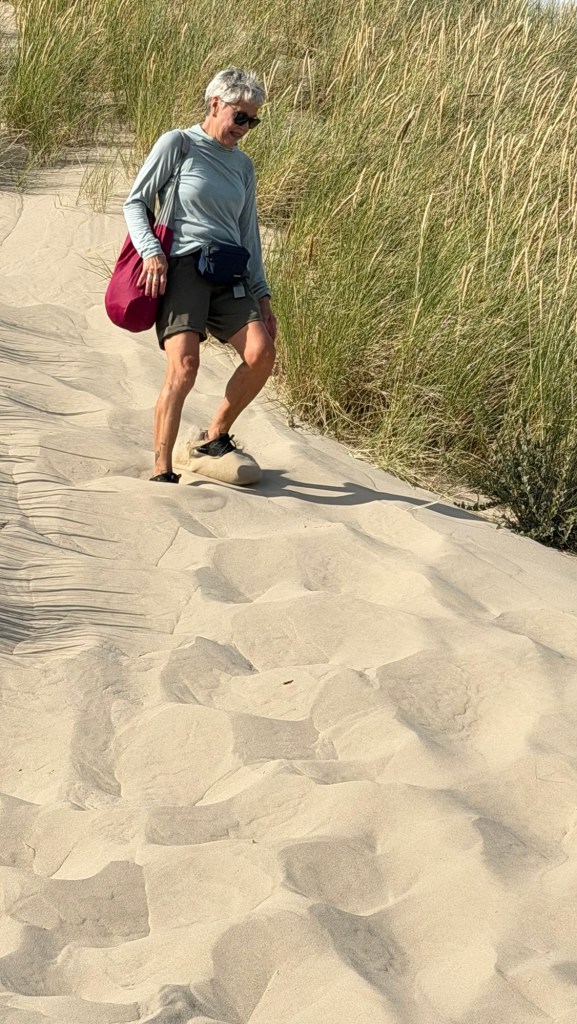
The trail began to descend from the tops of the dunes and it suddenly felt like we were wading in deep snow.

Will wading ahead to get over the dune
It was tempting to just sit down and slide, but the sand was really deep.

As we emerged from the dunes and dune plantation, we walked a road along the woods. There were signs posted alerting us to avoiding parts where wolves might be with their pups. They didn’t appear, but we did have a lovely horse and rider come cantering by us. We still had a couple miles to walk to reach Hulsig, a tiny town and our rest for the night at Hotel Inger. We were pretty tired after the dune climbs!

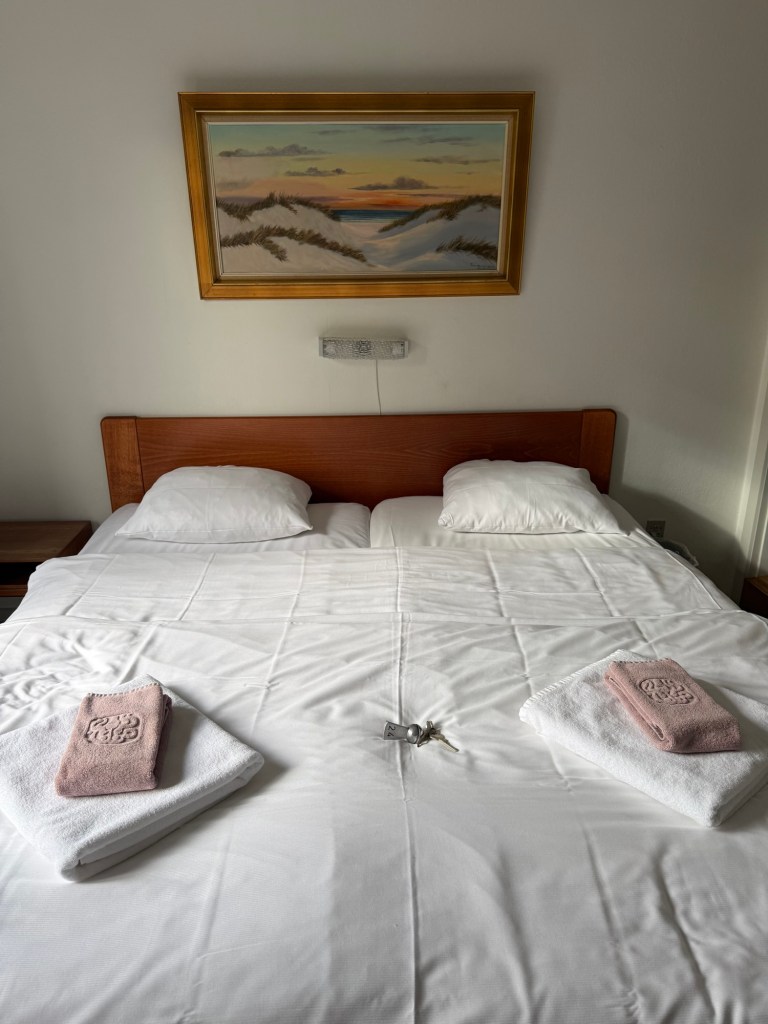
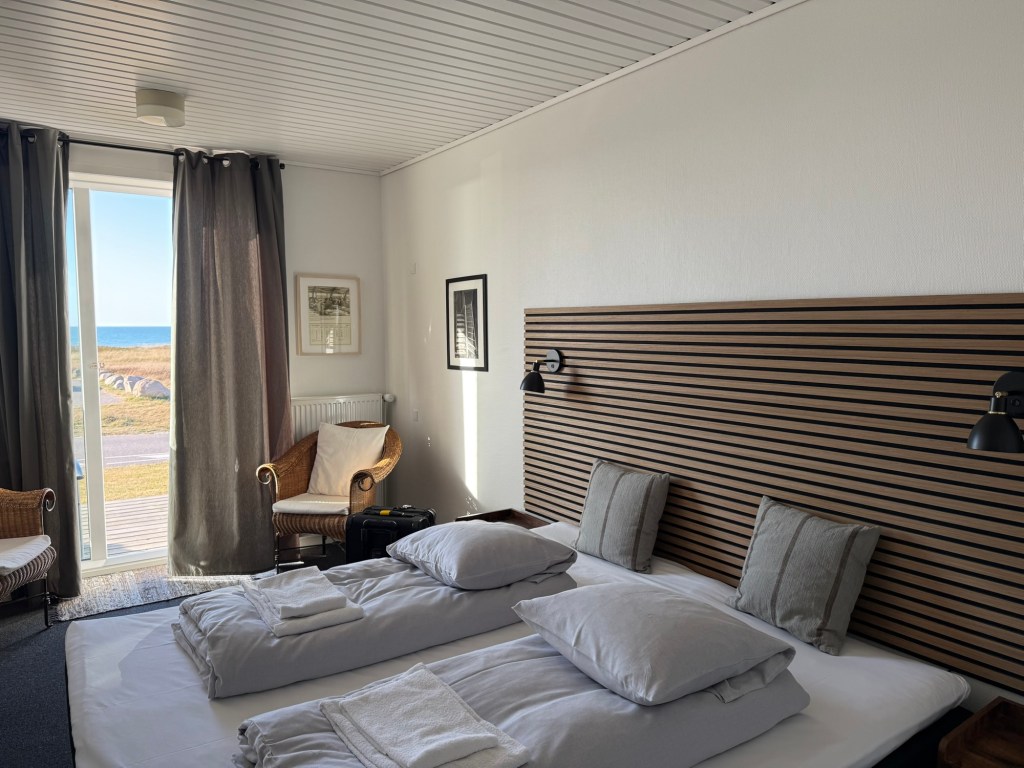
Our corner room at Hotel Inger

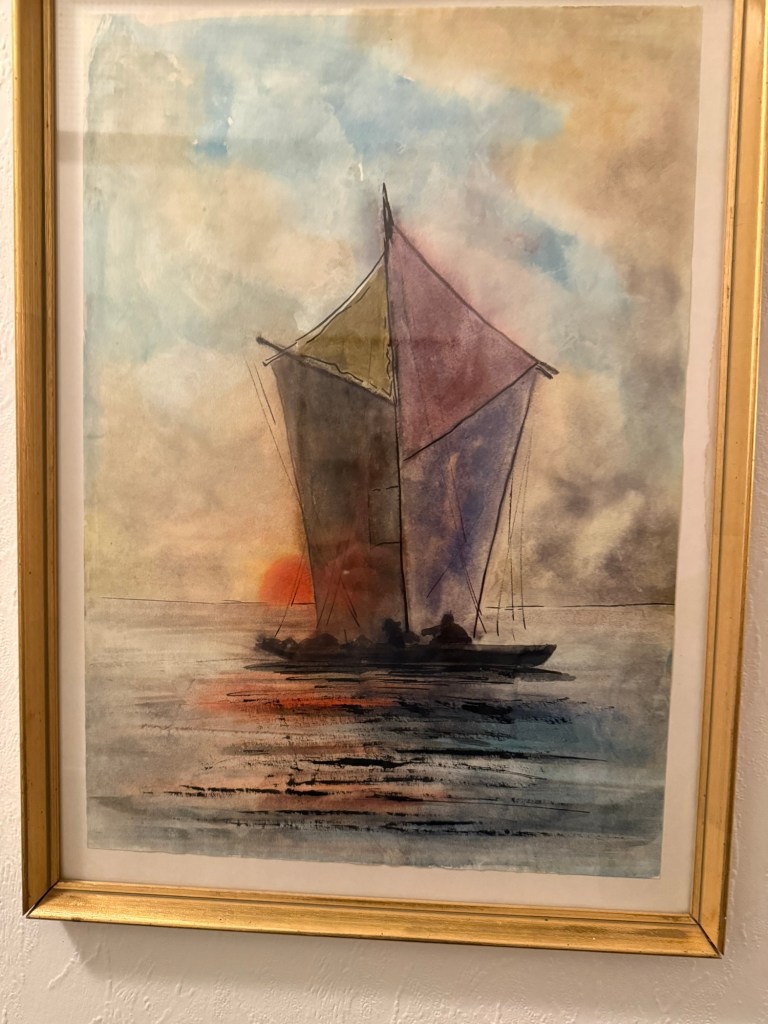
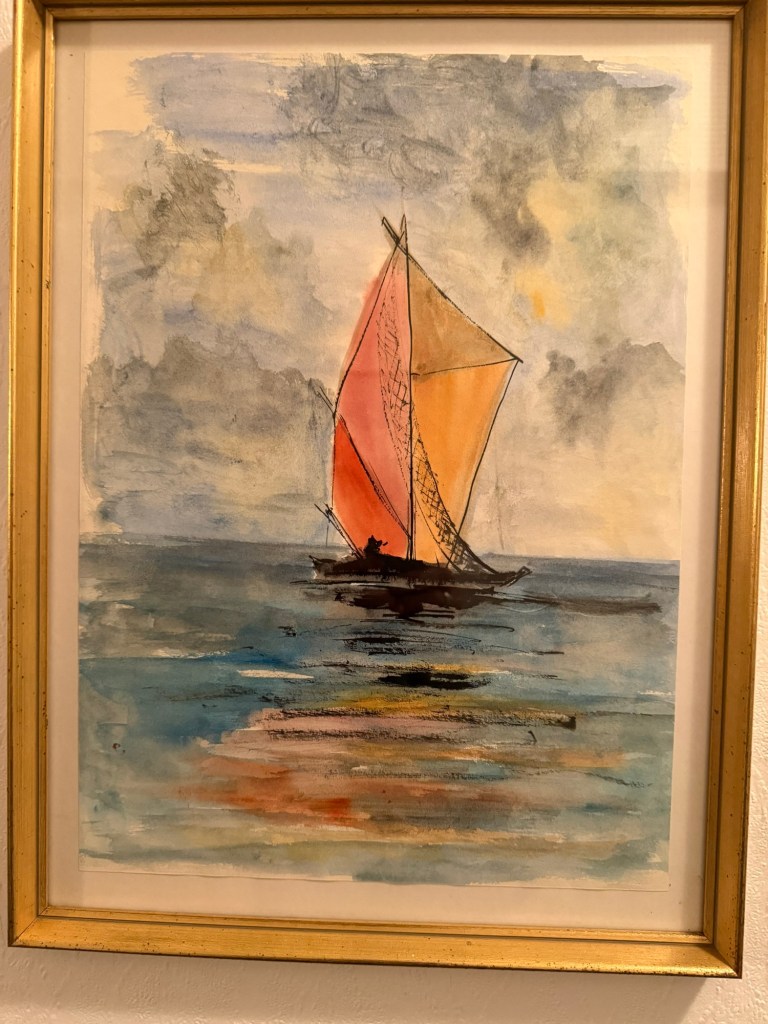
We were greeted very warmly and heard the history of Inger, the grandmother who started the hotel years ago. It is still a family run hotel with lovely rooms and beautiful artwork from local artists, open for 3 mos.in the summer only. We were excited to hear they had a table for us in their very good restaurant. While we ate, one of the Danish walkers I’d met that day on the beach came over to sit and chat with us. One of the best things about traveling for sure!

Walking the north coast of Denmark

After an amazing week on Texel, Will and I headed to Denmark. I’d found a self-guided walk through Wild Rover Travel along the north Denmark coast from Hirtshals to Skagen over 3 days. We had an afternoon in Aalborg, Denmark’s 4th largest city, after a short flight from Amsterdam.

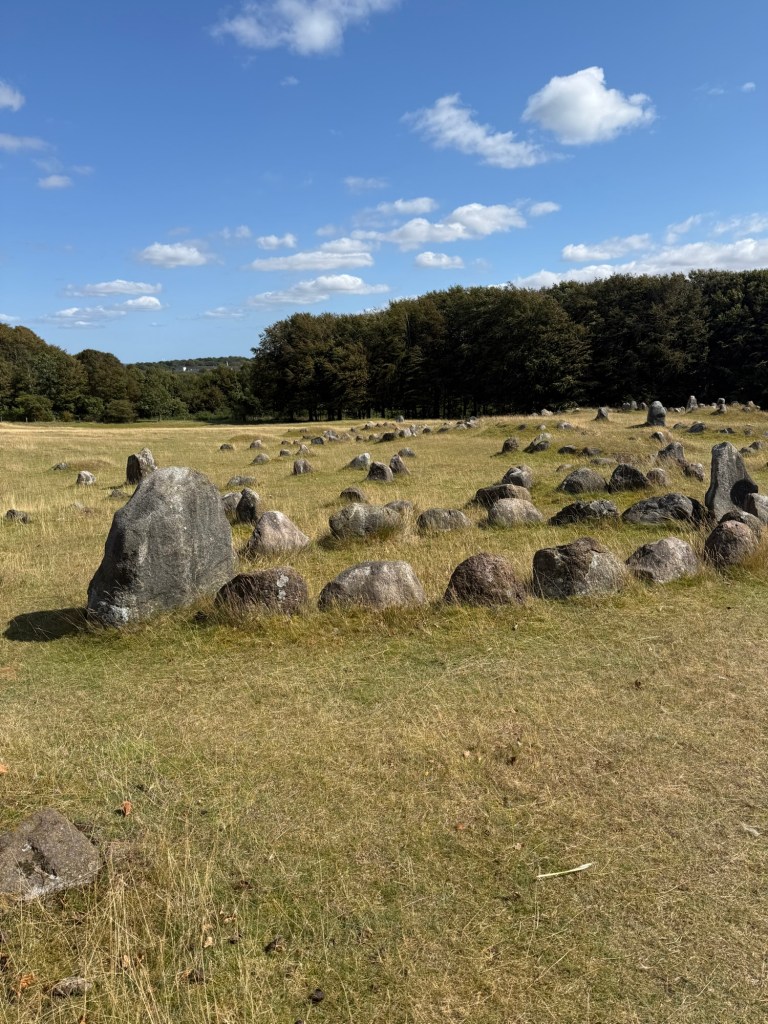
Will went off the explore the Utzon Center to see work by the architect Jorn Utzon, while I found my way by bus and walking to the Viking burial site and former settlement. There were many different sizes and shapes of graves, each marked by arranged stones. The entire site had been covered by sand blowing in from the beach miles away, unprotected due to deforestation and the strong prevailing winds. The graves and evidence of houses were excavated in the 50’s. On a beautiful clear day, it was hard not to feel the sacredness of the place. Artifacts from homes and graves have been found over the years and are kept in a Viking museum outside of Aalborg.

Our cosy room in Hirtshals

Hirtshals is a working port, an easy train ride from Aalborg and home to many fishermen and commercial boats. It’s also the port for the large ferries that go to the Faroe Islands, Iceland, Norway and Germany. Those ferries are really big! We saw at least 3 arrive/ depart as we walked along the harbor after a fantastic dinner of local fish and smoked salmon. We’d found a local restaurant with a line for ordering before choosing your seat, all of which gave great views of the harbor.

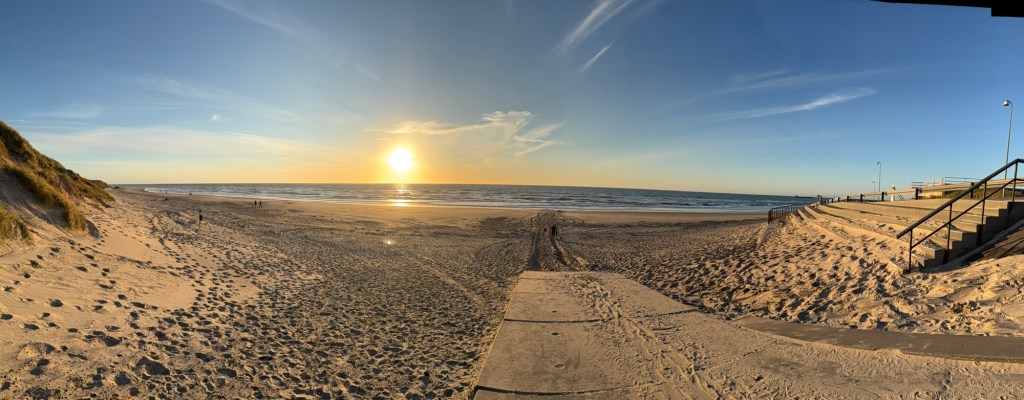
The sun still had nearly an hour to go before sinking into the North Sea in Hirtshals
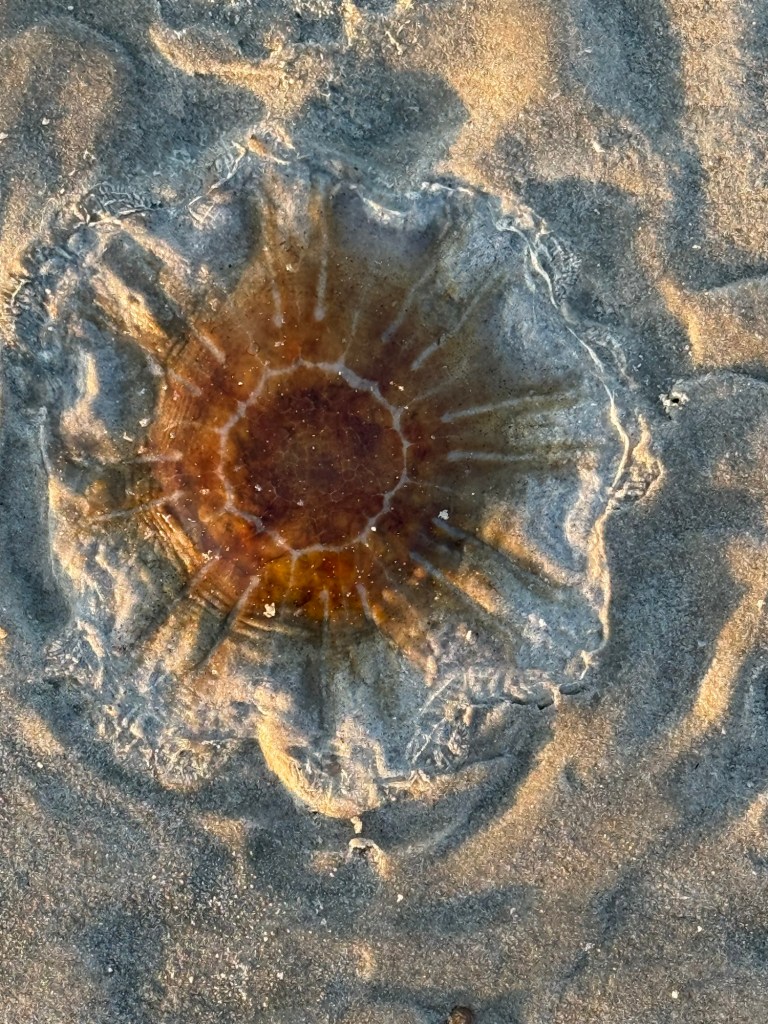
Dried dead jellyfish on the beach at Hirtshals ; we saw them all the way to Skagen
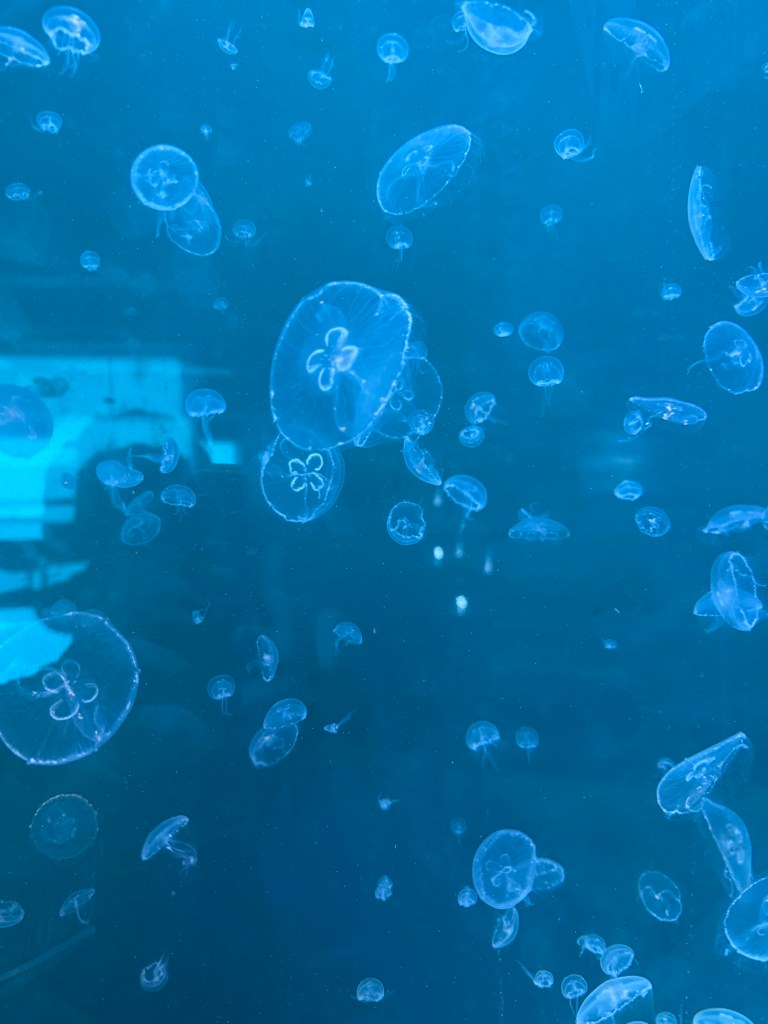
We visited the Nordsoen Oceanarium in Hirtshals before starting our walk Wed. The jellyfish tanks, large fish and seal tanks were impressive.

Walking Rover Travel has a very good app to follow the walking paths, but the sign posts were helpful too at times.

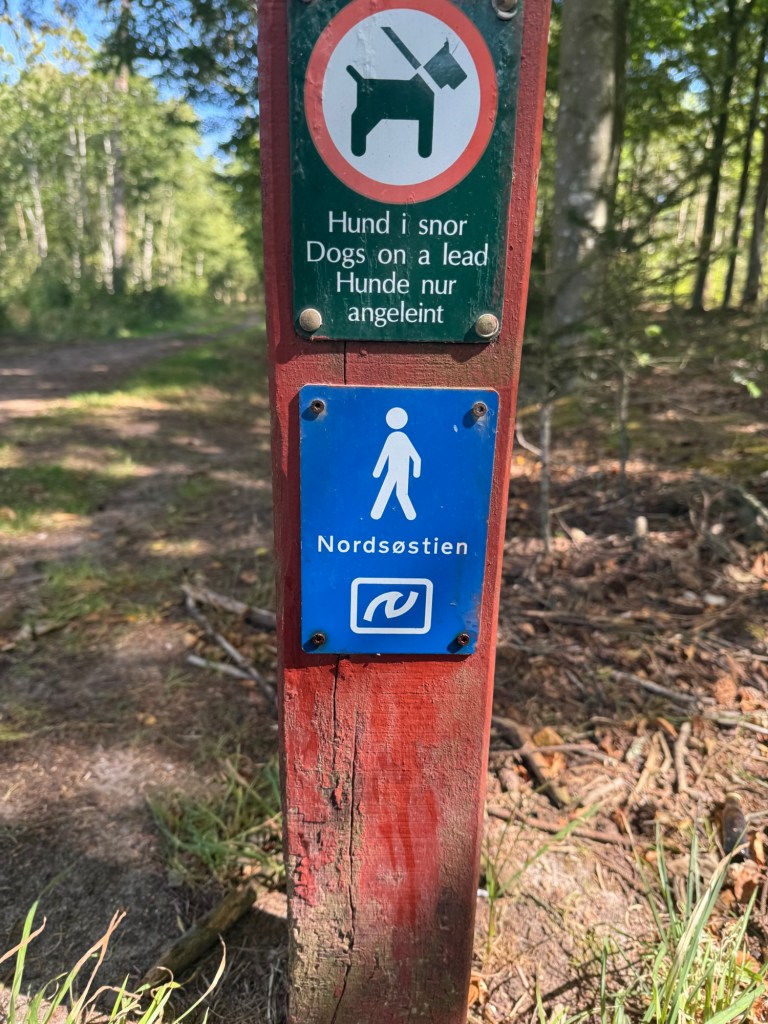
North Sea Trail marker

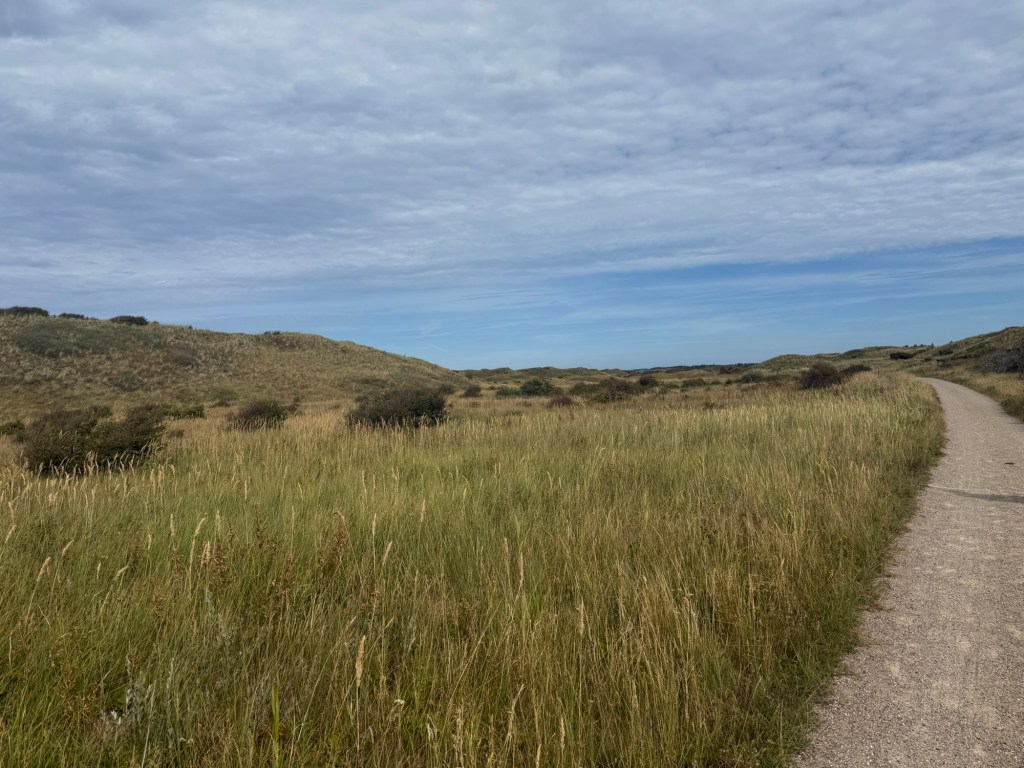
The first day of walking was about 12 miles in all, winding through forest paths, grassy tracks and dune plantations. In Danish, these are kiltplantage, man-made/built forests that are maintained in an effort to fight the drifting sands that covered villages, grazing fields and wet lands. At first they planted sea grasses and other low growing plants in the dunes, but then turned to planting trees of various species. It takes years obviously to have trees grow big enough to be effective against the wind and sand. Walking through a dune plantation is like being in a valley of low growing bushes and bog with dune hills up and down all around. The heather is a beautiful purple and there are often tiny flowers of yellow, red and orange interspersed. If anybody wants to read more about dune plantations, here is a good article. The Danes have been battling the wind and sand for hundreds of years.

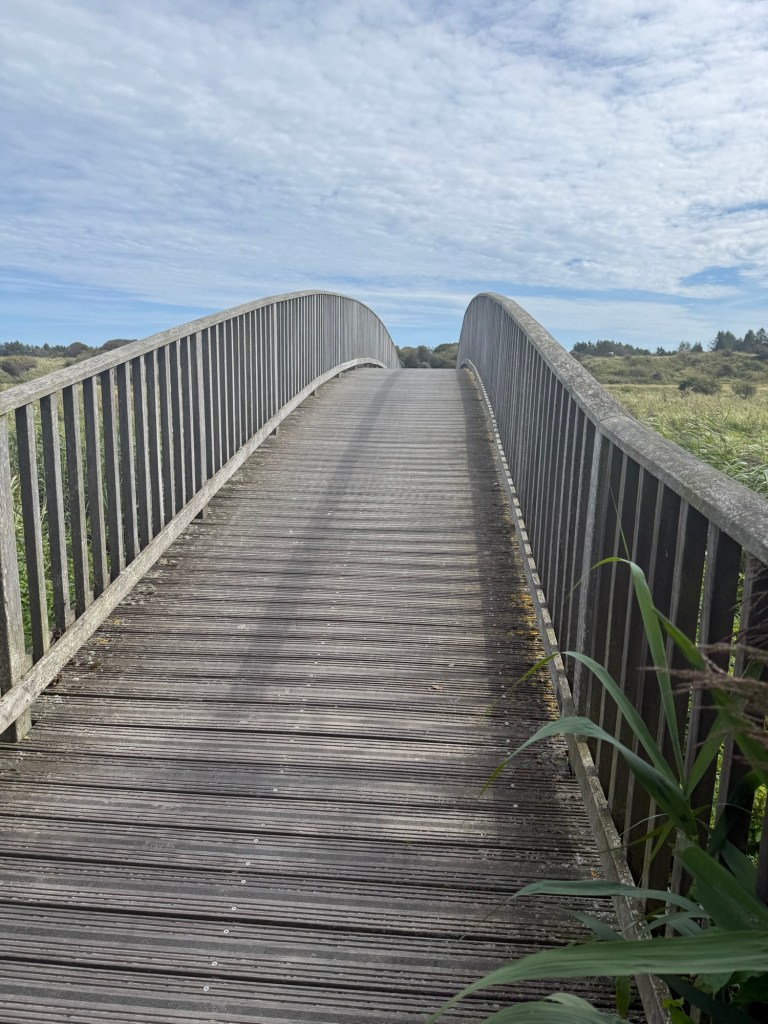
The end of the first day had us walking a long flat beach and then up along a river to the town of Tversted. Along the way, we’d seen a few bikers and local folks walking dogs, but no one else who seemed to be walking the coast.

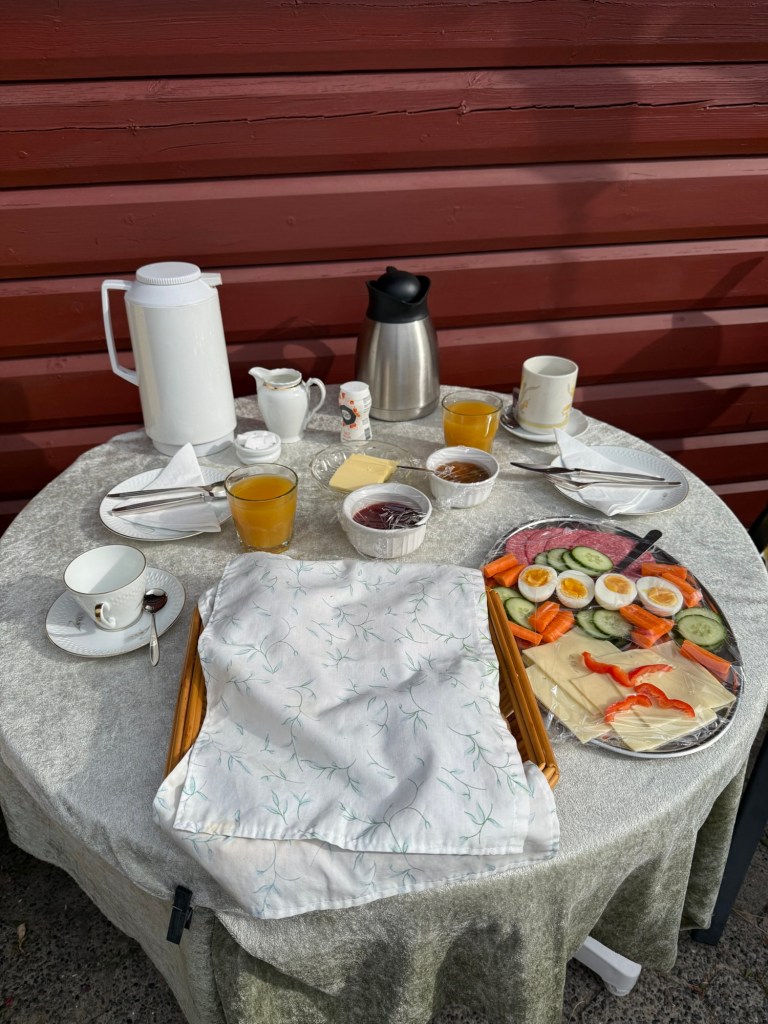
We stayed in Tversted, in a tiny, very neat outbuilding owned by our hostess Anne Marie. She showed us around the garden and arranged to bring us breakfast in the garden the next morning. She didn’t speak much English and the only Danish I can say is thank you (tak) so we did a lot of smiling at each other. The feel of the little place was 1970’s comfort- we loved it! It was so nice to have a cosy place to return to after dinner in town and to rest up for our next longer day of walking.

Our hearty Danish breakfast in Tversted.
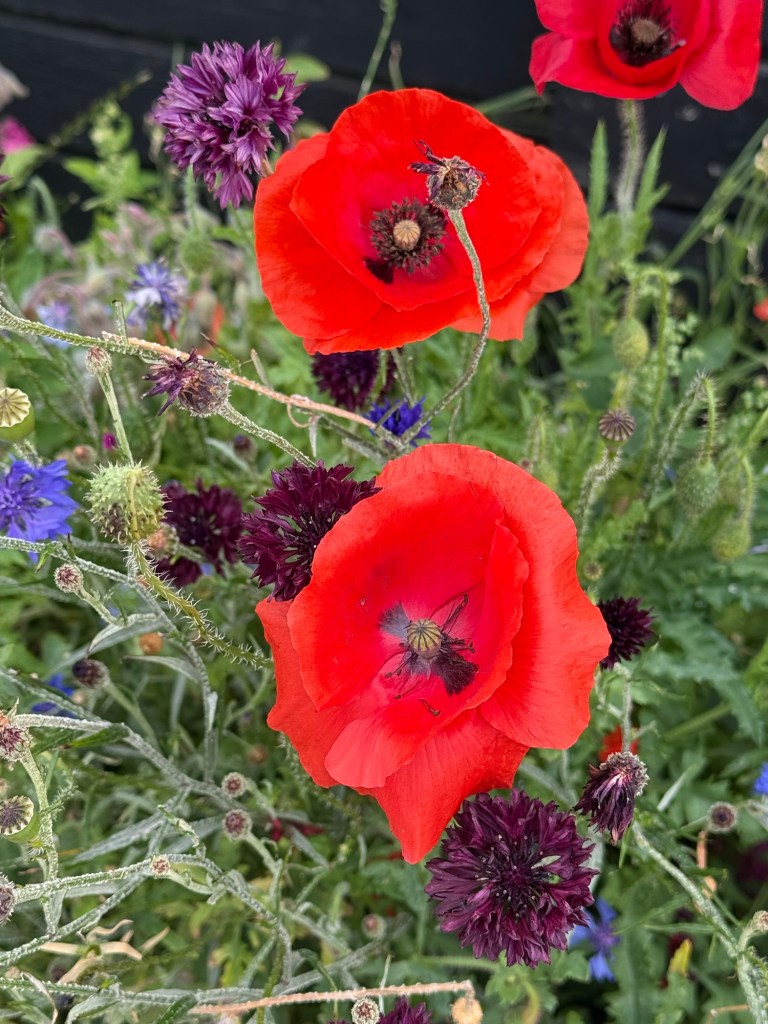
A tiny flower garden spotted as we started our walk to Hulsig on Thursday- I’m always keeping an eye out for these sweet red poppies

Camino Week 2

This week was as scenic as the first and much hillier overall. My legs weren’t so tired at the end of the day, so I could do some exploring after I reached my hotel(s).I had a couple more mornings of beautiful seascapes before the route left the coast and turns inland.

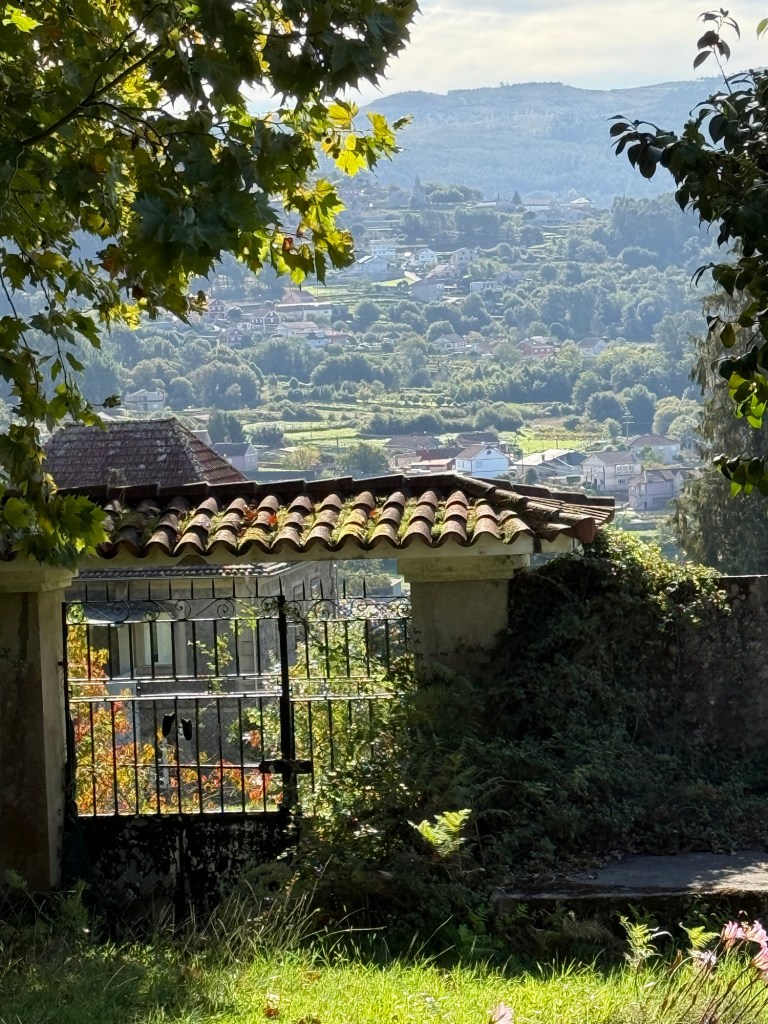
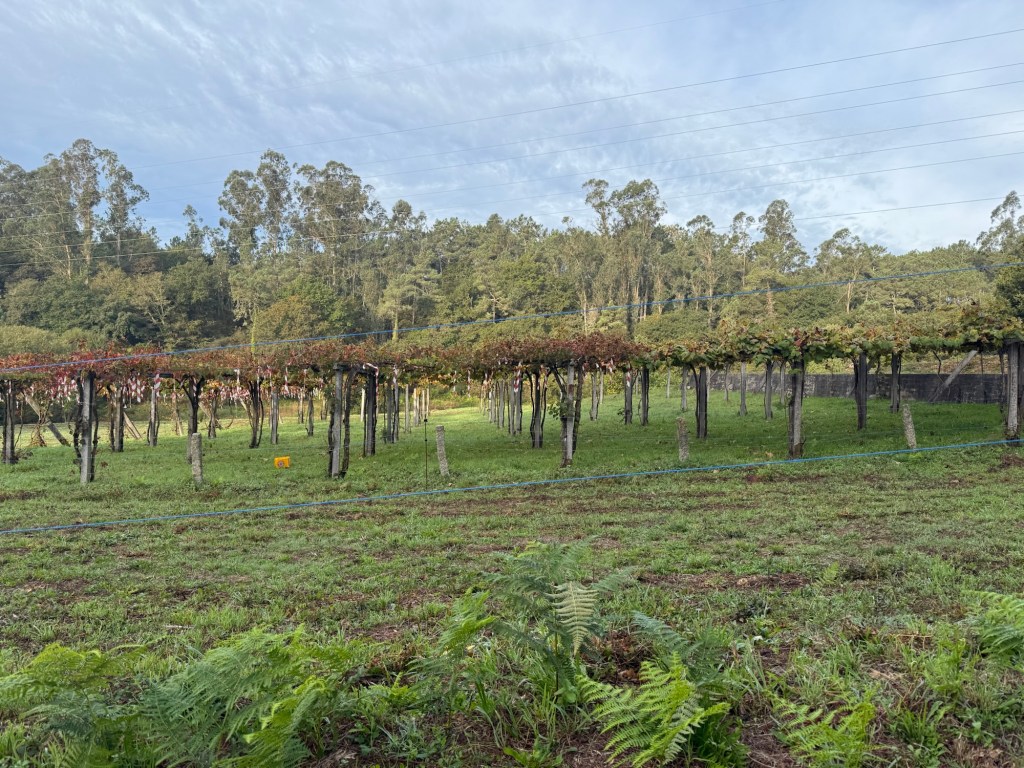
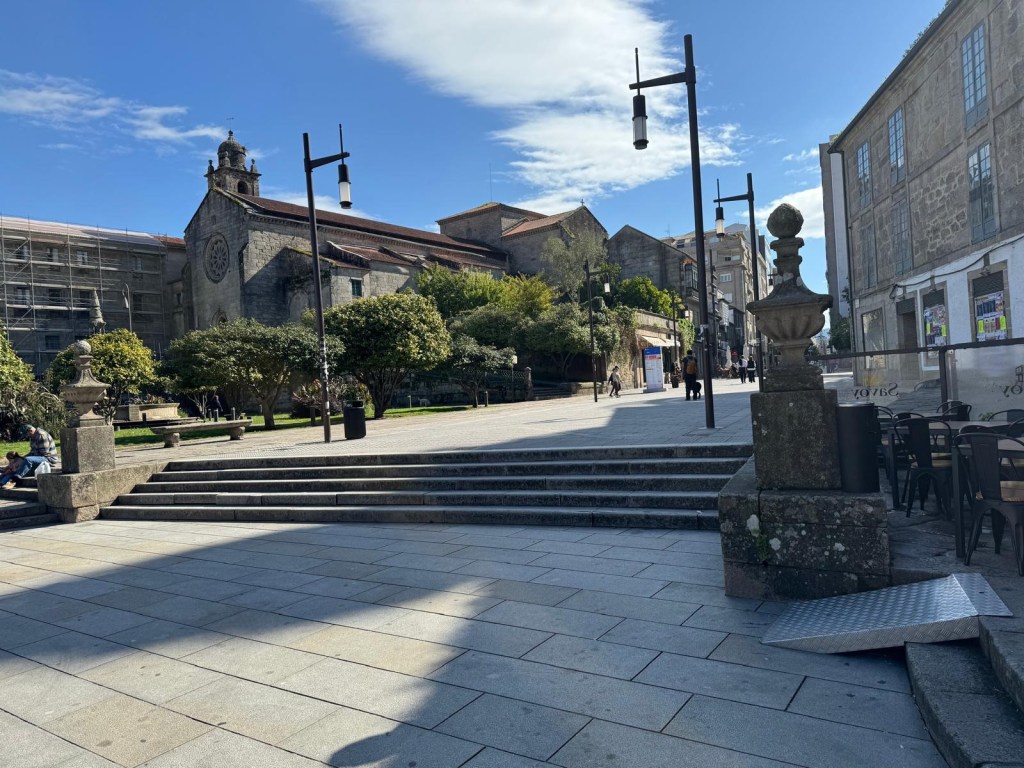
Galicia is the green lush part of Spain that the Camino winds through going inland. It’s a mix of towns, farms, vineyards and cities. The walk to Vigo, a city on the northwest coast, was about 12 miles and became more challenging with the city’s steep hills.

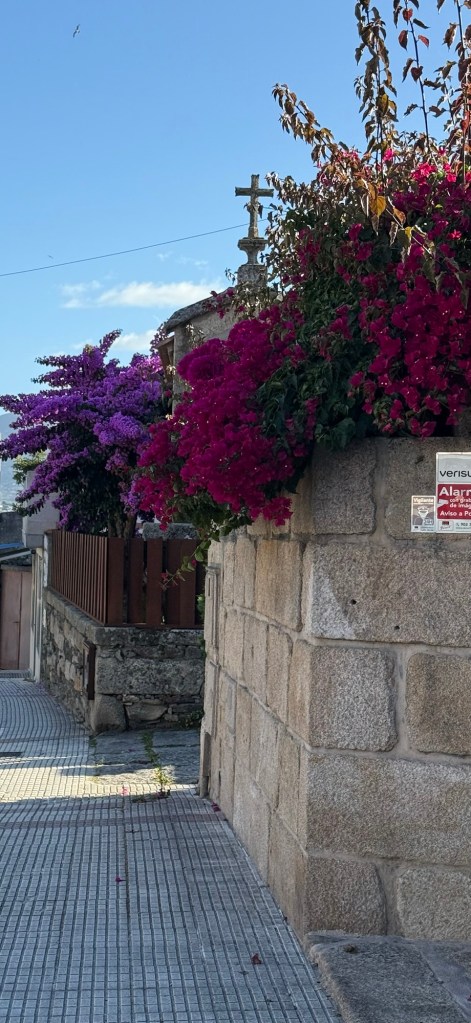
Bougainvillea is still vibrant in many places
The sun coming over the mountains gave everything a glow

On my way to Vigo, I stopped at the 3/4 way point up a long hill. I had a seat at a stone picnic table to eat my late breakfast. It was one of my favorite spots on the walk.

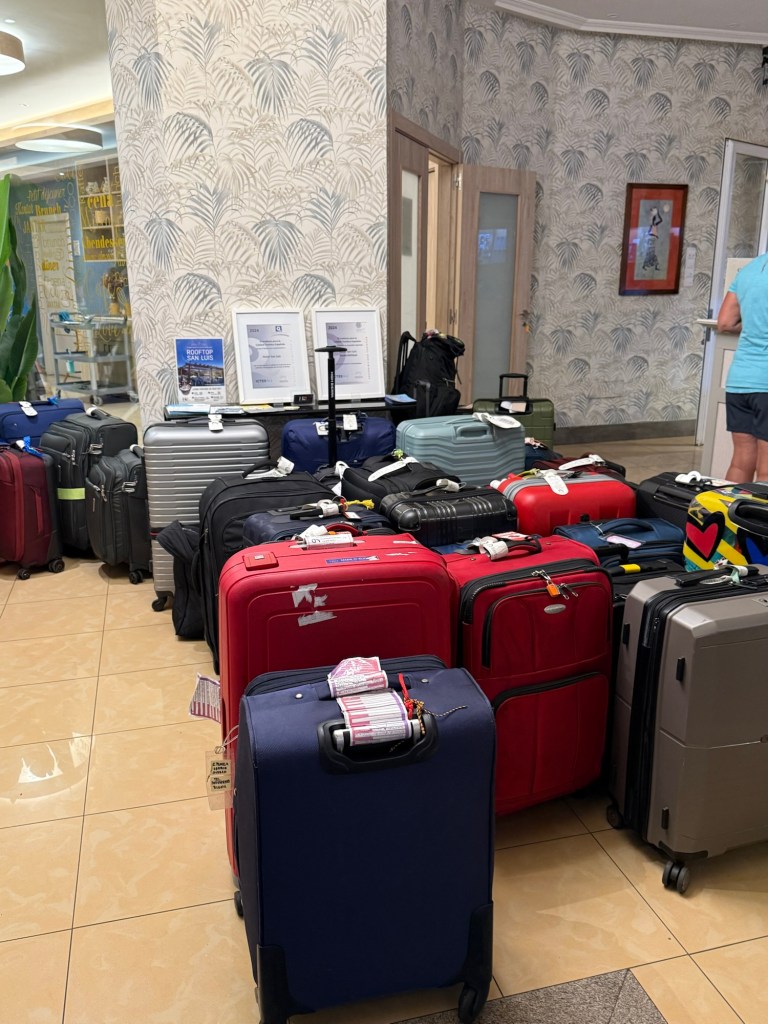
The routine of getting the suitcase down to the lobby by 8 got me out the door to start walking each day by 8:15 or so. The transport companies that move luggage on to the next hotel have my thanks and admiration. I was lucky enough to have my suitcase waiting each time I arrived at my next night’s stay. It seemed like the vans were everywhere when I arrived in a new place, with their guys using rolling carts to move mountains of suitcases.

As I walked through Vigo to leave the city, there were lots of parents walking their kids to school. Most of the kids had uniforms on, I’m guessing for parochial school. The views from the hills of the city made the climb up and down rewarding.

Redondela is a small town where I stayed in a hostal (their spelling) that had individual, double, triple and quad rooms. I was happy it had good a/c like the other places I’ve stayed since it was still hot out. I met a really great German woman named Sabine on our shorter walk into the next town Arcade. She invited me to stop to have a cold drink with her when we reached town, and then added me to her WhatsApp contact list to join some other people she’d met. I had dinner with her and a British guy who was also traveling solo. The 3 of us walked together the next morning to Pontevedra, a small city with lots to offer. At dinner that night, we were joined by 2 other German women Sabine had met a few days before. The 5 of us came together in the chilly wind the next morning to walk to Caldas de Reis.

The hotel receptionist had lots of good information, and even told me my Spanish was good! She was very kind; we didn’t have a very long conversation.

Very useful info from the hotel about the next stage
I love the simplicity of this steel bird in Pontevedra

We had a fairly long walk that day, but it wasn’t too hot til later in the day. At one point, it was a slow line to get a wax stamp for our pilgrim credential books. I got talking with a young British guy who was waiting with us. He had a small backpack with one change of clothes, so he washed and dried what he wore one day and switched to the other. I invited him to walk along with us after he showed us a cool way to customize the wax stamp. It was fun to talk with him about his travels, and his spontaneity in deciding to do this walk.

I used a silver marker to color the raised edges of the wax stamp. The man making the stamps put a small silver scallop shell on each.

It dawned on me that I was doing just fine with the longer walking days, still tired at day’s end but well recovered next morning. I contacted the booking company to cancel the shorter walking day I’d planned for the weekend. That way, I’d stay with the group of people I’d been walking and eating with for several days, and arrive with them in Santiago on Sunday.

This was hidden away on a wall behind some stores

I didn’t meet the group for dinner that night in Caldas de Reis, and opted instead to go to bed early. It’s not always easy to eat on Spanish time at 8pm or later. The afternoon siesta is still going strong. It’s crazy how busy stores are in the evening.

Sun slowly sinking over the river in Caldas de Reis
Mid-morning stop for a stamp at this beautiful Church of St Michael
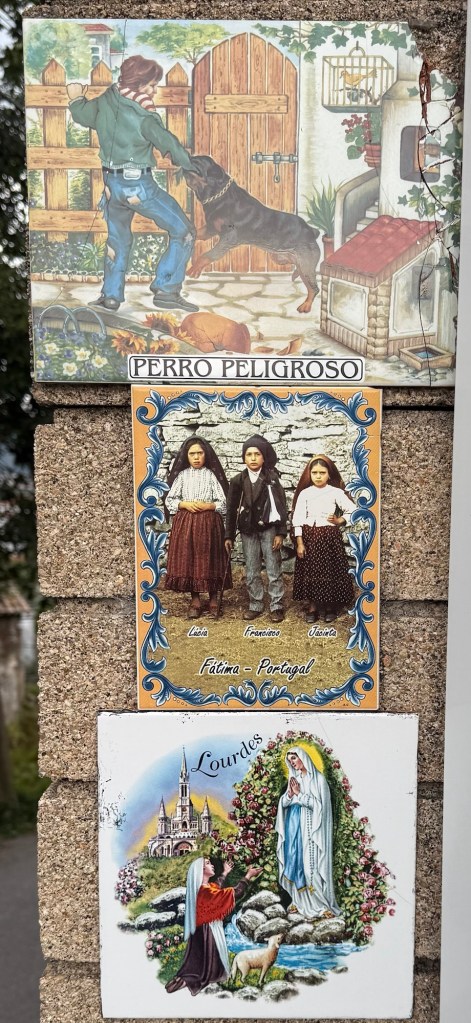
Signs at the gate of a house

Our destination town of Padron greeted us with grey skies and lots of stone decor. We stopped and got rain gear on, and fortunately the downpour didn’t come til we were in the town. I’m happy- and surprised- I never had to hike a day in wet weather on this trip.

Sunday dawned grey but the weather prediction was for sun the whole 16-17 miles to Santiago de Compostela- the final day of walking! The walking paths varied a lot as the day went on.

We were greeted by a man playing the bagpipes in the woods. Galicia has strong Celtic roots and I’ve heard bagpipes in several places now in this part of Spain.

There were more pilgrims on the trails and not quite as much chatting. I think people were focused on walking and noting what the shell markers said for distance left til Santiago. No matter how many days people had been walking, it hard to believe the end was coming near. We joked about ‘what would the next week be like without walking many miles/kilometers each day”?

I was still seeing farm animals on the way, and the rose gardens in bloom. The roses were beautifully scented too.

One of my walking companions laughed every time I stopped to smell! I couldn’t resist.
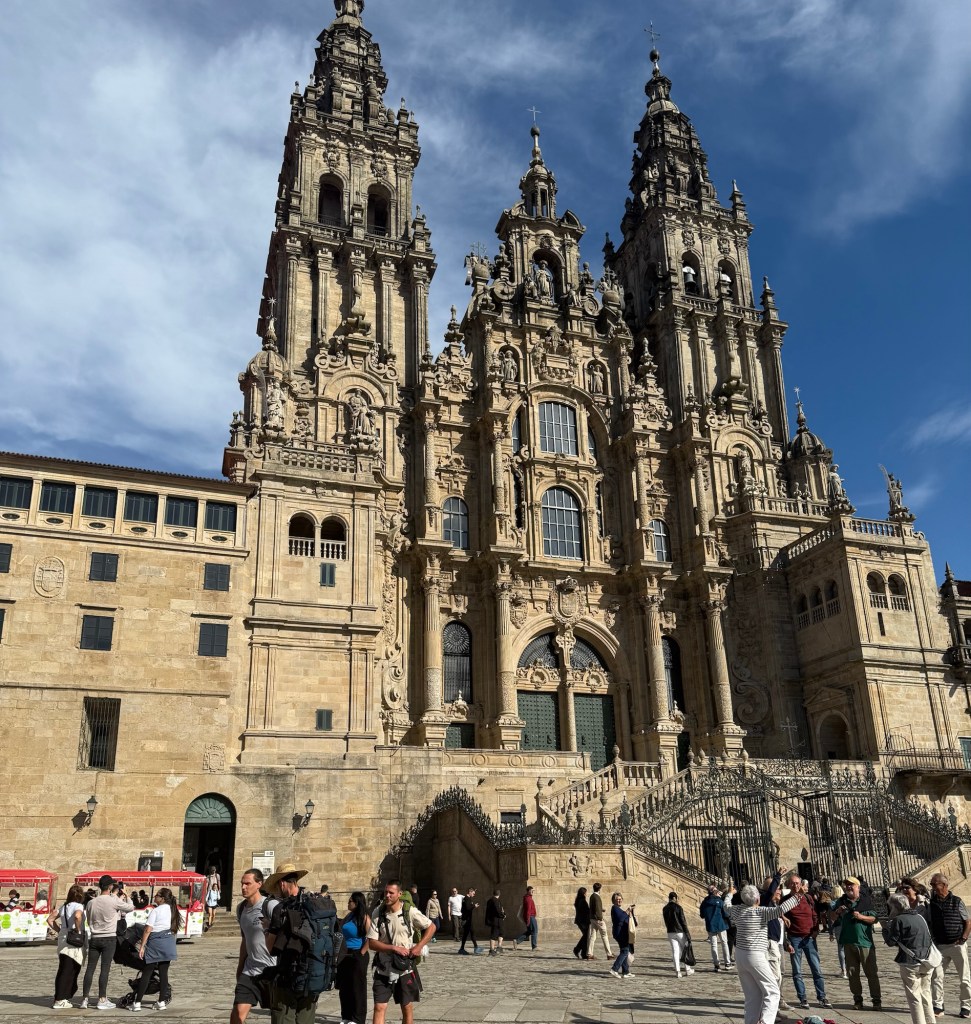
The Cathedral of Santiago de Compostela

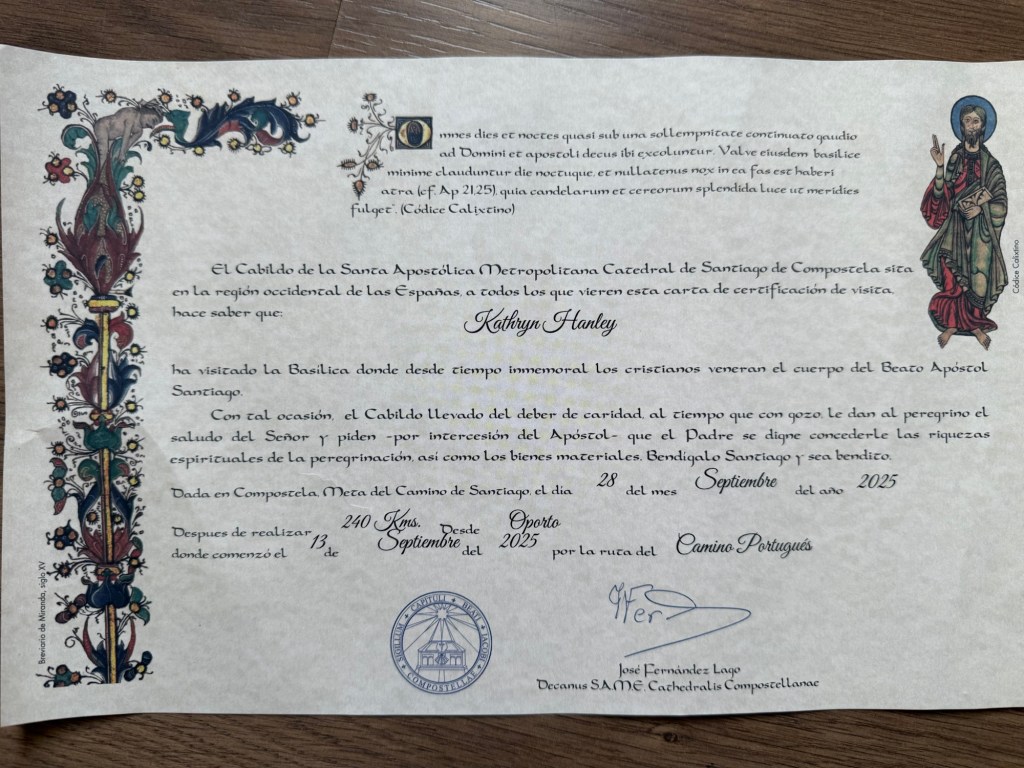
Sabine hadn’t walked the last day with us because her infected blister had re-opened. But she met us at the Cathedral and showed us where to go to register for the “compostela”- the official certificate that says a pilgrim has completed their journey. I had gone online a day before, as everyone has to, to register myself as a pilgrim. We’d joked that for those of us who selected “not religious” as a reason for walking would have to wait longer in line. But in fact, it was a little like getting a ticket for the deli. I showed the QR code I had from online registration and received a number to take in line. They even have a screen that tells what number is being called and what desk to go to. The woman who completed my compostela was an American retired ER nurse who’s volunteering for 2 weeks to do this job at the desk. She told me she’s walked the French Camino in 2019, and the number of people walking all routes has grown hugely.

The compostela

My group of 3 German women and 1 British man had lunch together before we all went our separate ways. It was really nice to celebrate with them, and to recognize quite a few other faces of people coming in to the Cathedral square.

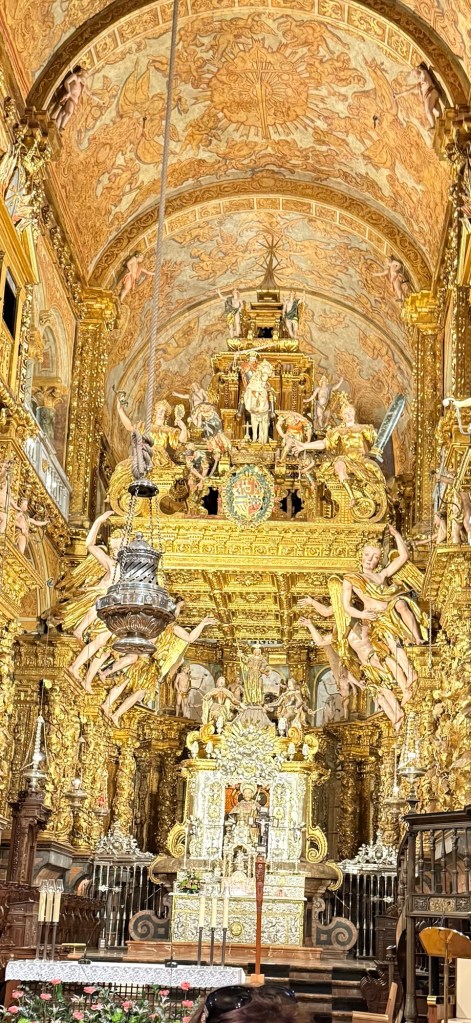
The altar of the Cathedral, and the silver thurible that holds burning incense

Even though I’m not religious, I wanted to see the ‘Botafumeiro”,where the thurible is swung back and forth with burning incense in it. Here is a link to a video on the Cathedral’s website if you want to see it:

I have no idea how they had so few people in the Cathedral when they made the video. Both times I went, the place is packed with people hoping to see this giant thing get swung back and forth high above our heads by 8 men pulling ropes to move it on its pulley. The incense is wafting everywhere as the thurible goes higher on each swing, the rising smoke symbolizing pilgrims’ prayers going up to God.

I stayed in Santiago for a few days to explore, rest and go out to the coast one day on a tour. The old city is all stone and winding streets and alleys. And it’s full of tourists and pilgrims. I’m sort of dismayed by the plethora of Camino merchandise in the shops all around the Cathedral.

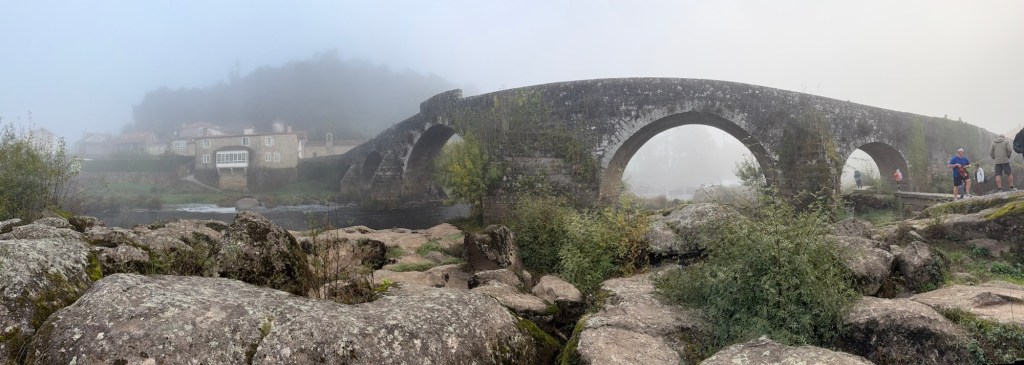
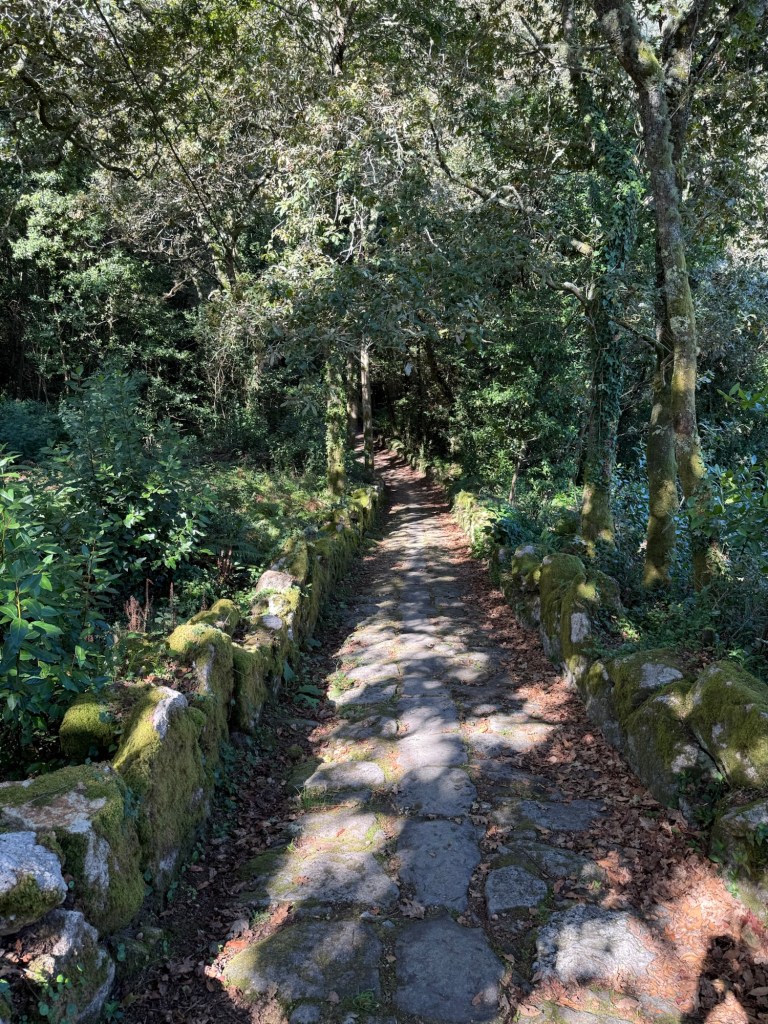
Old stone bridge over the Rio Tambre

The day tour started with stopping on the way to the coast at this old stone bridge. It was cool and misty there, completely unlike the weather in Santiago and at the coast.

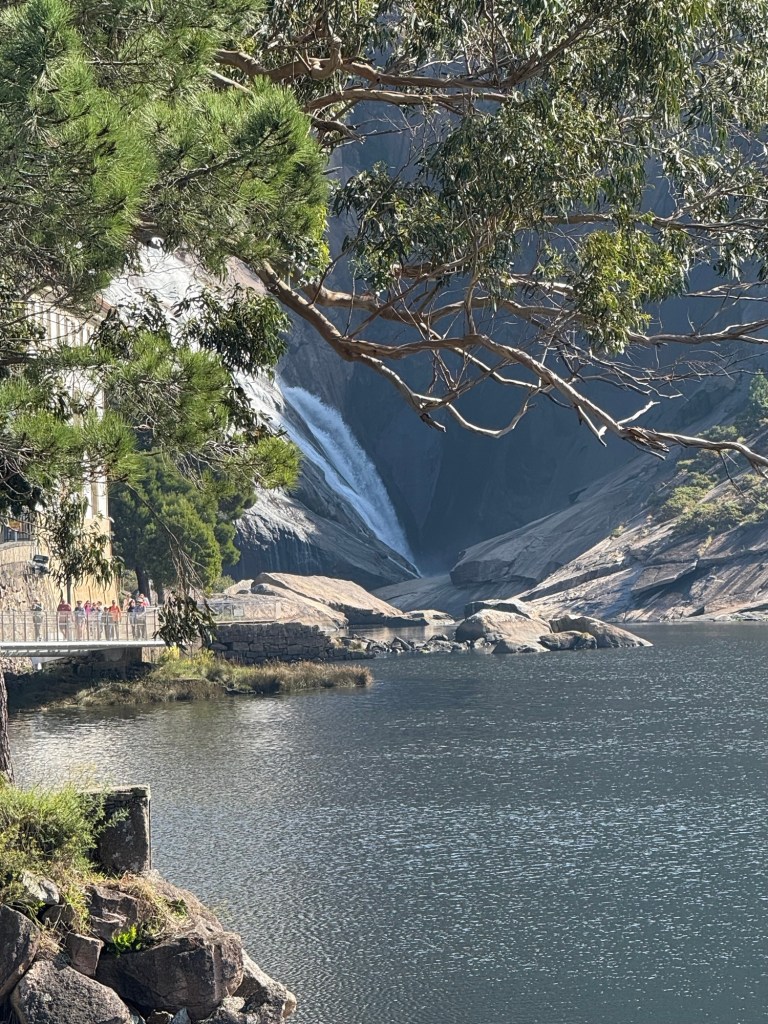
Dumbria waterfall

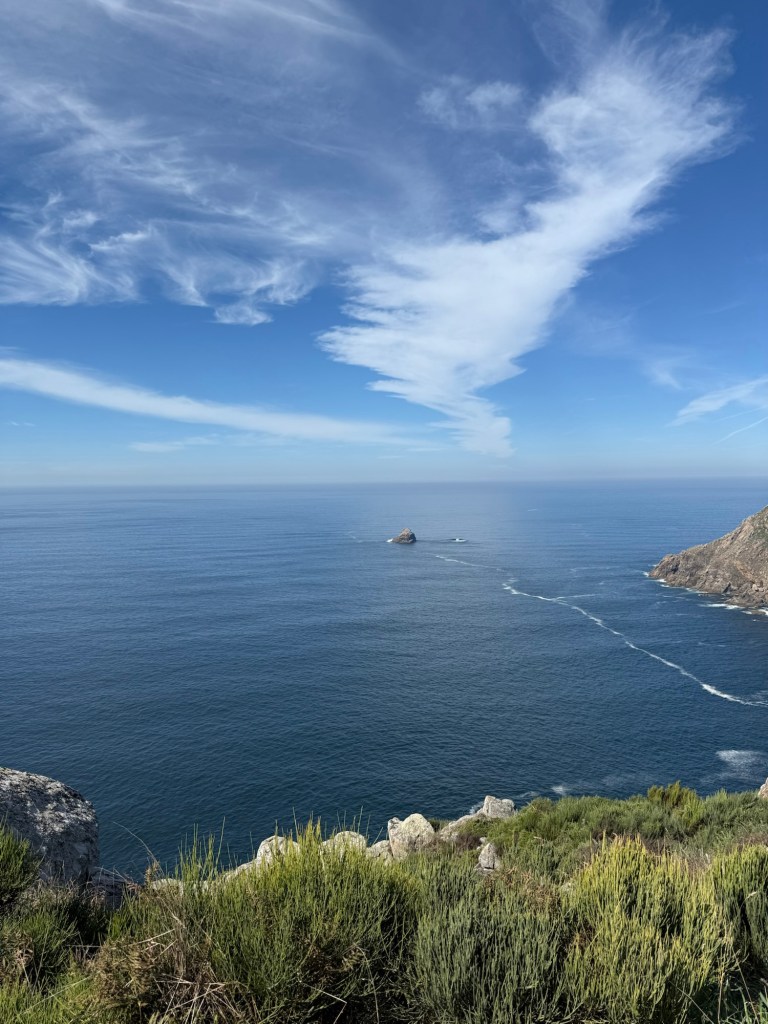
When we reached the coast, the beaches were beautiful white sand in protected coves. But the farther along the coast we went, the tour guide repeatedly reminded us that it is called the Costa da Morte (Coast of Death) for a reason. There’s a long history of shipwrecks along this coast due to rocks that rise up and can’t be seen by ships and strong currents.

This is at Cabo Finisterre, a rock bound peninsula that the Romans believed was the end of the known world. It is also referred to as the westernmost point of the Iberian peninsula.

After lunch in the town of Finisterre, our last stop was the village of Muxia.

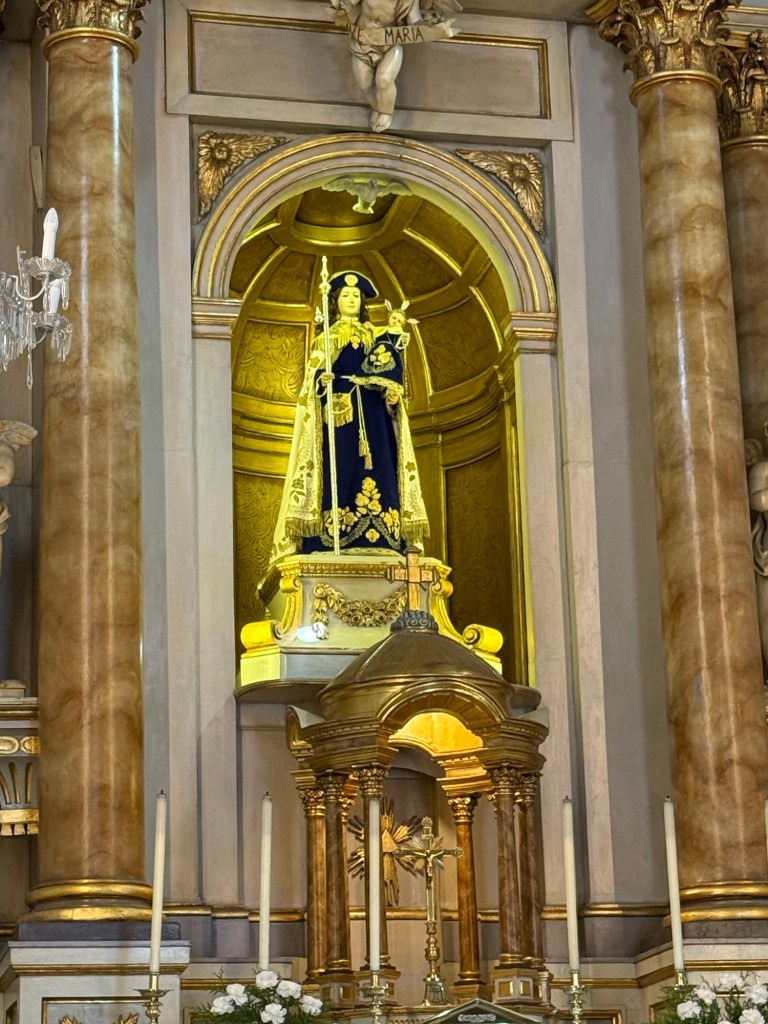
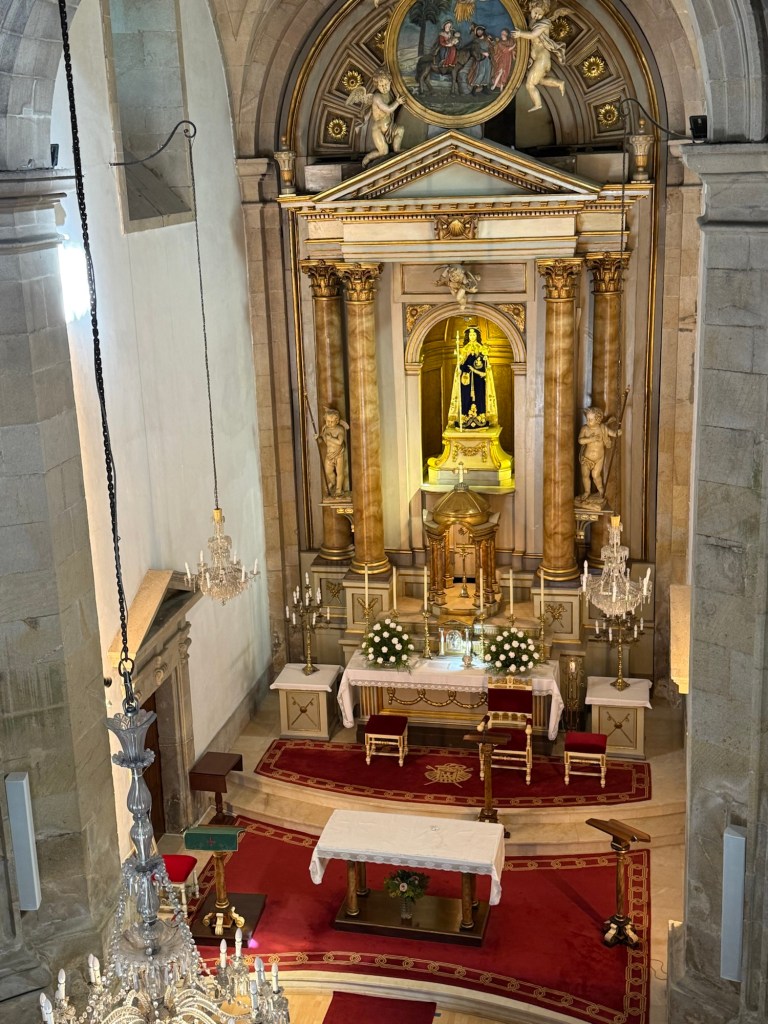
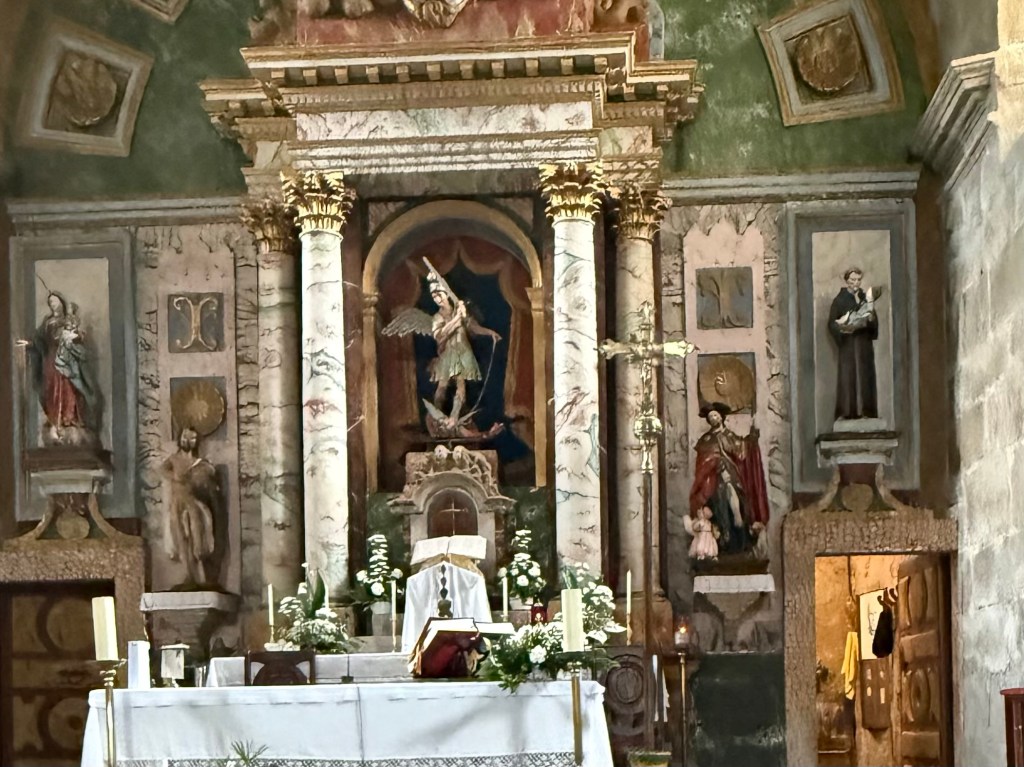
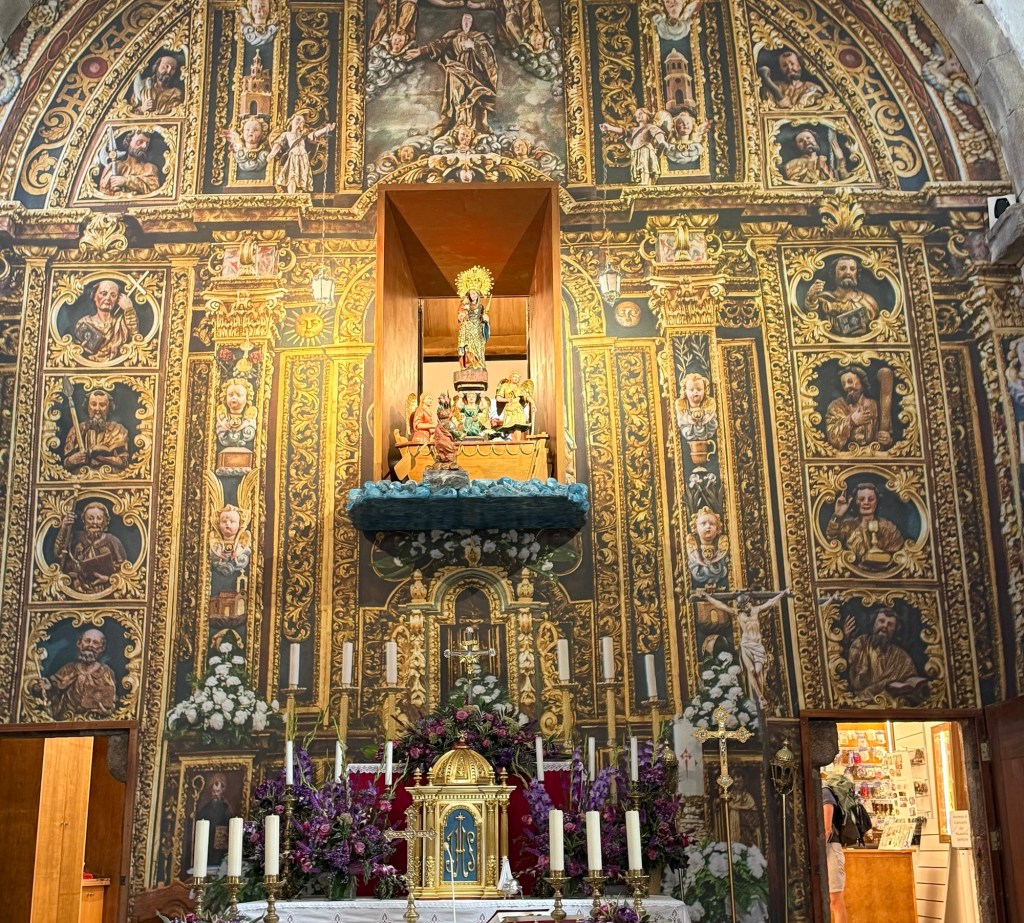
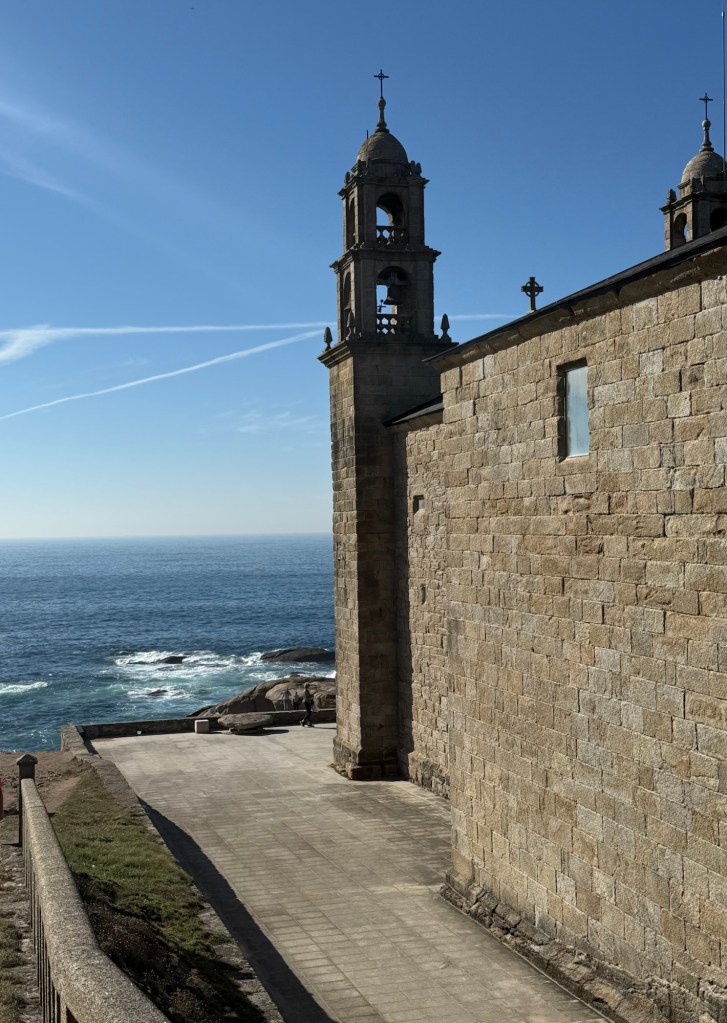
The Sanctuary of Our Lady of a Barca: many pilgrims continue their walk from Santiago de Compostela for another 4-5 days to Muxia-Finisterre. This church is the place where the Virgin arrived in a stone boat to inspire courage in St James the apostle.

There are also model size or larger ships throughout the church, and memorial plaques outside to pay tribute to boats and crews who’ve lost their lives off this coast.

I took the stairway up the back of the altar at the Sanctuary to see the Virgin up close, or at least the back of her. Many people buy these wax limbs, body parts or figures to place at the altar. The man who sells them said they’re a way to ask for prayers for illnesses related to the body parts or body as a whole.

The day was so clear and beautiful, and the breeze was chilly outside the church. I liked it even better than being in Santiago at the Cathedral since it wasn’t mobbed with people everywhere.

Standing uphill behind the church looking out. I loved being back to the coast.
This window sent sunlight streaming down onto the stone floor inside the church.
This laurel of roses, eucalyptus leaves and greens adorned the entry way to the church. The flowers were used too in arrangements at the altar and other parts of the church.

While I didn’t walk this part of the Camino, it felt like a fitting way to close my walking trip in Portugal and Spain. The greens, eucalyptus, roses, and the sea were all part of my walk, and their scents will bring it to mind often.

The Portuguese Coastal Camino: week 1

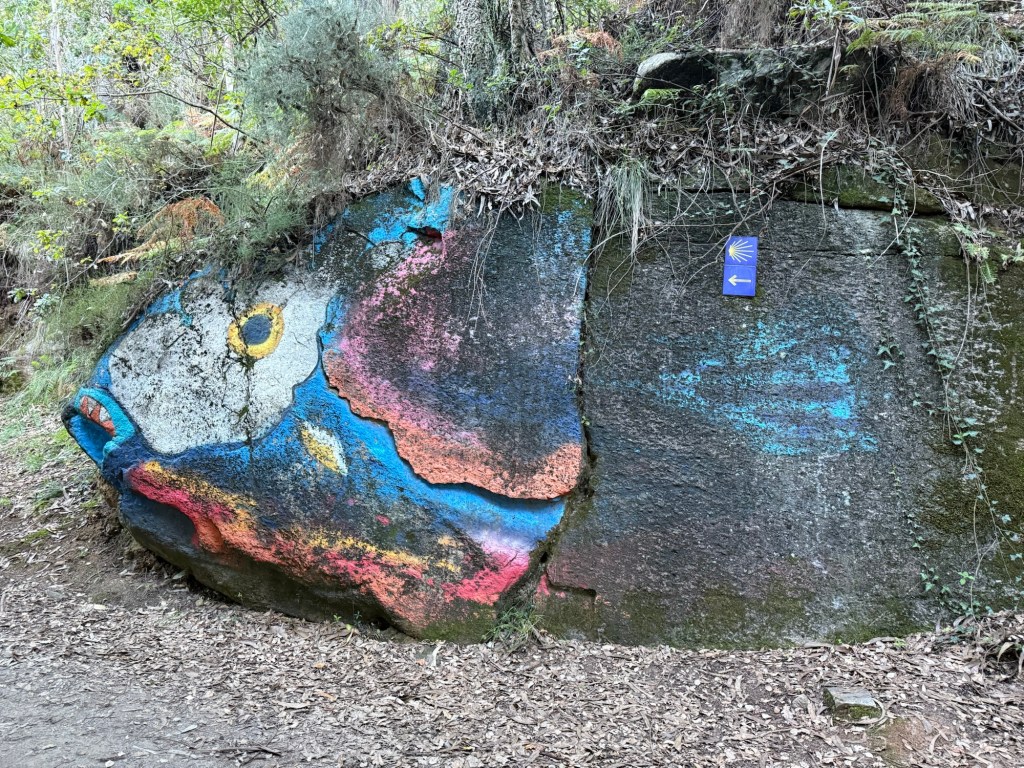
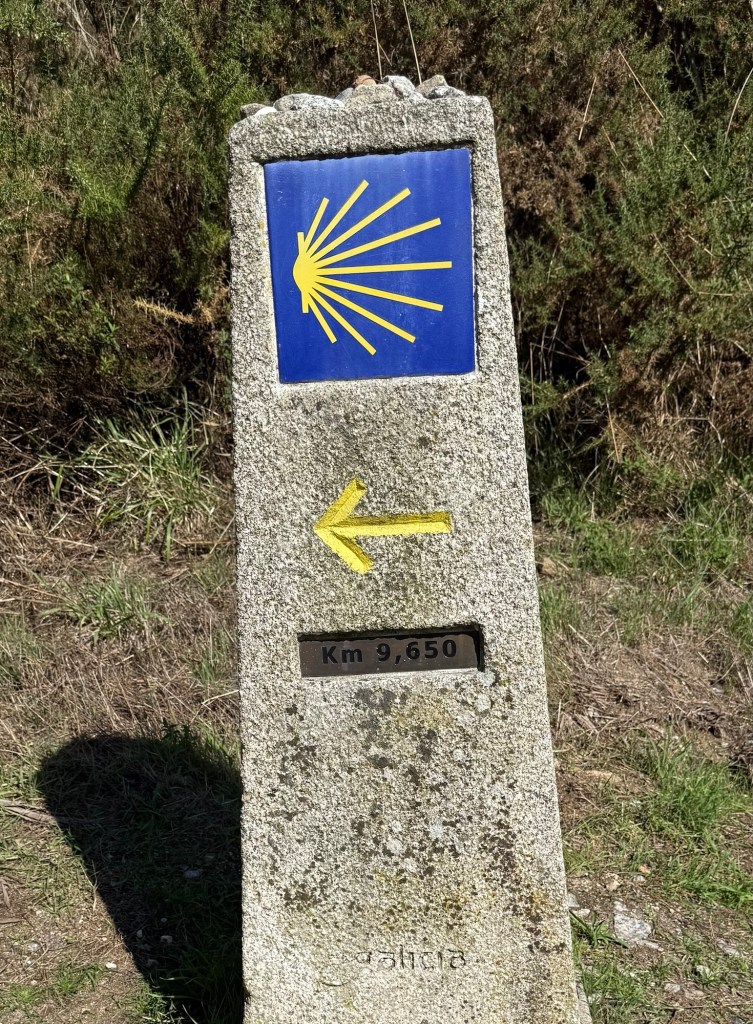
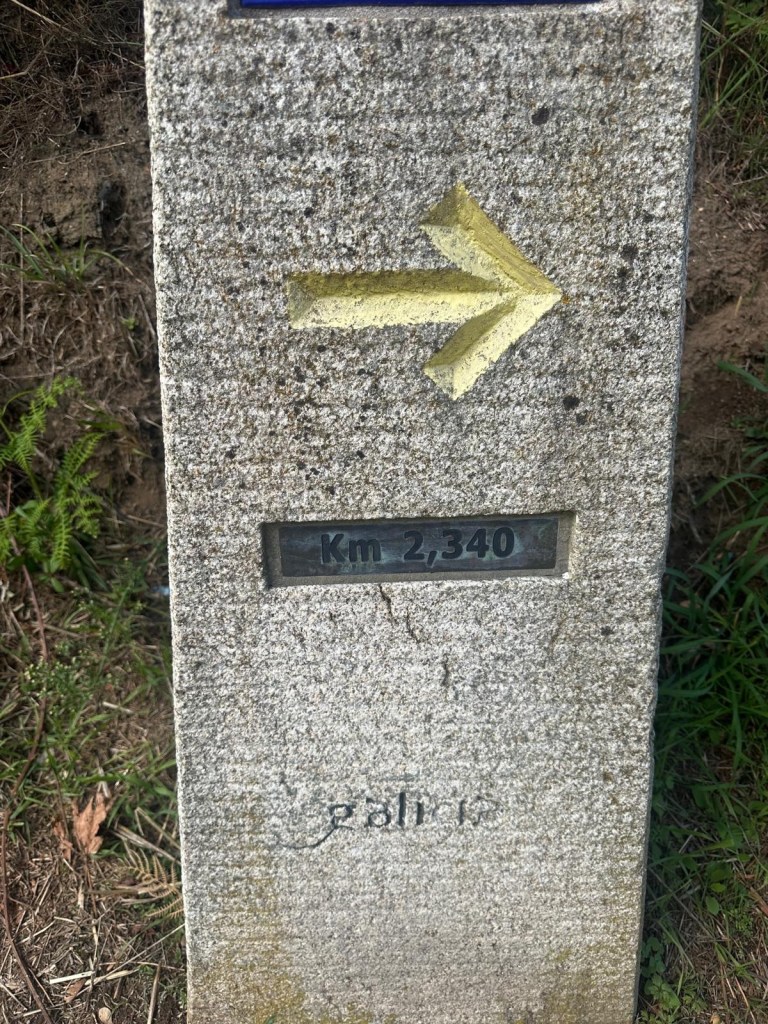
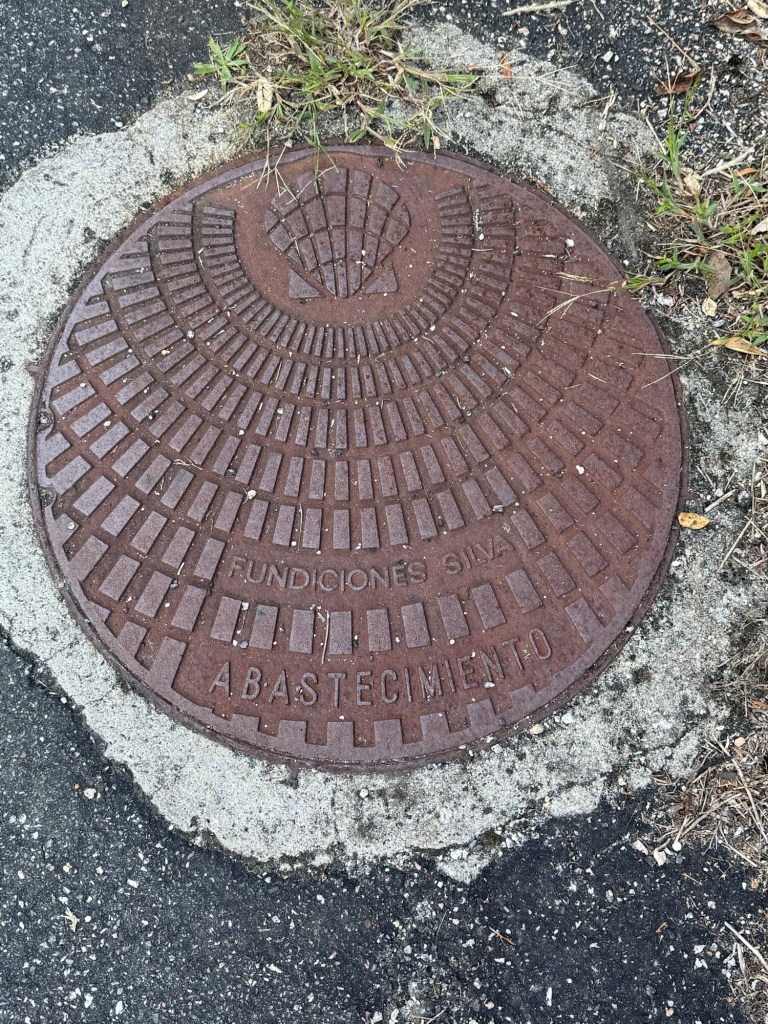
The arrow and the shell are the route signs to look for when walking the Camino.

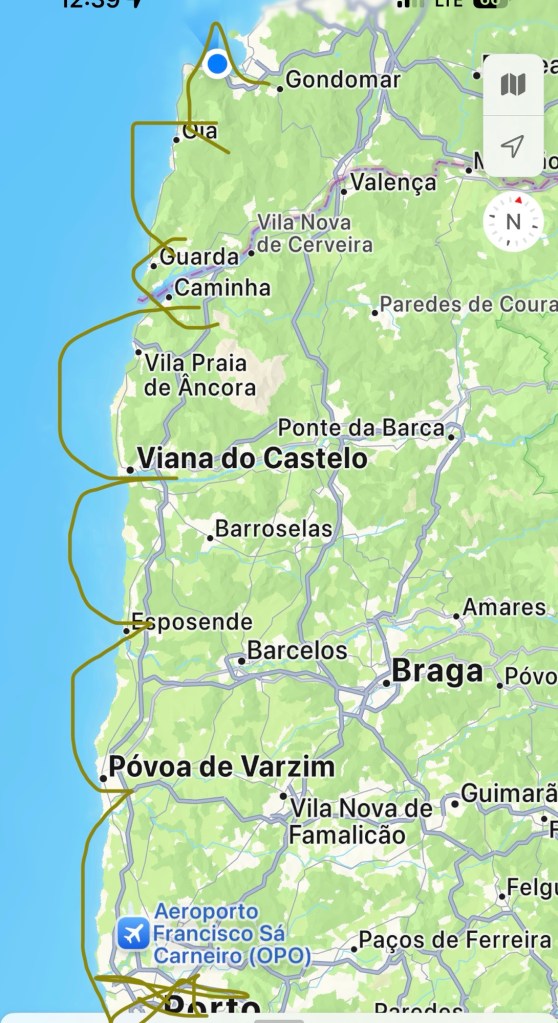
There are quite a few Camino routes to walk to arrive at Santiago de Compostela in Spain. After reading about some of them, I chose to walk the Portuguese Coastal Camino. I liked the idea of a relatively flat walk along the coast north from Porto,Portugal and then turning inland to walk the Portuguese Camino for the last 100 km. I’ve never done a days’ long walk anywhere. From I read and heard from others who’ve done some routes, it’s safe and a good challenge. An excellent way to celebrate my retirement! I booked with a company whose itinerary options looked good; they move my luggage each day and have booked my hotels as well. Going in mid- September gave me hope of not walking in boiling heat each day.

1st day walking along boardwalks in Portugal

Most people start from Porto for the Portuguese Coastal Camino, although it does start in Lisbon. I took a bus to the outskirts of Porto to start walking on September 13. My “training” over the past several months was walking longer distances and slowing my pace down to do longer walks. But I hadn’t done any walks longer than 12 miles, so the 18 miles of the 1st day were more than a little daunting! I saw the yellow arrow and started off.

I was happy to see this sign since I didn’t know about the scallop shell’s significance. There are people who have them hanging off their backpacks.

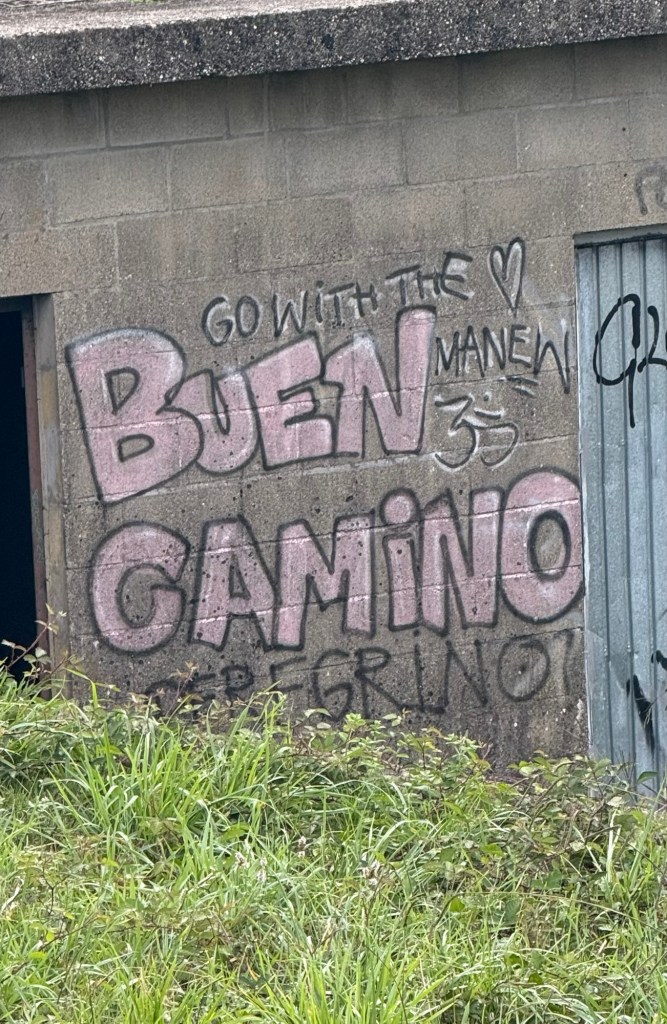
There were other people walking; a number of lone walkers, and also some groups that were going really fast. People said hi or ‘buen camino” as they went by or when I did. The sea breeze was strong, but it got hotter as the day went on. I stopped twice at sandy beaches to strip off my socks and sneakers to get into the water. My legs were tired by the time I strolled into Povoa de Varzim and found my hotel with my luggage waiting, but I was psyched! The evening agenda: cool shower, stretching, and dinner before getting bag organized for tomorrow and bed.

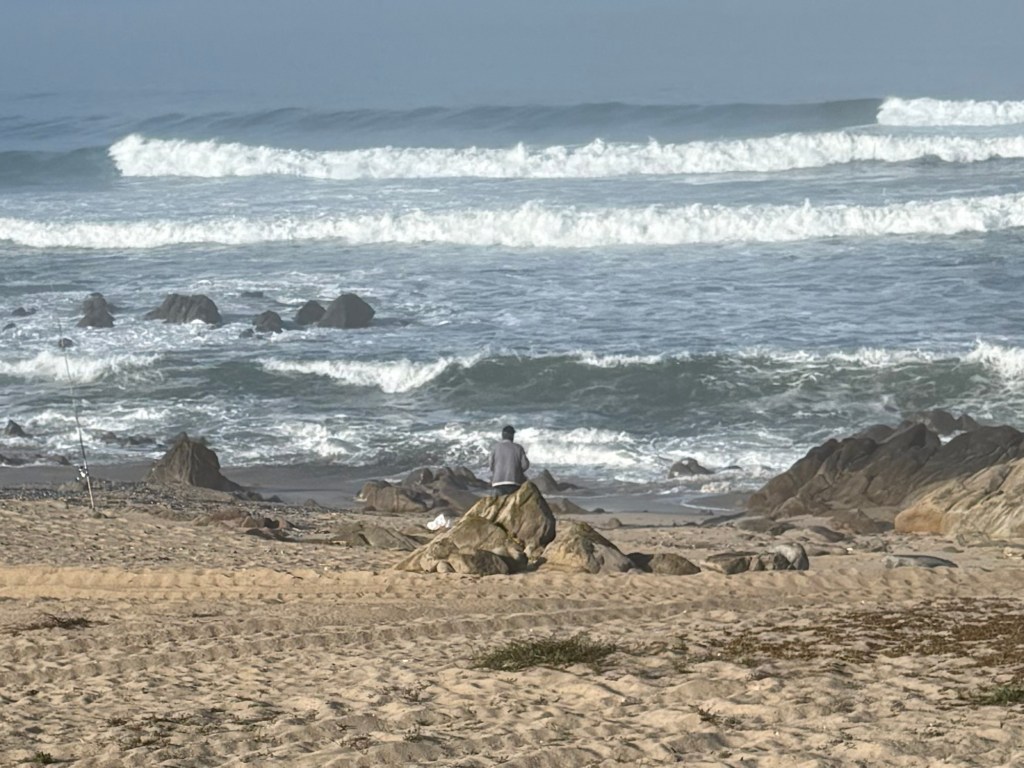
Lone fisherman

Luggage has to be downstairs by 8 am, so an earlier start the next day meant cooler air, sun only peaking through the mist about 8:30. This older man wished me “bon camino” as I walked through town; there were other people out fishing or raking sea weed into flat rectangles on the beach (to dry it?).

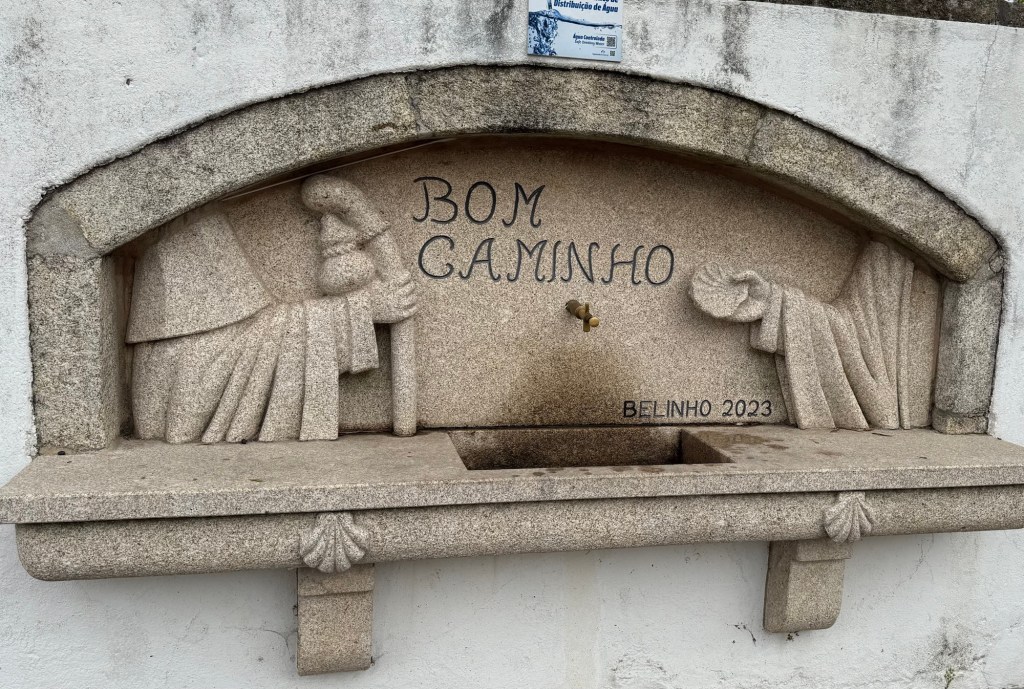
Many people wish walkers “Bom Camino” as they pass by, and even point out the arrows if you’re looking for it

I tried asking one guy if it was for his garden, but my limited Portuguese and his lack of any English had us both laughing. Only 14 miles that day so I arrived earlier at the hotel. But my room was ready and luggage there- and they gave me a 2 bedroom suite because they ran out of single rooms! I ate dinner with a Dutch woman. It was interesting to hear her perspective about the walking and what she hoped to get from it.

Early start from Esposende, Portugal

Day 3 was another 18mile day, but the cool start and walking for a while with a woman from Toronto kept my energy going.

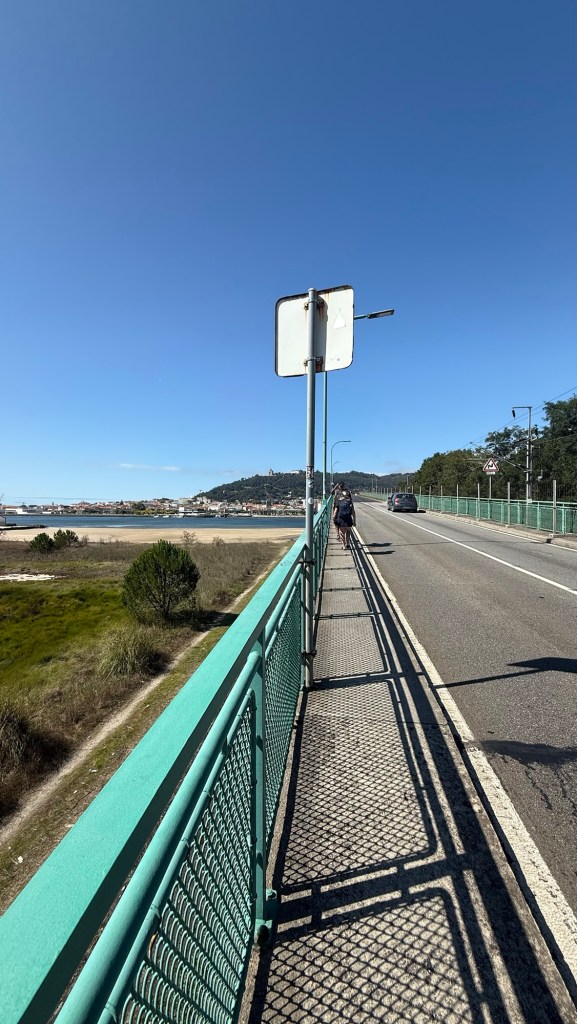
I walked with a couple from Edmonton for the last couple hours of the day. They were sympathetic about our country’s horrid political state because they describe Alberta, their province, to be like a MAGA province. I was happy to have them walking ahead as we went single file over a bridge into Viana do Castelo; between the cars whizzing by and the wind, we were afraid we’d be blown into the traffic!

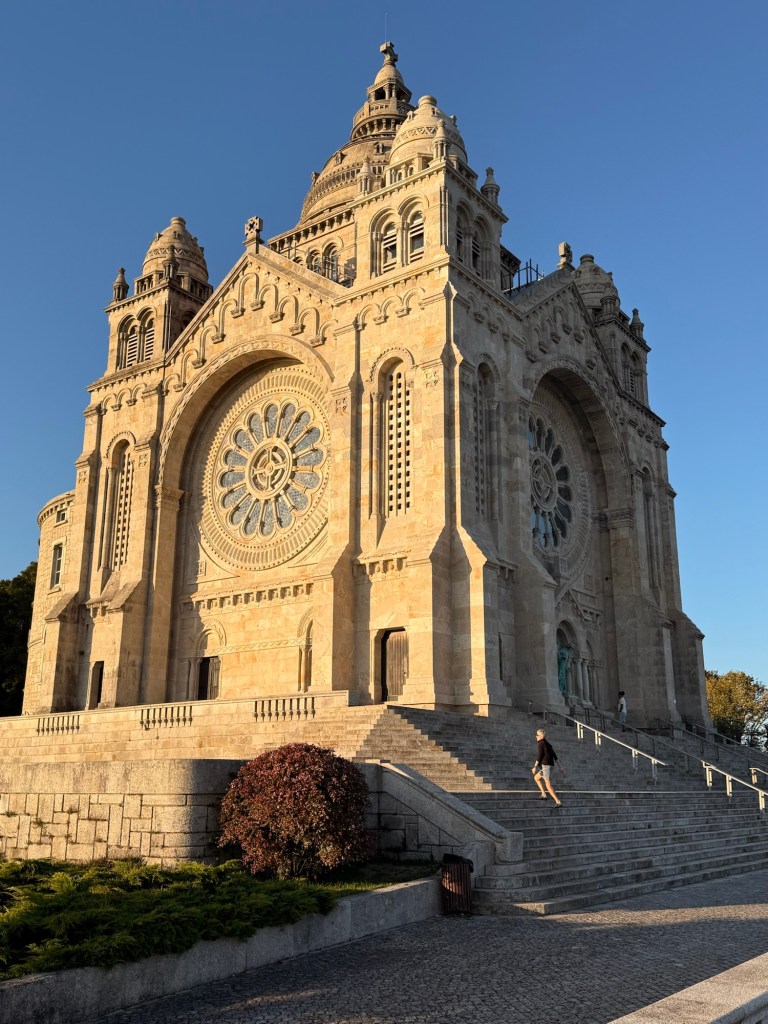
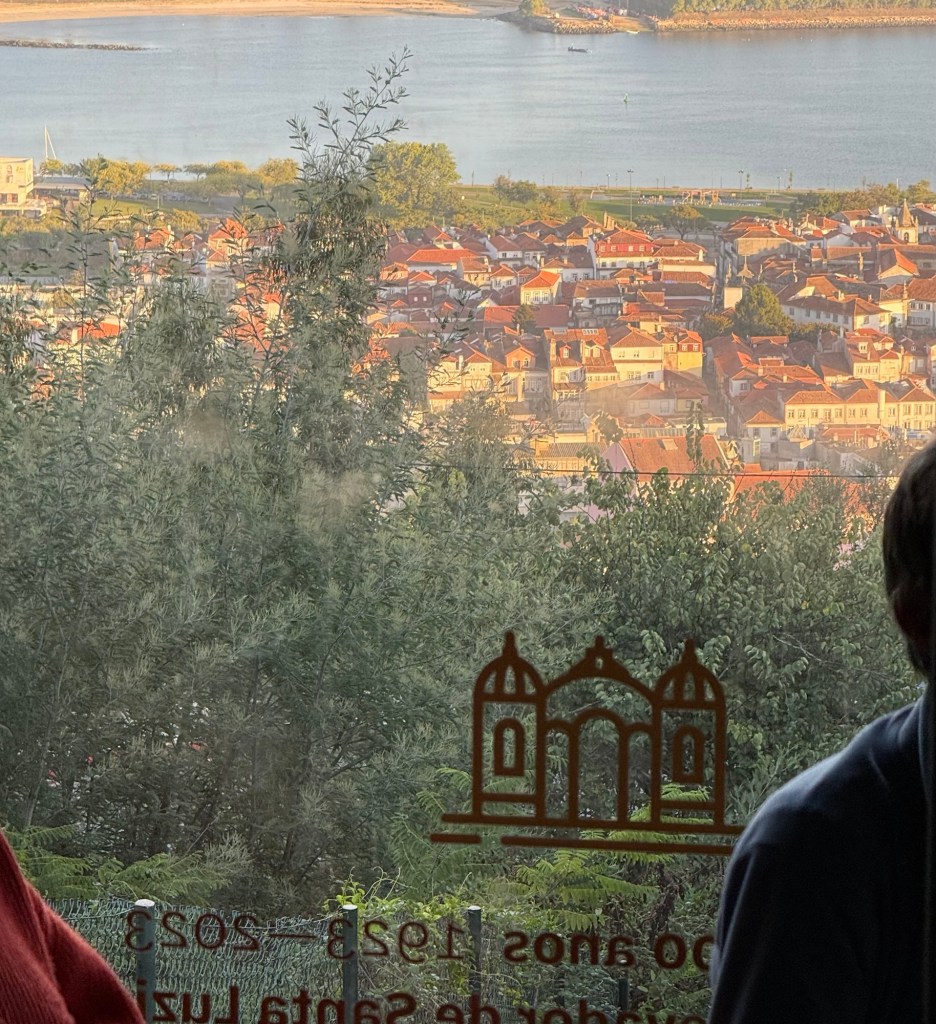
I couldn’t pass up taking the funicular up to Santa Luzia Basilica after seeing it on my walk into the city

By the 4th day, I had the routine down about getting the bag downstairs at 8 and getting out early. But I was tired to start and it made for a hard day with heat and a longer walk than I originally thought because my hotel was booked farther along. After 12 mi., I caved and got a taxi for the last 4.5 mi. They had a sauna and pool, so after that and a good meal, I slept hard.

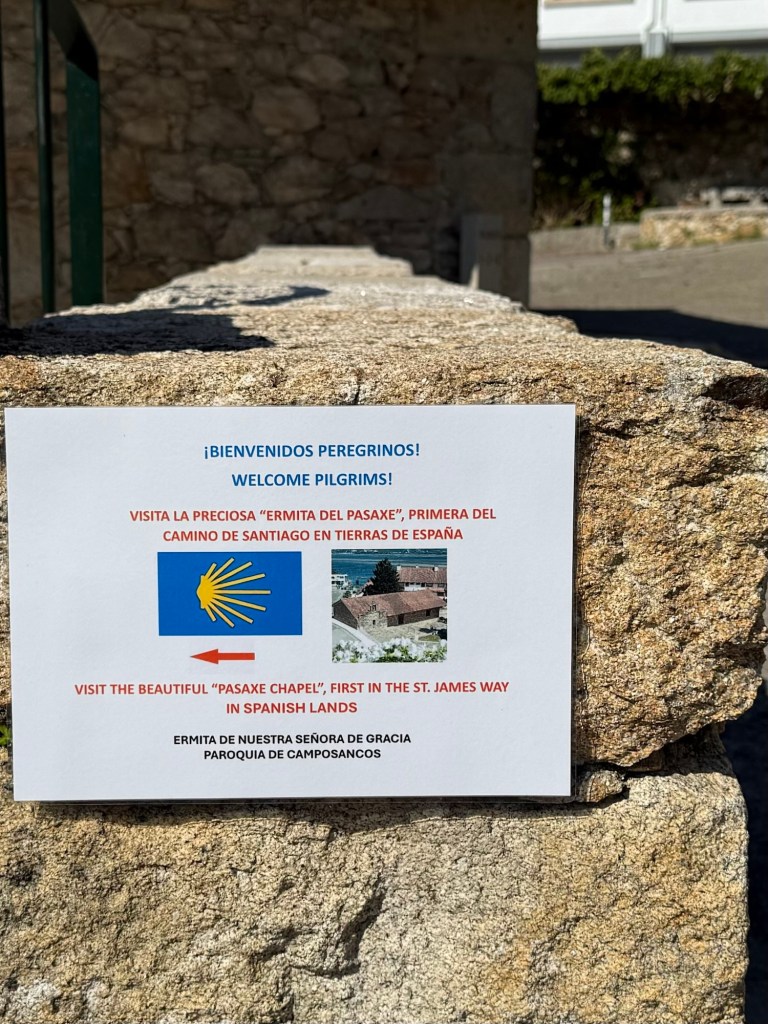
Motorboat taxi to Spain: 6 euros and a speedy ride with lifevests

Being a town closer meant I had time to roam around Caminha before getting my 10:30 taxi over to Spain. I got some good fruit and things to eat at the outdoor markets, and poked my head into a church.

I walked for a ways with my fellow ‘pilgrim’ from Toronto before she turned off the path to her hotel. It was a shorter day for both of us- 7.5 mi. I was in A Guarda before I knew it. This time the hotel gave me a little apartment -another case of running out of single rooms. I did laundry by hand and laid it out to dry in the sun on the little deck before making myself an omelet. It was chilly but nice to sit out to read.

A week of walking

Chilly the next morning, and the sun took its time coming over the hills as I walked. The eucalyptus forest smelled amazing,

On the road to Oia

I got into the 64 degree pool when I reached the hotel in Oia, and it melted the 10+miles away. There were a lot of folks I’m starting to recognize from various days of walking, and everyone seemed to be getting their feet and legs in at least.

Friday morning start at 7:55 am to Baoina-

The route on Friday switched back and forth from ocean side hills to steeper inclines up through forest. Charles called to chat while I walked— late shift for him at work had him up very late. I can’t believe the cell connection we had as I walked up hills and down curvy little roads.

Coming into Baoina

I think my legs are acclimating to the long walks, even though I start stiff each day. The 12 miles didn’t seem too daunting. On the way into Baiona, there’s a tall statue on top of a hill. I actually had the legs to make the climb up to see the “Virgin de la Roca”. The hill was an ancient Celtic place of ritual. There were 4 Spanish women up there who had me take their photos in several spots. And then they said they should take mine.

I didn’t know til afterwards that there may be stairs up inside her to look out of the boat she’s holding.

This has gone on way too long-I guess that’s what happens when you take a rest day and sleep many hours. Hopefully you just look at the photos. I’ve learned a lot about the Camino and myself this week, met more nice people than I’ve mentioned, and look forward to the next week of walking.

Porto, Portugal

Gaia, a part of Porto

I had 2 days in Porto before beginning the Portuguese Coastal Camino. Besides sightseeing, there were 2 things I needed to do: get my Pilgrim “passport” for the Camino at the Catedral do Porto and figure out my bus route out to the coastal edge of the city to start my walk.

Catedral do Porto
This is the pilgrim passport in which I have to get 2 stamps/day along the way to Santiago de Compostela. The stamps prove that I walked at least 100 km, and can get the ‘compostela” (official certificate of pilgrimage) at the end of the Camino.

There wasn’t really a line at the Cathedral, so that task was done quickly. I stopped into the bus station within Sao Bento train station, and stood in line quite a while. I think a lot of new university students were getting their bus passes. The woman at the desk began to pull her shade down to indicate her lunch break just as I stepped up to the window. She was happy to sell me the ticket with a few rides on before she pulled the shade all the way down!

Even there there’s major construction going on in and around Sao Bento station, the tiles inside made the trip worthwhile.

Since I was near, I went to visit a church with more amazing tile on the outside wall.

The narrow house truly is super narrow with 1 or 2 rooms on each of its 3 floors. And on one of the floors, there’s a doorway that allows visitors to touch the back foot on a statue of Christ stumbling while carrying the cross. The Carmo church had stairs down into catacombs where I could see human bones in a glass floor (eek!), stand on a balcony to see the whole church, and get a glimpse of various tools people used flagellation.

Broom of thorns – not for sweeping!

There’s so much beauty to be seen around every corner and up every hill in Porto, much like Lisbon.

One of Porto’s 7 bridges over the Douro; the opposite side has the old port wine warehouses. I walked across the lower level of this bridge; the top is reserved for trains.
View looking back at Porto when I crossed the bridge
The cafe greeter
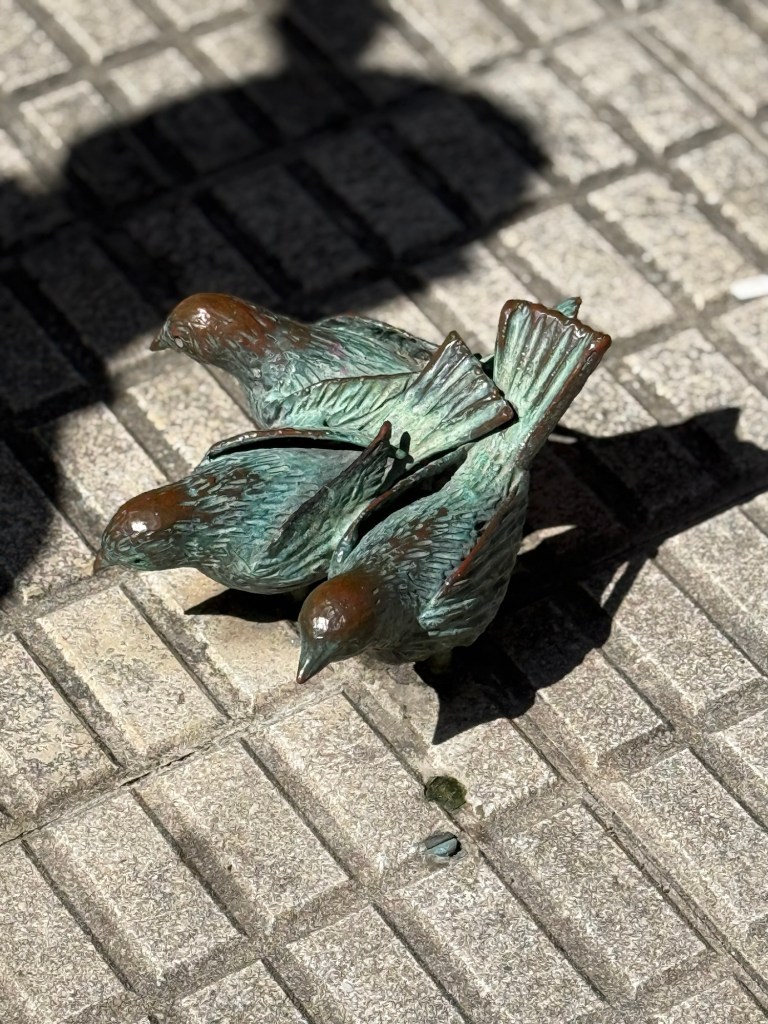
His birds are well cared for, and clearly enjoy being part of the ensemble.
Being the bird obsessed person that I am, I shot several short clips of him performing. And I love his message at the bottom of his organ.

One last touristy thing I did was to get a ticket to visit the Livraria Lello, one of the oldest bookstores in Europe (Lisbon has one too) and supposedly one of the most beautiful. I have since read that they charge for entry tickets to help them survive as a bookstore. It is quite beautiful outside and in.

Porto is a beautiful city, for sure, and one I’d like to return to explore more of. It was also quite cool to get off a city bus in its coastal edge and start walking north!

Workaway in Germany

Late afternoon biking magic

When I started looking at Workaway listings, I stumbled on listings for helping in monasteries or convents for nuns. I wrote to a few, and was happy to be invited to go to help at one a few hours’ train ride from Berlin in the countryside. The community of sisters are from several different countries, so English is just one of many languages spoken there.

My room at the convent

One of the sisters met me walking from the bus stop near the convent, and she showed me around the guest area bedrooms, a kitchen, and dining rooms. She also showed me where the bicycles were stored so that I could use one anytime I liked. After she left me to unpack, I wandered around the front gardens and took a short bike ride to the town center. I wanted to be back in time for Vespers (the evening prayers) at 5:30 in the chapel. It was so lovely. The sisters sang and read in French, a language I only know a little of. It didn’t matter. Their voices were beautiful.

Some of the many hedges at the convent

It was warm and sunny all week, giving me good weather to trim the hedges. I’ve always wanted to try something like that. The line to trim along wasn’t completely gone, thankfully. There were tools, wheelbarrow and a short garden stool to give me some height. Over the course of 5 days it all began to look pretty tidy- or ‘very German” as one (Dutch-born) sister told me.
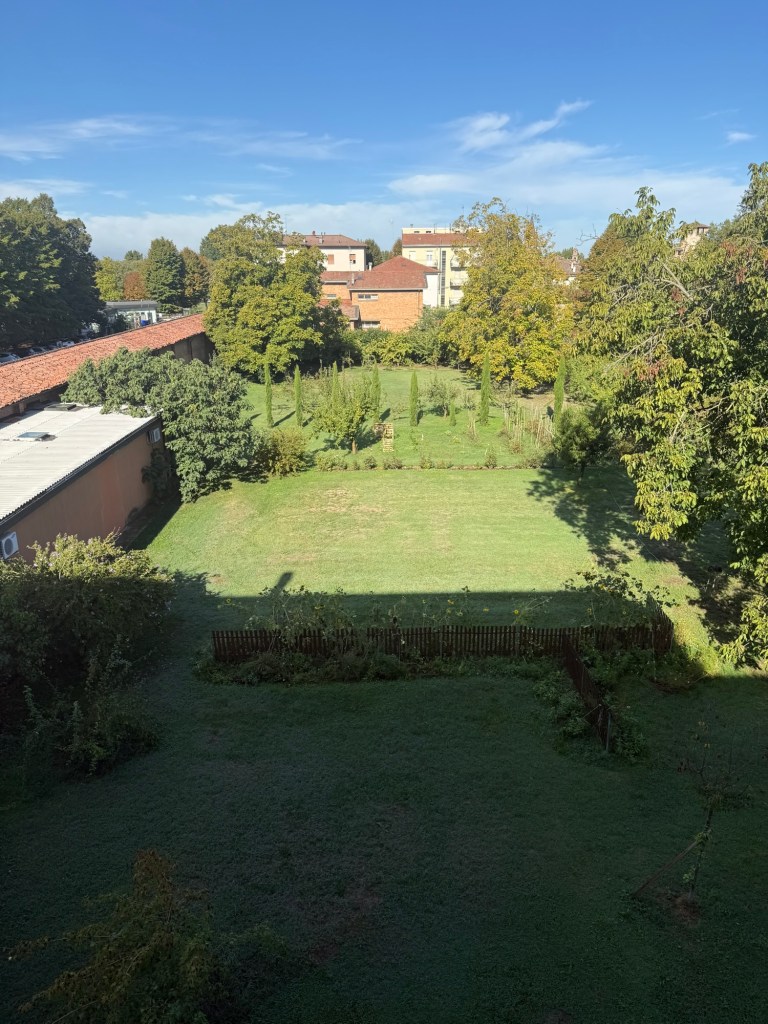
A good week’s work

The biking around the town and out through the farmland is mostly flat like the Netherlands, with equally good bike paths. Each afternoon I would ride into town and then follow a different path out into the countryside. I liked getting a glimpse of neighborhoods in and around the town and seeing teens playing soccer in a really nice sports field The further out I rode, the farms seemed at first look to be identical in their layout and tidiness. But I began to see some differences too: a flourishing dahlia bed in one, a huge concrete Christ on the cross in another, miniature toy farm equipment for kids in another.

I felt very absorbed and mindful as I worked on whatever job I had. It felt like the sisters move thoughtfully through their days of prayer, study and work (cooking, looking after the guest area, cleaning, etc) and that mindfulness permeates the air of the convent. I liked the variety of several tasks to be done inside in case of rain, or outside in good weather. The sisters would stop to introduce themselves and to chat when they were going about their day, so I think I got to meet most of the 10 who live there all year. There were also sisters from other places visiting to be on retreat or study. No one asked me if I was religious or a church attender; the invitation was open to join whatever form of worship was happening. When I went to one of the Vespers, a sister gave me a book with the songs and readings marked—in French- to follow along if I wanted. I tried…

I helped a sister tidy up the cemetery in the back of the garden. It has 25 graves of sisters who’d lived in, and died at, the convent: last year the order moved the remaining few to a senior convent.

In the evenings, I often had dinner and great conversations with the 2 young priests visiting from Rome to study German at a nearby language school. One is originally from Toronto and the other from Northern India. I learned a lot about their seminary experiences and their studies in Rome. They both had to master Greek and Hebrew in their first year in order to study the New and Old Testaments in the original; apparently that first year is when many young priests leave. We laughed a lot too, and I found their questions about the US thoughtful and challenging!
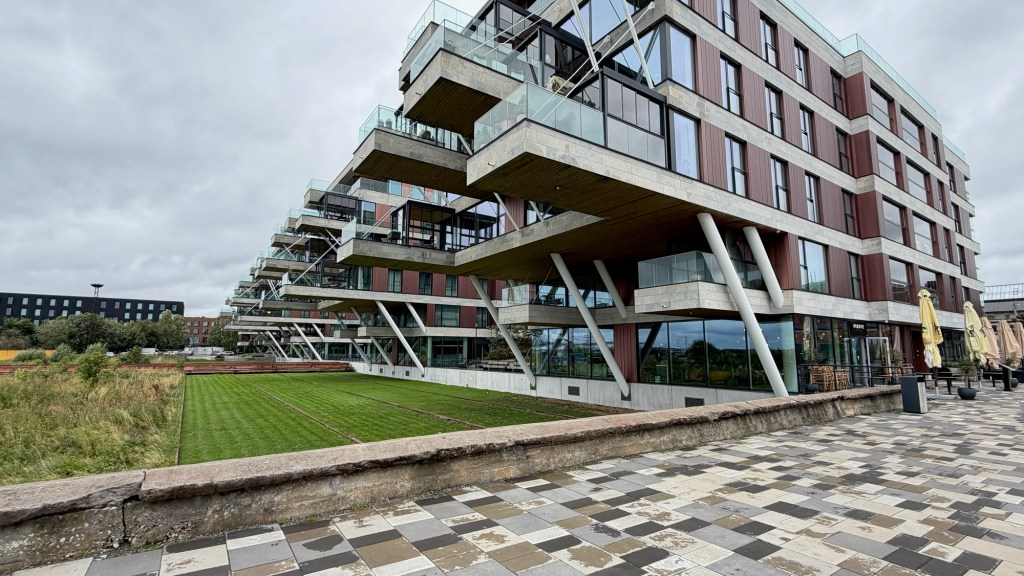
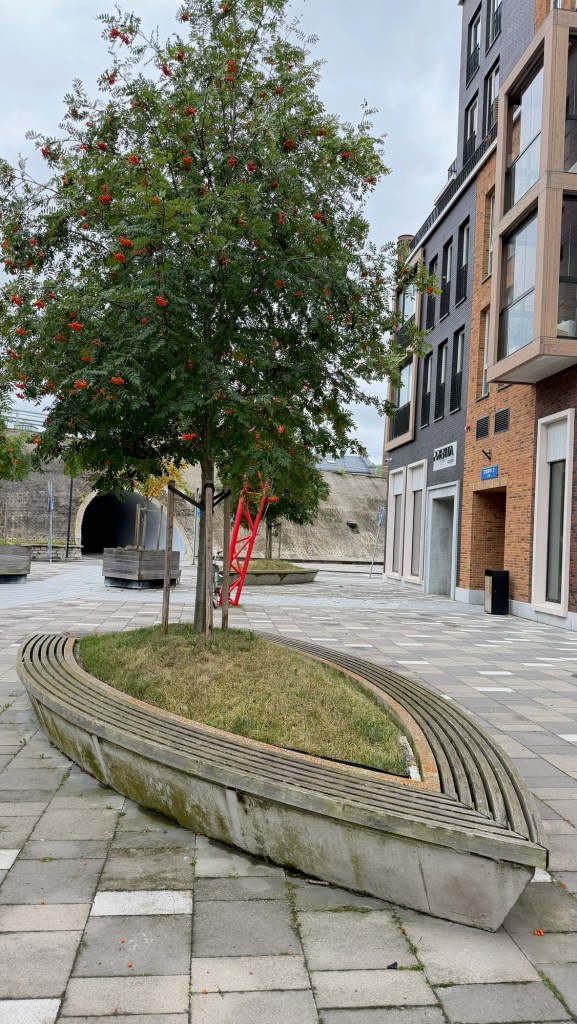
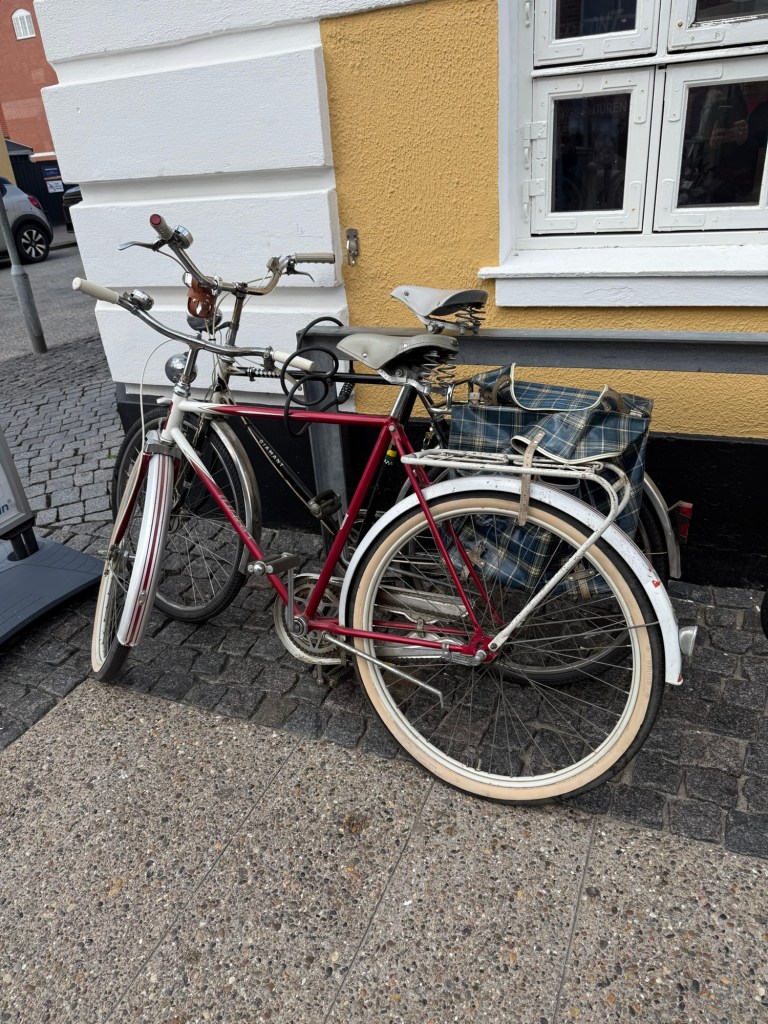
I took a little ride on my last evening to see the sunset (at 8:20!). The bus to my train would leave early the next morning Over the course of my last day, several sisters came to wish me well, give me a hug and invite me to return. Even Mother Superior stopped in the kitchen to say goodbye! In just a short time I was made to feel like a part of their community.
Evening sky over the canal nearby